
Cold Proofing Sourdough In The Fridge

You've probably heard that proofing your sourdough in the fridge (also called cold proofing or cold retarding) is one of the best ways to make a loaf with an incredible flavor and texture. You’ve heard right, and I’m gonna teach you exactly how to do it!

Craving The Article Details?

What it is: Cold proofing is the final fermentation period after shaping when sourdough rests in the refrigerator before baking.
Why you’ll love it: Cold proofing builds a more complex, tangy flavor and a beautifully blistered, crisp crust while also making the dough easier to handle and giving you total flexibility to bake sourdough on your schedule.
How to do it: Cold proof sourdough for 12-48 hours in the fridge. In my own side by side tests, 48 hours gave the best balance of flavor and structure.
Jump to:
- Craving The Article Details?
- What Is Proofing?
- So What Is Cold Retard, Cold Proof, Or Cold Ferment? Are They The Same?
- Why Proof Sourdough In The Fridge
- How To Proof Sourdough In The Fridge
- How Long To Proof Sourdough In The Fridge
- My Preferences For Proofing In The Fridge (Tested Side By Side)
- Signs Your Cold Proof Has Gone Too Far
- Cold Proofing Sourdough FAQs
- My Takeaway
- Put This Technique to Work: Cold Proofed Sourdough Recipes From My Kitchen
What Is Proofing?
In both regular (yeasted) bread making and sourdough baking, proofing refers to the rise after shaping. During yeasted baking it’s often called the final proof or final rise and sourdough bakers sometimes refer to it as the second rise, but most commonly it is called proofing.
This is different from bulk fermentation, which happens before shaping. During the bulk fermentation, the dough ferments as one mass. After shaping the final proof allows each loaf to continue fermenting and developing before baking.
Final proofing doesn’t have a universal rise percentage or requirement to increase in size. How much the dough changes depends on the dough, flour, hydration, starter percentage, temperature, and how far fermentation progressed during bulk fermentation.
This step is critically important for all bread or leavened goods, to give them a light, airy texture, not to mention the flavor! Without proofing, our bread would be flat, dense, and taste bland.
If you’re having trouble with dough that’s not rising at all, you might want to check that whether your sourdough starter is active enough.
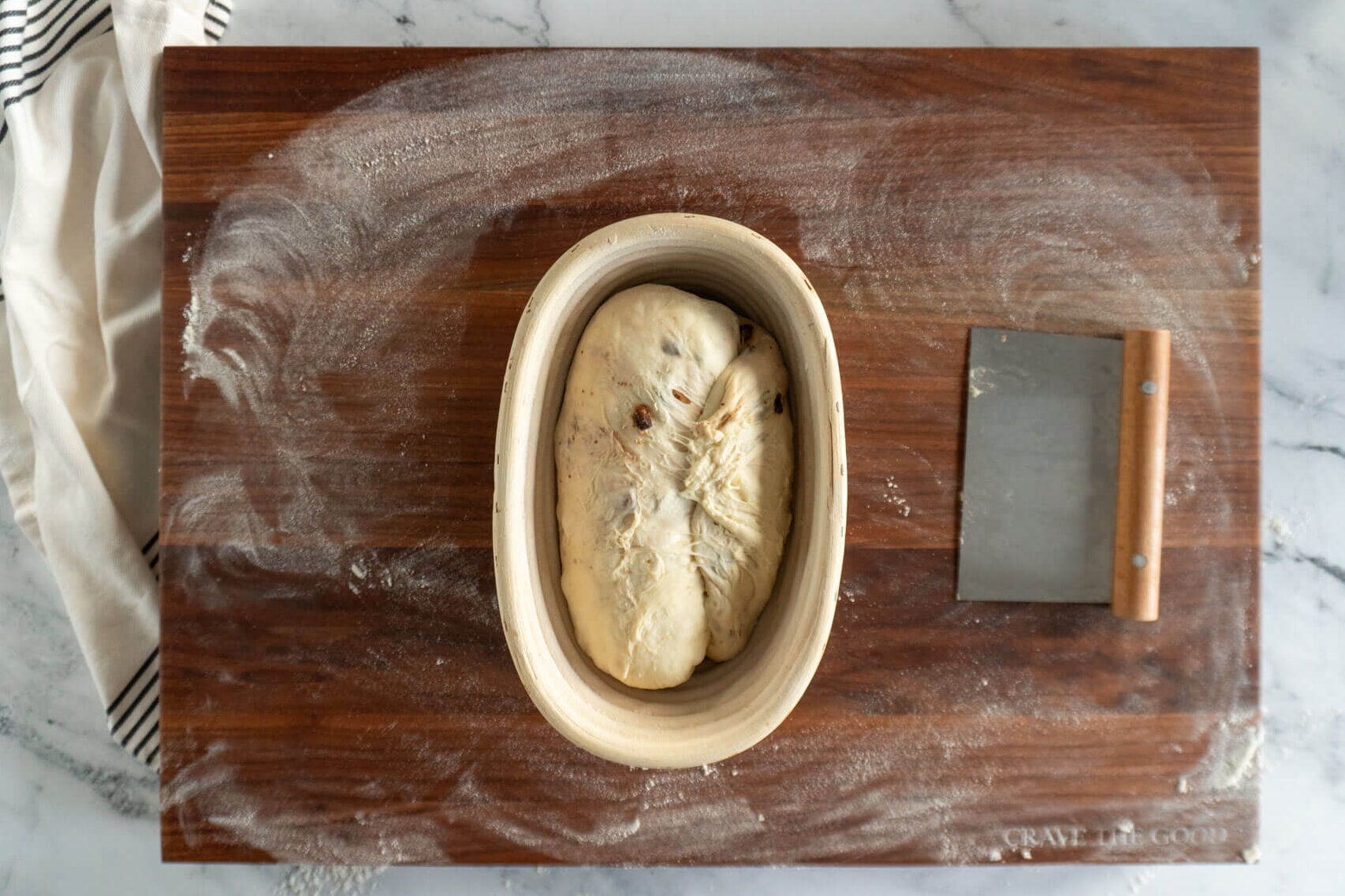
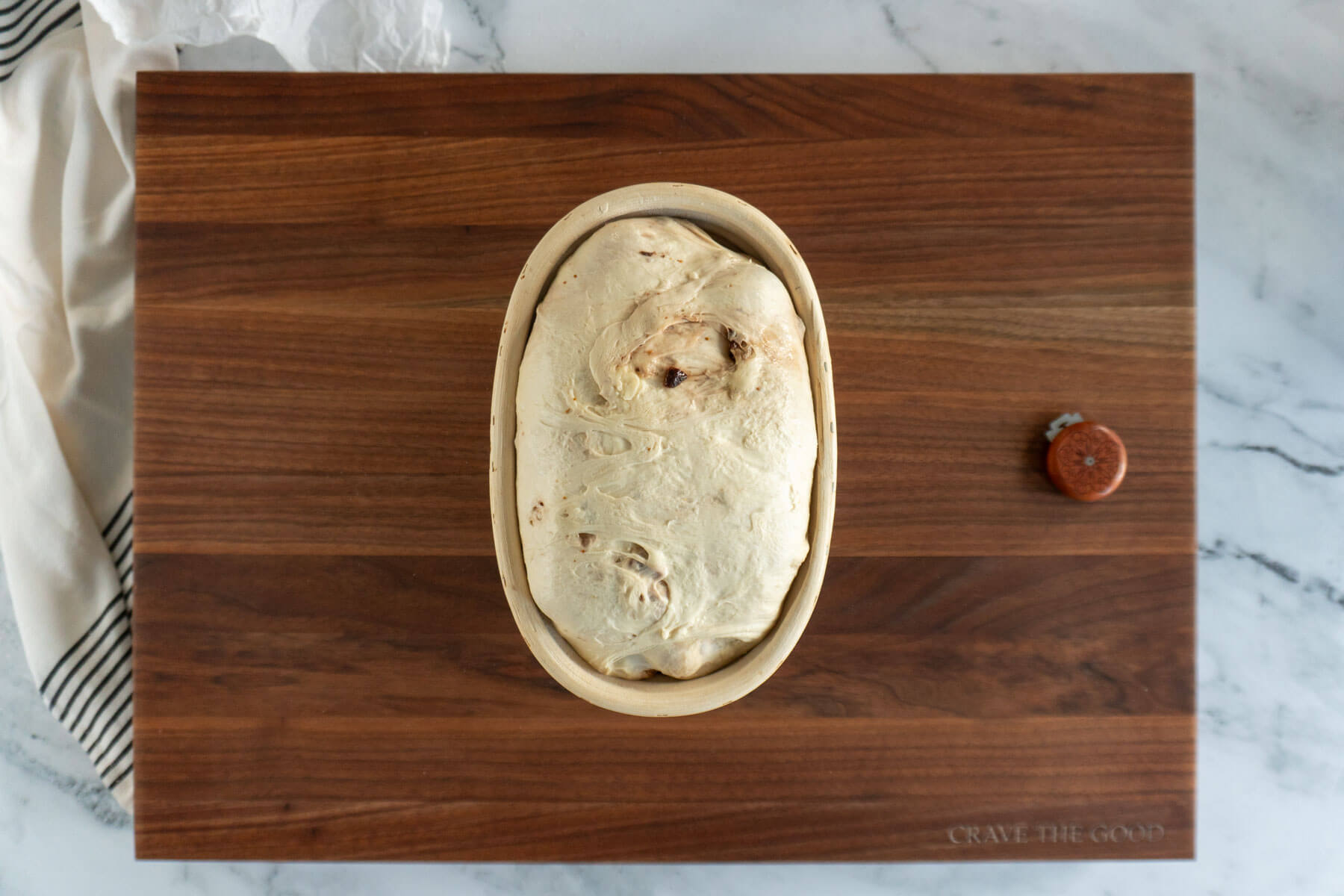
So What Is Cold Retard, Cold Proof, Or Cold Ferment? Are They The Same?
A cold retard is a powerful tool in your baker’s toolkit. At its core, it is simply the act of proofing your sourdough bread at cold, fridge temperatures. Because the low temperature slows the yeast activity in the dough, it is called retarding.
The terms cold fermenting, cold retarding, and cold proofing are often used interchangeably by sourdough bakers, but the important part of whatever you want to call it is when it happens in the fermentation process. For this article, we’re talking about a cold final proof after shaping.
The refrigerator slows fermentation, but it doesn’t instantly stop it. Your dough continues fermenting as it cools and throughout the cold proof, just at a slower rate.
The slowed fermentation rate is why I recommend storing your sourdough starter in the fridge if you're an infrequent baker!

Why Proof Sourdough In The Fridge
In most of my sourdough recipes, I give the option to prove the loaf at room temperature for 1-3 hours or place in the refrigerator for a cold retard. Whenever I have the option of choosing room temperature or proofing sourdough in the fridge, I always choose the fridge!

1. Better Flavor:
Dough that has been proofed in the fridge has a more complex, sourer flavor than room temperature proofed dough. When the bread is proofing at room temperature, I find that the dough develops faster than the flavor, by slowing it down and proofing in the fridge, we allow the flavor to develop in time with the dough.
This is a direct result of the temperature slowing down the yeast’s fermentation activity, but the bacteria in the sourdough starter are less dependent on the temperature and they are able to continue breaking down starches into lactic and acetic acids, giving us a boost of that sour tang we can’t get enough of!
2. Easier To Handle:
Cold dough is much much easier to handle. It’s easier to flip out of your banneton, it’s easier to score, it’s just easier to work with. Especially for new bakers.
Warm dough tends to flatten once turned out of its banneton, giving you less time to flip it, score it, and transfer it to a dutch oven. I find my scoring lame also tends to stick to warm dough.
Cold dough is less urgent, it resists spreading for longer, it’s by far easier to score, and because it’s more sturdy, it’s easier to get into your dutch oven!


3. Adds Flexibility:
Sourdough is a process, a process I’ve come to truly enjoy, but it still takes a while.
Allowing your sourdough to cold retard in the fridge puts you back in the driver’s seat when it comes to baking sourdough.
Completing the second rise in the fridge extends your proofing window from 1-3 hours to days! You can bake that bread on your schedule, not the dough’s!
4. Better Crust + Crumb:
This one might be splitting hairs a little bit, but I feel that cold proofed dough usually has a superior crust and crumb to a sourdough proofed at room temperature.
Baking cold sourdough tends to give that delicious, blistered crust that’s somehow crispy but also delicate at the same time. It’s 12/10 perfect.
In my experience, the crumb improves with time as the dough continues developing strength, especially in recipes that don’t incorporate kneading. Gluten development isn’t dependent on temperature, though methods like autolyse can encourage gluten development earlier in the process.

How To Proof Sourdough In The Fridge
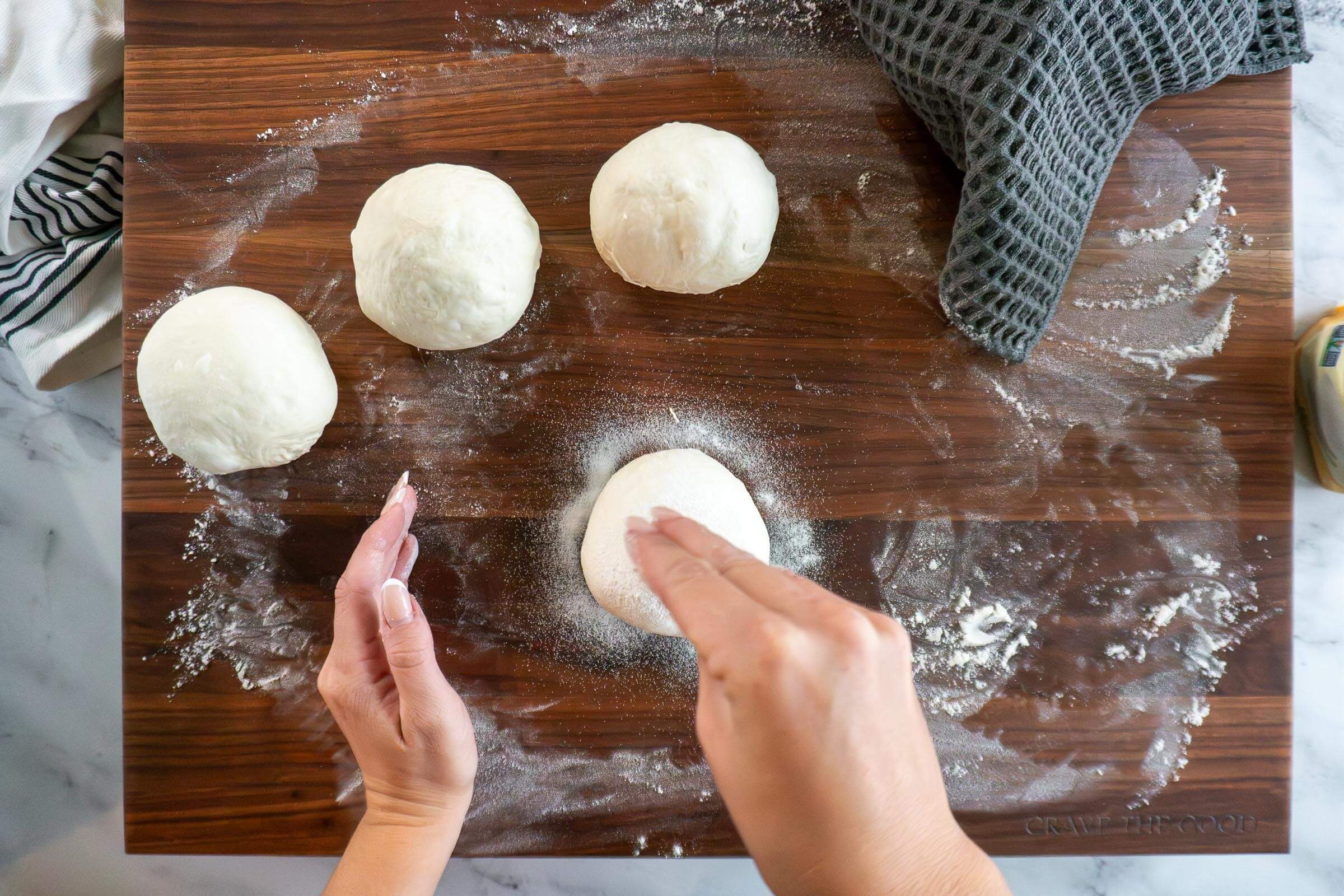
- Step 1: Follow your favorite sourdough bread recipe as written until you get to the final shaping stage.
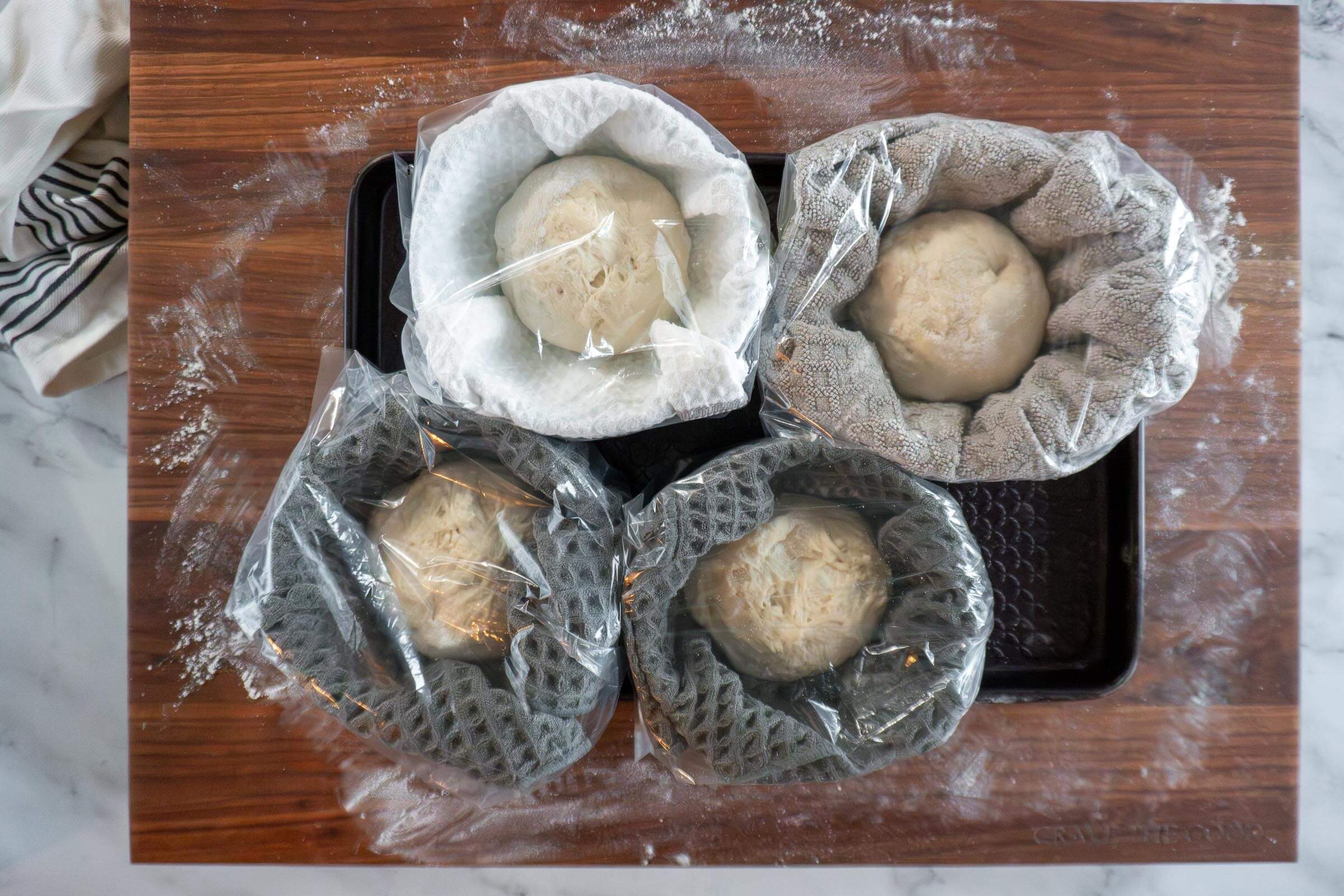
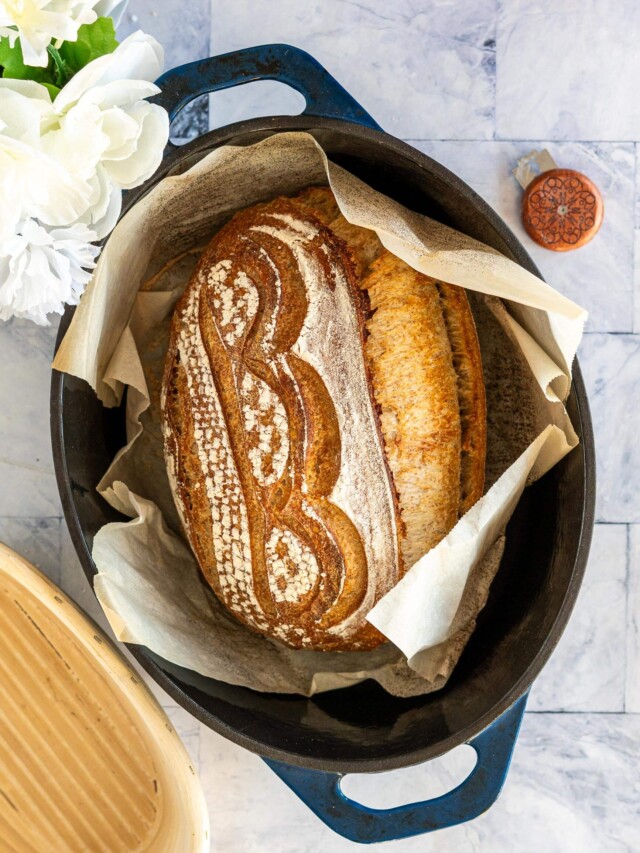
- Step 2: Shape the dough as desired, in a boule or batard. Place the shaped loaf into a banneton basket or banneton alternative and rest at room temperature for 1-3 hours covered.
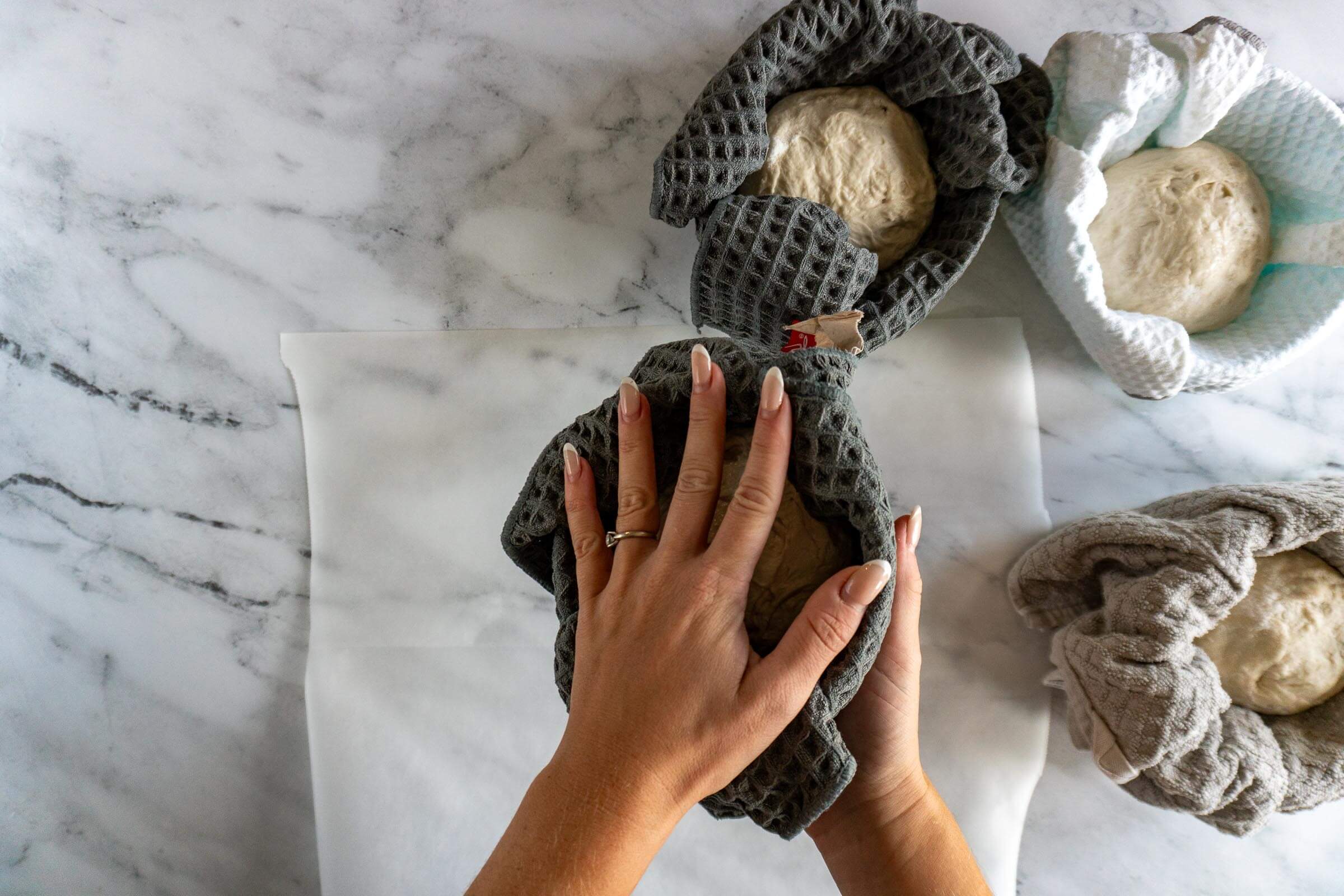
- Step 3: Place the covered banneton into the fridge for your desired length of time.
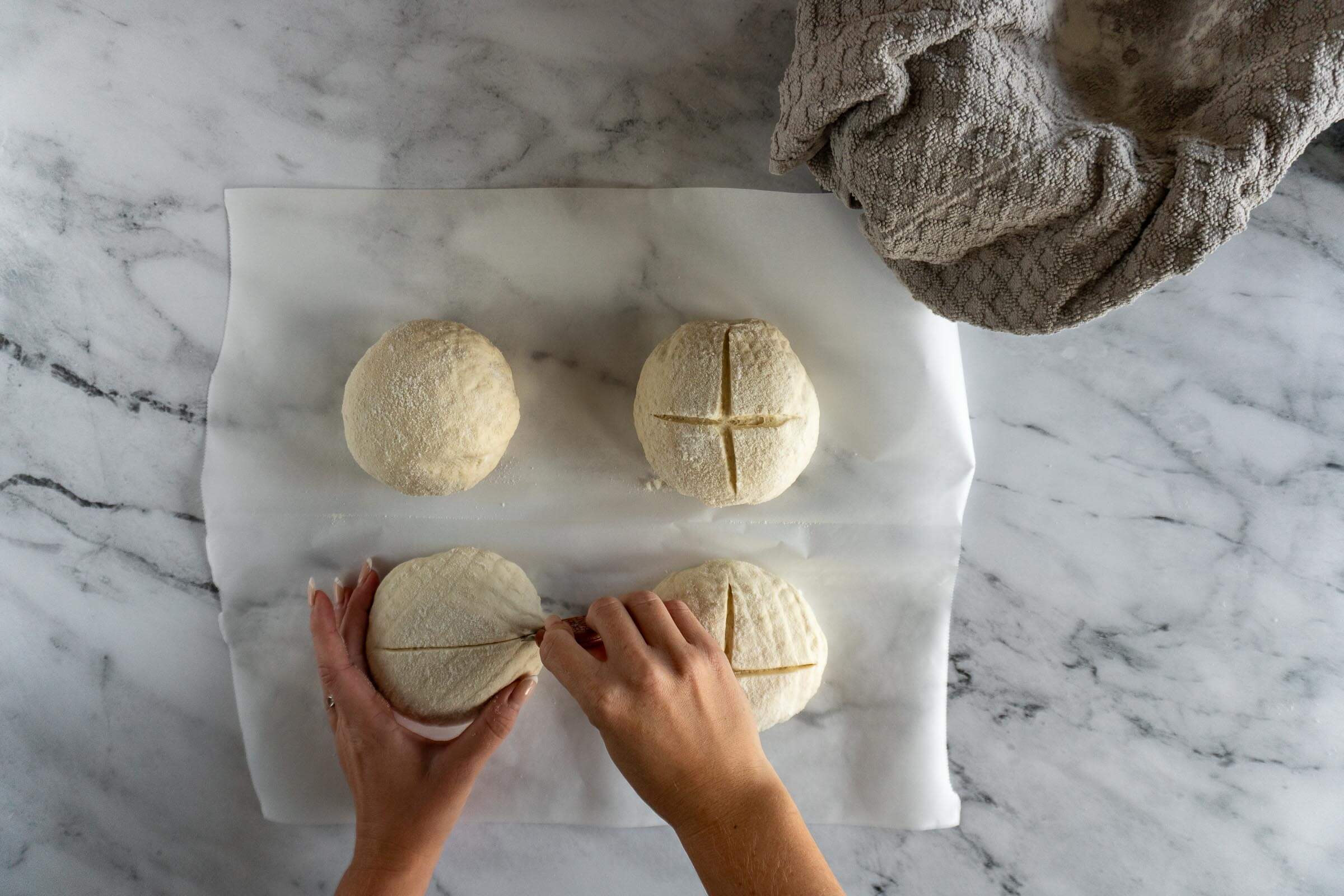
- Step 4: When ready to bake, simply preheat oven and dutch oven.
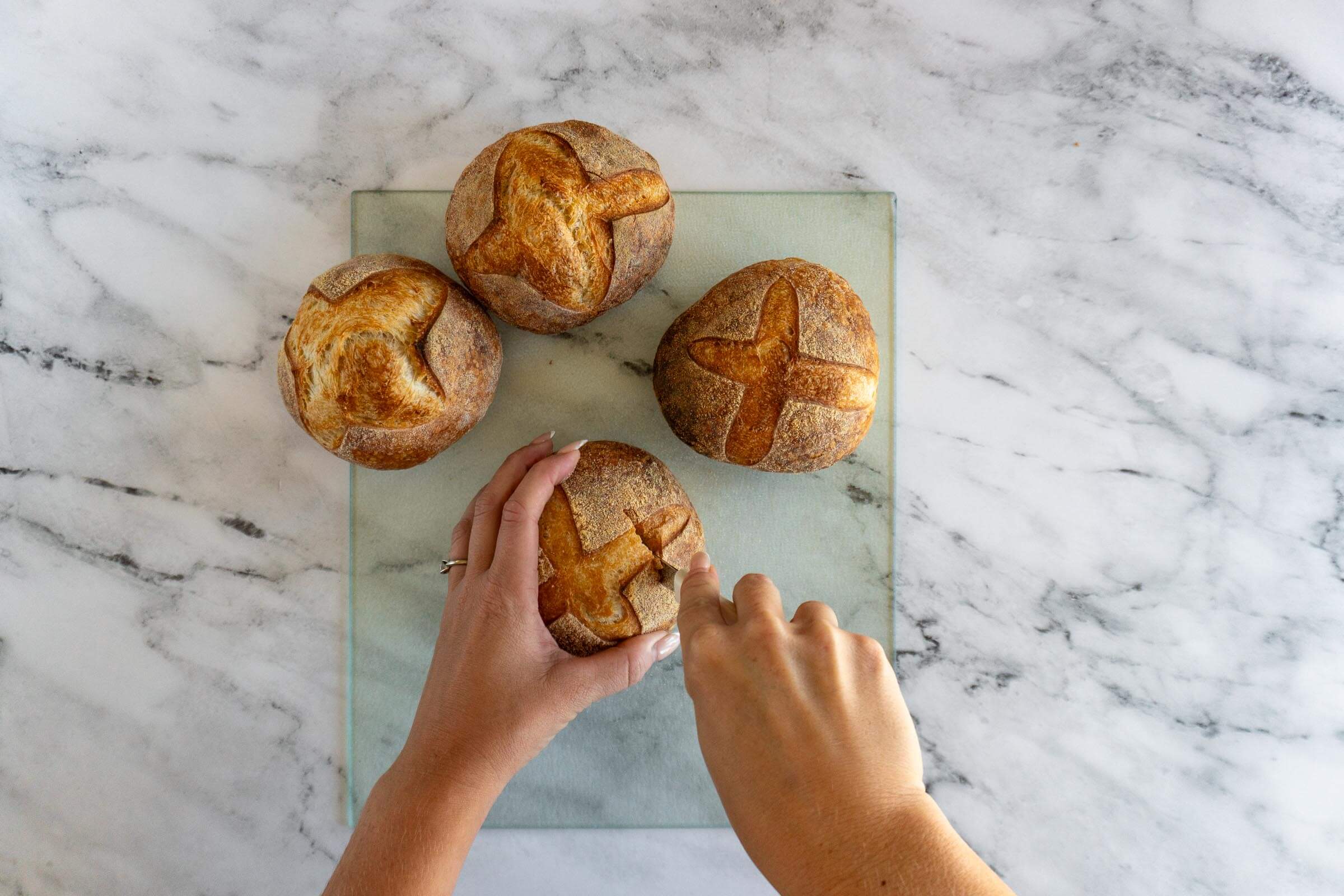
- Step 5: Once the oven is preheated, score bake the sourdough straight from the fridge as per the recipe.
Note: Photos above from my Sourdough Bread Bowls Recipe
How Long To Proof Sourdough In The Fridge
There’s no single “right” answer. It depends on your schedule, your taste preferences, and how your specific recipe is built. As a starting point, 12-48 hours works well for most sourdough loaves, but there isn’t a universal rule. The longer the dough has fermented before refrigeration, the less room it has for an extended cold proof.
| Factor | Choose SHORTER Cold Proof | Choose LONGER Cold Proof |
|---|---|---|
| Your Schedule | You want to bake tomorrow, or need bread soon | You’re prepping 2-3 loaves to bake across several days |
| Your Taste Preferences | You already stretched the bulk ferment for tang and want a milder second rise | You kept bulk ferment short and want more time for flavor and acidity to develop |
| Your Recipe | Higher starter % (>20%) and/or long room temperature bulk ferment | Lower starter % (<20%) and/or a shorter bulk ferment |
Notes From The Crave Kitchen:
While a short 2-hour cold retard will do nothing for the flavor, it can help if you have to pick up the kids from school while you should be baking! A super long 84-hour cold retard is likely too long for most doughs and will result in over-proofed bread that lacks energy for decent oven spring.
But preparing 2-3 loaves and keeping them in the fridge to bake over the next 3 days is an awesome way to maximize your efforts, minimize clean up, and keep your family in fresh baked bread. I often prepare a few loaves on Saturday, then I have a fresh loaf to bake off for Sunday dinner, one to get us through the Mondays, and one to bake on Tuesday!
Flour matters, too. Whole wheat and rye flours ferment differently than dough made primarily with bread flour, even with a cold proof. If your recipe calls for a meaningful amount of whole grain flours, around 30% or more in my experience, monitor your fermentation more closely than the clock.

My Preferences For Proofing In The Fridge (Tested Side By Side)
I don’t like giving advice that I haven’t actually tested, so I spent months playing with cold proofing before writing this guide. For this article, I baked two identical loaves of my small loaf sourdough recipe from the same starter, at the same time – the only variable was how long each loaf sat in the fridge. Here’s exactly what I learned:
| Fridge Time | Crumb | Flavor | Oven Spring | My Takeaway |
|---|---|---|---|---|
| 1- 2 hours | No real change from a room temperature bake. | The same as any recipe that hasn’t cold proofed | Same as a same day bake. | Useful as a scheduling buffer (e.g., picking up the kids), does not impact flavor |
| 24 hours | Large, slightly underdeveloped air pockets | Mildly sour, lacked depth and complexity, | Good, but not my best test loaf. | Workable in a pinch, definitely better than nothing |
| 48 hours | More open, more even crumb | Noticeably more complex, pleasantly sour | Best of the two photographed – bloomed more at the score | My sweet spot. Best balance of flavor and structure in this test |
| 72 hours | Holds up well if the bulk ferment wasn’t pushed too far | More sour, still delicious | Reliable, as long as the bulk ferment was on the shorter side | Great for batch baking a loaf a day across 3 days |
My findings may surprise you – I expected the 24 hour loaf to be a stronger contender against the 48 hour option, but it wasn’t. Going from 24 to 48 hours made a bigger difference than I anticipated when tasted side by side. The extra day gave a noticeably more complex but pleasantly sour loaf with better oven spring. The 24 hour loaf tasted fine, but lacked depth and texture that the 48 hour loaf had.
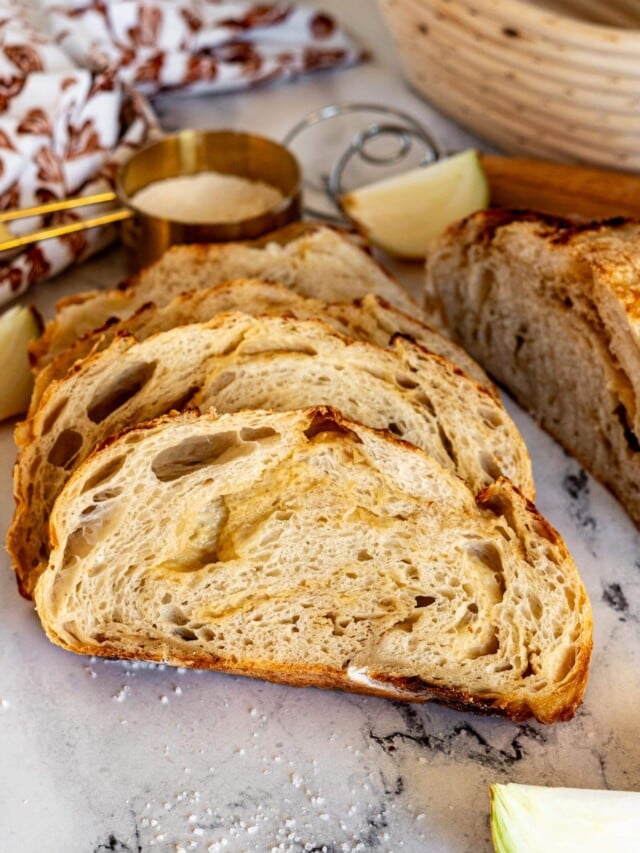
Look closely at the photo below and you’ll notice that the 24 hour loaf’s air pockets are larger, but that’s not a sign of better fermentation, it’s a sign the crumb didn’t fully catch up yet. The 48 hour loaf’s smaller, more uniform crumb is the one that’s actually more developed and consistent. This seems a little counter intuitive when you’re used to chasing wild crumb and looking for large holes, but it’s what’s around the air pockets that matter.
The 48-hour bread also had a better oven spring and bloomed more at the score, this is apparent in the overhead photos below.
Note: My 24 and 48-hour observations come from the side by side test described above. The results in the 72 hour timeframe come from years of baking experience rather than a controlled side by side comparison.

Signs Your Cold Proof Has Gone Too Far
Even in the fridge, fermentation doesn’t completely stop – it just slows down. If you’re worried you’ve pushed a cold proof too far, here’s what to look for:
- The dough looks flat and spreads instead of holding its shape when turned out of the banneton. Properly cold proofed dough should stand proud on your parchment paper, and if it flattens or puddles, this is a clear sign that the dough has lost some of its strength.
- Big, irregular surface bubbles or a deflated look along the top. Properly proofed sourdough will have a domed shape with a consistent surface texture.
- A sour, almost boozy smell instead of a pleasant tang. When combined with slack dough and poor structure, this can indicate that fermentation has progressed too hard and the dough is past its peak.
- Poor oven spring, even with a hot dutch oven and a well preheated oven. Over proofed dough just doesn’t have the energy left that’s required for a strong oven spring.
If you catch any of these signs, don’t panic. My motto is “bake it anyways”, so the loaf doesn’t rise as much, it’s still useful for something! Just score it a little shallower than usual, and bake as is.
Cold Proofing Sourdough FAQs
You can bake the sourdough straight out of the fridge, and I generally do so. This keeps the dough more firm, easy to work with, and easier to score.
Heck yes! Sourdough is super adaptable and doesn’t really need fancy tools or supplies. I actually baked sourdough for over a year without a banneton, using a pot, or a bowl. Here’s a list of banneton alternatives.
You’re totally able to proof at room temperature, it just occurs more quickly, so be prepared to bake within 1-3 hours after the final shaping.
Please cover your dough. Use a dedicated shower cap or even a recycled bread bag! The refrigerator’s dry circulating air can dry the exposed surface of the dough, creating a skin that can make scoring more difficult and affect the crust.
There isn’t a universal amount of time. I like to shape my dough, then rest at room temperature for between 1 and 3 hours before I toss it in the fridge, but this really depends on the dough itself, how far it has progressed during the bulk ferment, and how long I intend to cold proof. A dough that’s already well fermented may go into the fridge sooner than a dough that was shaped earlier on in its progression that may benefit from more time at room temperature.
Not necessarily, but it can happen! Cold temperatures slow fermentation considerably, so a cold proofed loaf may show much less visible expansion than it would during a room temperature final proof.
Don’t wait for a cold-proofed loaf to double before baking. Instead, consider how far fermentation progressed before refrigeration and watch for changes in the dough’s structure and feel.

My Takeaway
Cold proofing sourdough isn’t about a magic number on a clock. It’s another part of the fermentation process, and how long your dough can handle in the fridge depends on what happened before it got there.
That’s probably the biggest thing I’ve learned from baking sourdough for years: read the dough, not the recipe.
For the particular dough I tested in this article, 48 hours was the sweet spot. It gave me the structure and flavor I was looking for. If you’re looking to hone in on the sweet spot for your favourite recipe, I highly recommend running a side by side test like this to help you dial it in, and learn to read your dough.
Put This Technique to Work: Cold Proofed Sourdough Recipes From My Kitchen
The beauty of cold retarding sourdough is that it works across nearly every type of sourdough recipe, from simple rustic loaves to creative variations like pita bread. Below are some of my favorite recipes that showcase the cold proofing process:
- Sourdough Pita Bread
- Chocolate Walnut Sourdough
- Sourdough Pizza Dough
- Sourdough Bagels
- Cranberry Walnut Sourdough
- Sourdough Cinnamon Rolls
- Sourdough Babka
- Pina Colada Sourdough
- Rosemary Sourdough Bread
- Everything Bagel Sourdough Bread
- Lemon Blueberry Sourdough Bread
- Caramelized Onion & Gouda Sourdough
- Fig and Brie Sourdough
- Whole Wheat Sourdough Bread
- Olive Sourdough Bread
- Sourdough Bread Bowl Recipe
- Rustic Sourdough Bread
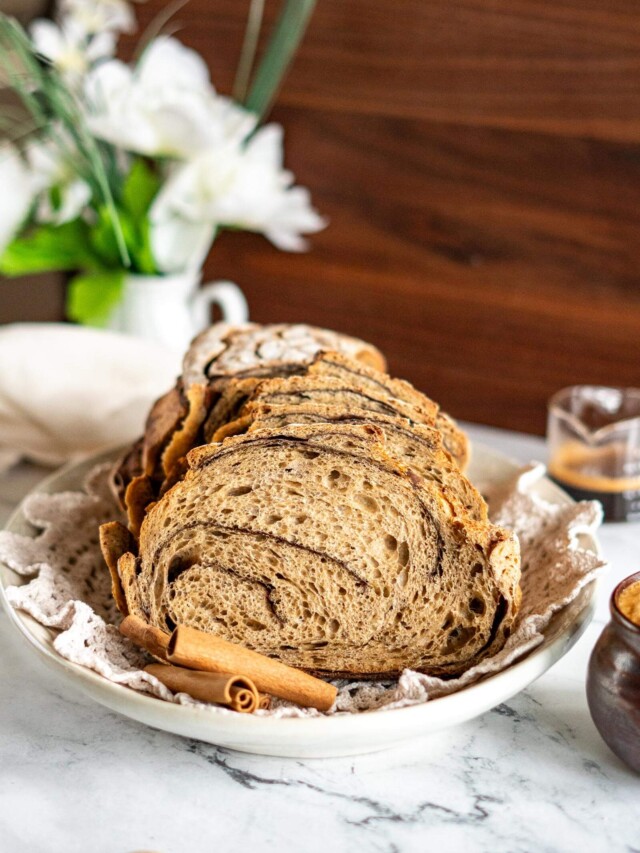
- Chai Sourdough Bread
- Apple Cider Sourdough
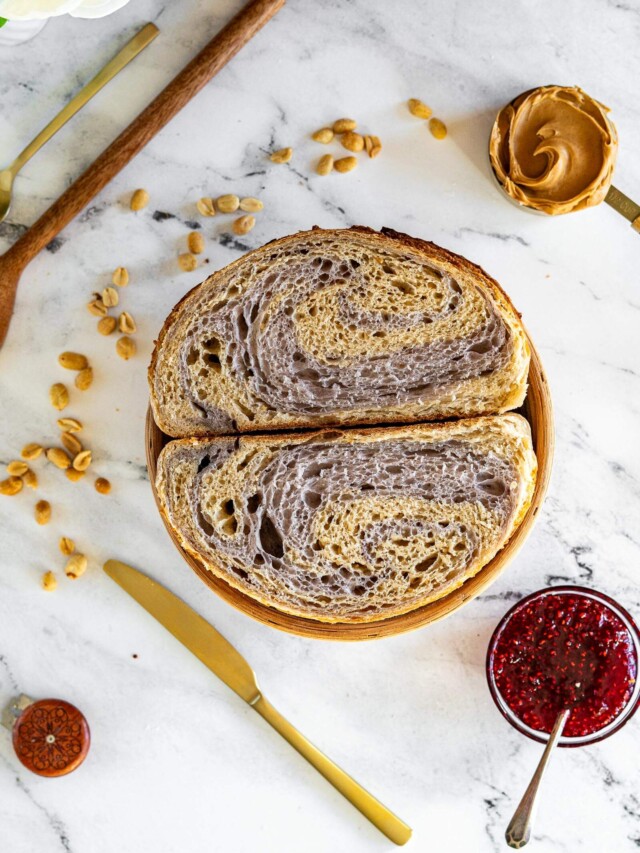
- Peanut Butter And Jam Sourdough
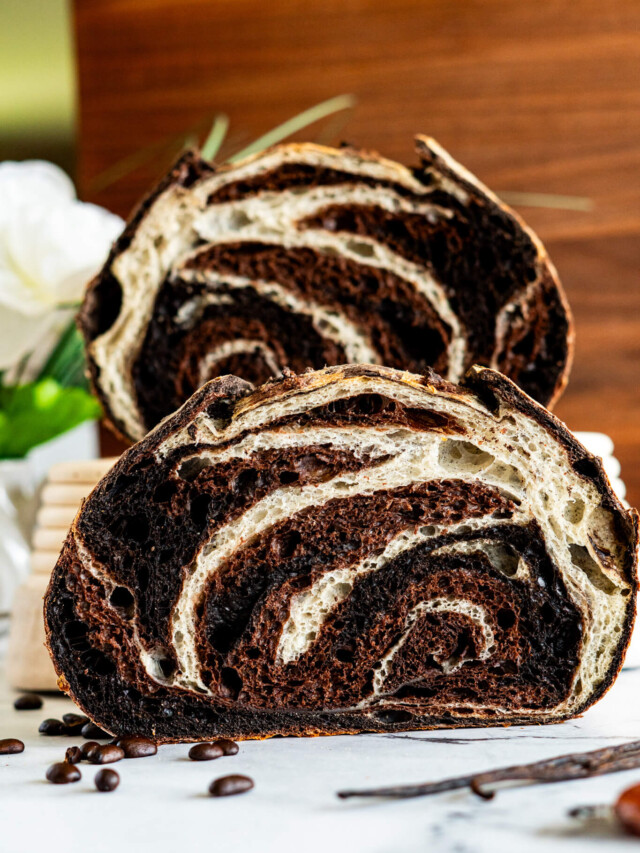
- Chocolate Swirl Sourdough
- Sun Dried Tomato Sourdough
- Sourdough Apple Fritter Focaccia
- Pumpkin Sourdough Bread



















I have tried cold fermenting my sourdough bread, but the loaves appear smaller once baked.
Technique: Immediately after I shape the dough I place the dough in their bannetons, cover them, and put them in the fridge (37F) for 24-48 hours.
I remove them once the oven is at 490F (the dutch ovens( lids on) are preheated in the oven) and cook them for 15 minutes then remove the dutch oven lids, lower the temperature to 470F and cook for an additional 22 minutes. should I be trying a different cooking technique?
Hey Michael, it may depend on the recipe you’re using and the percentage of starter. If you want to try proving the dough in the banneton for a couple or three hours after shaping and then refrigerating that might help you get a little more rise! You can also experiment with longer cold retard times, I push it and experiment a lot. If a recipe has a low starter percentage I may even leave it in there for 5 days LOL!
I find proofing in the fridge with a brioche dough works so much better than with the sourdough.
Interesting, I wonder if its because of the extra ingredients in brioche?
Hi! I have moved into a new place and my sourdough isn’t rising in the oven like it used to at my old home. I still live in the same city, but the season is different. I’ve only been making sourdough for 6 months, so I’m still learning. It is now peak temperatures for the summer time where I live and instead of taking 3 days to make sourdough it only takes 1.5 days. I let my bread proof in the fridge overnight. Would potentially leaving it in the fridge longer help it rise better in the oven?
Hey Syd, sourdough is a learning curve isn’t it! Once you think you got it figured something else changes! Ha! If your temperatures are really warm, absolutely keeping the dough colder would allow you to impart more flavor and gluten development.
Another small step you can take is to make your bread with cooler water instead of warm. The bulk ferment can last a bit longer that way as it comes to room temp.
So I tried this method! New to the sourdough world, but for my 3rd attempt it has definitely turned out the best. The previous 2 were very dense. The only issue I found with this loaf, it did not get as brown on top and had 1(only 1) large whole(or bubble). Not sure why, but so so good. Do you think anytime frame in the refrigerator will yield the same results? 48 hours was sooo long. But definitely worth the wait!
Annie, I’m curious what recipe you’re using and how the bulk fermentation looks for you. I think, if your dough is really dense, it needs more time at room temperature in between the stretch and folds, or higher bulk fermentation temperatures. The fridge adds a little airiness to you’re dough, but I find it develops more flavor than volume.
I’m a total newborn at baking sourdough bread. After reading all of you advice, suggestions and knowledge, I feel confident my 4 loaf will turn out pretty good. I live at high altitude and those recipes just failed (probably me). So I went for a regular recipe, which is cold proofing now, seems to have done much better. I’ll be sure to share pics once I bake tomorrow. Again thank you for all your help.
Always Baby Steps
Sherry
Sourdough is a total learning curve. You’re going to fail along the way- most of the failures are edible, so its not so bad- but I can totally relate. As with anything, take your time, enjoy the process, and it will come <3
Hi, I have been cold fermenting with my bannetons covered tightly with a plastic bag. When I pull them out just before baking in my outdoor wood fired oven, they are soaking wet and very sticky on the top. I have to flip them over on my peel to slide into the wood oven, and they stick to the peel and the only way I can get them off the peel mangles them and they flatten out and look like a flat blob that doesn’t rise. I’ve tried semolina powder on my peel, taking the bag off 30 – 60 minutes before baking and leaving in the fridge to dry it off. My best (so far) solution is to toss more bread flour on the loaves until they are “drier” before flipping onto the peel (and still use a ton of semolina). But often they still stick to the peel. On the rare occaisons that I bake in my electric oven using dutch ovens, I can flip the “wet” loaves onto bakers parchment and then hand lower the parchment into the dutch ovens and everything works great. Thanks for any suggestions!
What is the hydration level of your dough? That’s the only thing I can think of that would make them sweaty?
@Paul Maynard, I had this same problem. Turns out my dough was too wet from the start. I was using a simple recipe of 4oz starter, 12 Oz warm filtered water, 20 Oz unbleached bread flour and .875 Oz sea salt. I jacked up the flour ratio to 23 Oz and the salt to 1 Oz and my dough has been perfectly manageable and consistent every time.
Thanks for sharing Joe, love it when my readers help each other out!
@Joe T, I’m glad to read your post … mine are always sweaty, too, so I’ve been baking in loaf pans. I may tinker with the ratios a bit next time!!
@Paul Maynard,
I would just do the same in the wood fired and put parchment paper on the peel and slide both onto the oven floor.
Sooooooo, from the fridge to the oven ? You don’t let it warm up ? I have been leaving it in the fridge , but have let it warm up then I bake .
I bake straight out of the fridge all the time! You can certainly leave it on the counter for a couple of hours to warm up, but I have never found that necessary
My loaves are always smaller following cold retard for 24 hours, and they take longer to bake.
Normally I bake at 490F for 15 minutes with the lid on my dutch oven and 19-22 minutes at 470F with the lid off for dough that proofs on the counter for 4-6 hours.
Using a thermometer the the cold retard bread is never finished in this time frame, requiring 5-10 minutes longer with the lid off at 470F.
thoughts
Interesting! My baking process is slightly different, and may benefit your cold retard process – I bake at 450f covered for 30 minutes, then uncovered for 5-10 depending on crust color. This might allow a bit longer for the chilled dough to expand and add oven spring!
So I just want to make sure I’m understanding this correctly, you don’t proof at room temperature at all? You proof all in the fridge after you do the stretch and folds?
Yes, that’s exactly right! You can proof it at room temp then toss in the fridge or inverse it and toss it in the fridge then bring it to room temp before baking if you like? It takes a long time for the dough to fully chill and it continues to proof while warm in the fridge for a couple of hours I’m sure.
Hi! Thanks for this. What I do is stretch and folds and then I let it proof for 4-6 hours in the same bowl. I find that gives it amazing sour flavor. Then I shape and let it sit for a just a bit so I can zipper seal the loaves. Then I cover and put in the fridge usually for 12-18 hours depending on my day. They come out beautifully. I once let them puff in the banneton on the counter after shaping and when I baked them they were so flat. It was so long a room temp ferment.
Thank you so much for this article!
I’m having trouble with my bread not springing in the oven after I cold ferment. Some days I need extra time before I bake , and on those days- I put the shaped dough in the fridge for about 4 hours- then I let it rise on the counter for an hour or so before I put it in the oven. Each time I cold ferment- my bread always comes out super dense. Any thoughts about why? Could I be over proofing? Under proofing? Should it not sit on the counter after being in the fridge? Thanks!
I would guess, and I don’t know without seeing the crumb, that it’s under-fermented. Either your starter was sluggish when you used it to make bread (guilty) or it was not proofed long enough, or a combination of both. As soon as you place that sourdough in the fridge and the dough is completely cooled, the fermentation slows considerably – that said, chilling it for 4 hours is unlikely to make a huge difference, and it probably takes at least that long for the bread to chill throughout.
What is the process and timings you use for your bread making? Under fermentation can also be caused by too short of a bulk ferment during the stretch/fold/shape stages.
Hi! Can I proof shaped sourdough rye pumpernickel in a plastic bag covered banneton in the fridge?
Yes absolutely!
Wrong! Do NOT cover your sourdough loaf with plastic of ANY kind before putting it into the fridge! Leave it uncovered in the banneton. Sourdough bread is a high hydration dough which will not “dry out”. Instead m it will develop a “skin” that goes into giving your loaf a beautiful, crisp crust.
Hey Emma – that’s the cool thing about baking – there’s more than one method that works! I haven’t tried to leave them uncovered, but I might next time, but that said, the bags I use aren’t air-tight, and my loaves definitely develop a skin.
I’ve been covering it with a damp towel I keep for that purpose. Should I skip that?
Not at all, if that works, keep trucking!
@Emma,
It is not wrong to cover your sourdough with plastic while in the fridge. Lots of people do it this way, and have been very successful.
Hello, I have a question, late last night I decided to start a sourdough bread, I went as far as stretching and folding my dough, then realized I couldn’t stay up any longer so at 3 am I put the dough in the fridge, how long can I keep it in the fridge before I can resume working on my dough
Sorry for the delay in getting back to you, we were at the beach for the last week! In the future, if you run into a time crunch, you can always shorten your stretch and folds, or do 1 less cycle. Shape the loaf then pop it in the fridge.
I’d avoid placing it in the fridge until shaped, as it would be very difficult to pick up where you left off with cold dough.
@Italia Mirijello, so glad you asked this,as I literally just did what you did. How did your bread turn out? This is only my second loaf and I’m expecting nothing great, lol.
Thanks for the reminder that the shaped dough can hang out for longer in the fridge. I typically keep mine in from anywhere from 8-16 hours and it bakes up so well in the Dutch oven. I sometimes feel rushed if it’s been in the fridge for longer than that so I’m glad you did a 48 hour time frame. It’s always worth the wait. Sourdough is so much fun.
It is so much fun! I’d definitely give it a try extending your cold ferment time. I often make up the dough Sunday and bake Monday/Tuesday but I’ve never saved a loaf to compare before this post, and I was really shocked by the results of the crumb when I put them side by side – the 48-hour loaf was by far the better-developed loaf. Play with it a bit, or do like I did and make 2, and have the only variable be cold ferment, it will help you nail down your starter’s best time frame.