
Sun Dried Tomato Sourdough

Sun dried tomato sourdough bread combines tangy sourdough, sweet sun-dried tomatoes, and salty parmesan for a bold, savory artisan loaf with a crisp crust and chewy crumb.
More savory sourdough bread recipes: Green Olive Sourdough, Pickle Sourdough, Caramelized Onion Sourdough.

Craving The Recipe Details?
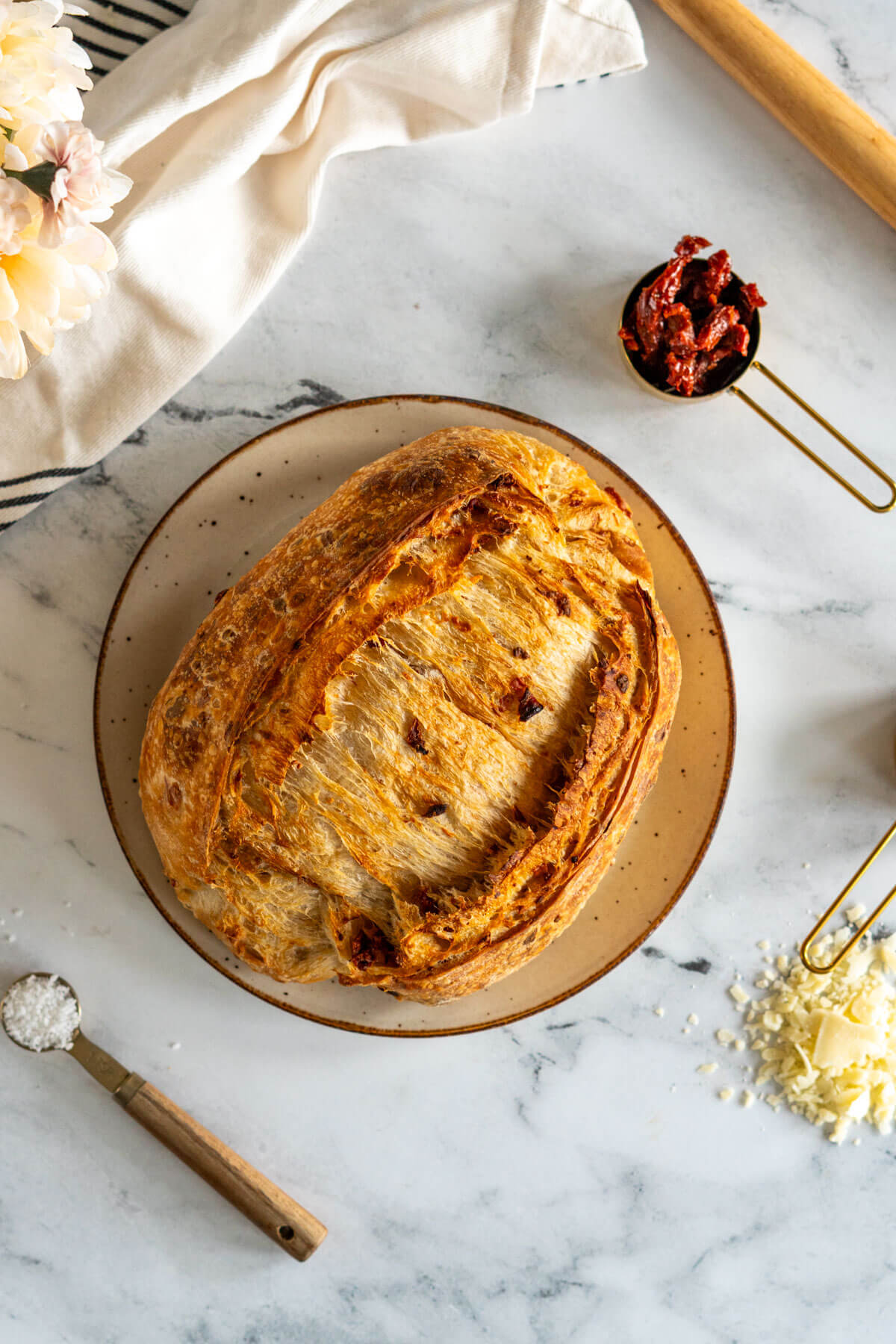
What it is: A bold naturally leavened artisan sourdough bread packed with intense sun-dried tomatoes and salty parmesan petals, with a chewy crumb and a crisp, golden crust.
Why you’ll love it: Tangy sourdough base with deep, concentrated tomato flavour and distinct pockets of salty parmesan in every slice.
How to make it: Whisk your active starter into water with chopped sun-dried tomatoes, mix in flour and salt, fold in the parmesan petals at the first stretch and fold, then ferment, shape, and bake in a dutch oven to golden perfection.
A classic sourdough is one of my favourite things to bake. Simple, tangy, endlessly satisfying, like my same day sourdough or whole wheat sourdough. There’s a reason it never gets old.
But sometimes your palate calls for something with a little more going on. Something that tastes like you put real thought into it, because you did.
This sun dried tomato parmesan sourdough bread is built on the same base you already know, with two additions that completely change the experience: oil-packed sun-dried tomatoes for deep, concentrated flavour, and shaved parmesan petals folded through the dough so every slice gets pockets of salty, nutty cheese instead of a uniform background hum.
This sun-dried tomato and parmesan sourdough is dedicated to a little more.

Master Your Sourdough Starter In 5 Days!
From Confused To Confident.
Find success with 5 simple, actionable secrets delivered to you. No more guessing games – just clear, proven steps to a thriving starter.
Jump to:
Key Ingredients
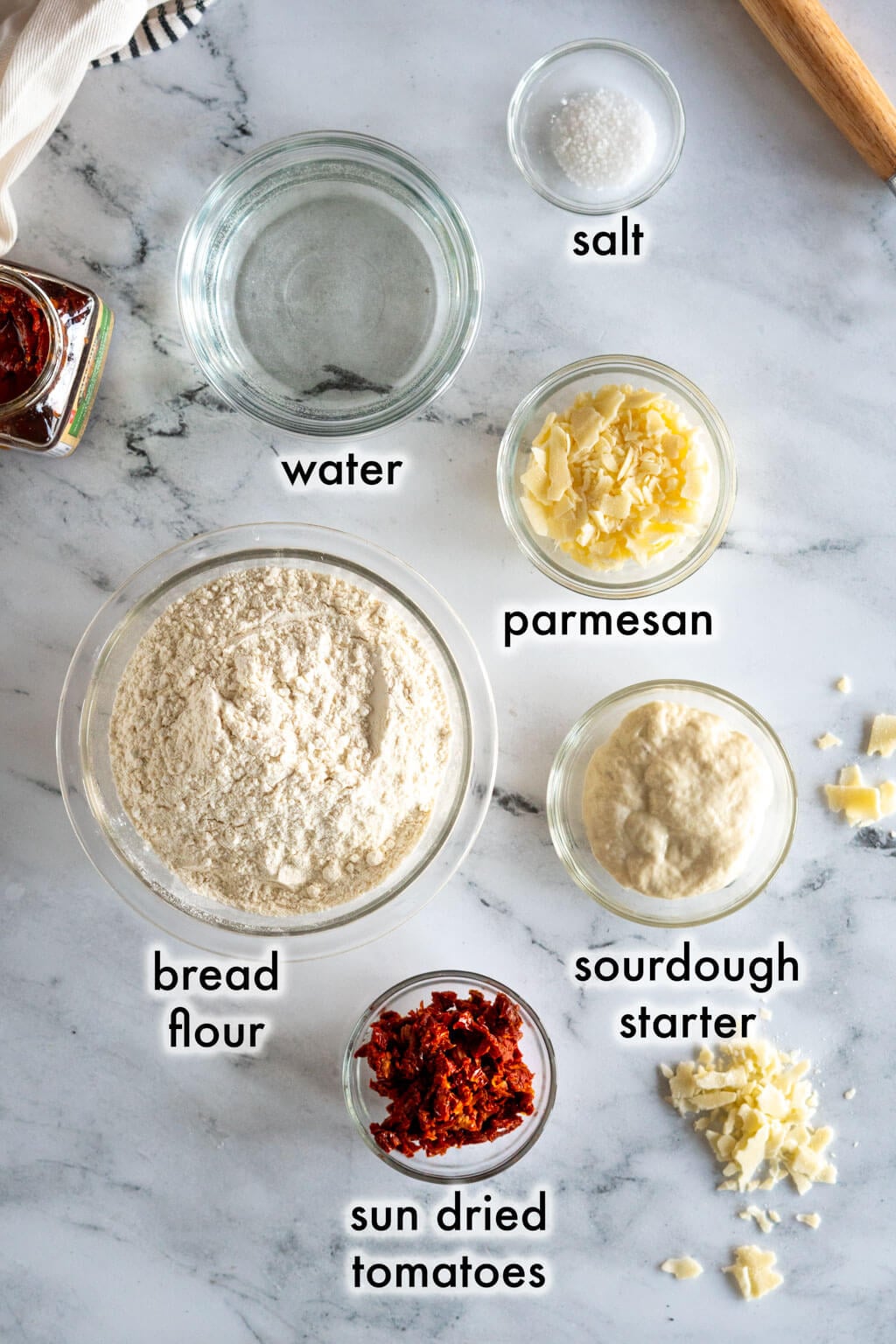
Sun dried tomatoes: While I love dehydrated tomatoes, I prefer to use sun dried tomatoes in oil for this recipe. I used store bought tomatoes for this recipe because I ran out of homemade sun dried tomatoes! But either will work.
Parmesan petals: Parmigiano reggiano cheese has a nutty, salty, umami flavor that pairs well with tangy tomatoes. Parmesan petals create pockets of intense, salty flavor throughout the loaf, while shredded or grated parmesan tends to get “lost” in the dough, altering the base flavor of the loaf rather than offering varying flavors and textures.
Sourdough starter: This recipe requires a fed and active sourdough starter at 100% hydration. Your starter should have been recently fed and should have at least doubled in size.
Psst.. Want to know more about feeding your starter, storing sourdough starter, how to use discard, or even which is the best jar for your starter? I've got tons of guides to help you!
Variations + Substitutions
This loaf is a great base for playing around. A few variations worth trying:
- Swap the cheese. Aged white cheddar melts more completely than parmesan and gives you a sharper, slightly gooey result reminiscent of pizza bread. Pecorino romano works beautifully if you want something saltier and more intense.
- Add garlic. A whole head of roasted or smoked garlic, squeezed out of the skins and folded in with the parmesan petals, takes this loaf somewhere close to garlic bread territory. It’s as good as it sounds.
- Add fresh herbs. A small handful of fresh basil, oregano, or thyme folded in at the first stretch and fold completes the Italian flavour profile.
- Go olive and tomato. Replace half the sun-dried tomatoes with roughly chopped kalamata olives. The brininess of the olives against the sweetness of the tomatoes is a really good combination, and the crumb ends up with more visual interest too.
- Add a little heat. A pinch of red pepper flakes or a few finely sliced chilies added with the tomatoes at the start gives the loaf a gentle background heat that builds as you eat it. It pairs surprisingly well with the parmesan.
How To Make Sun Dried Tomato Sourdough
Make The Dough:

- Step 1: In a large bowl, combine 300g of room temperature water and whisk in 65g of active sourdough starter until mostly combined.

- Step 2: Chop 50g of sun dried tomatoes, then squeeze in a paper towel to remove excess oil. Add to sourdough starter mixture and whisk in.

- Step 3: Dump 400g unbleached bread flour on top of the sourdough starter blend. Using a danish dough whisk, spatula, or spoon mix until a shaggy dough forms. Knead the dough with your hands until all the dry bits are incorporated.

- Step 4: Sprinkle 8g of salt across the surface of the dough.
- Step 5: Cover the bowl and set aside for 60 minutes.
Stretch And Fold:

- Step 6: Prior to the first stretch and fold, sprinkle the 50g of Parmesan petals over the dough. Adding the petals at this point ensures even distribution through the dough throughout the stretch and fold process.

- Step 7: Using damp hands, grab one side of the dough, stretch it upward, and fold it over the center. Rotate the bowl a quarter turn and repeat until you’ve completed four folds, this is one set of stretch and folds.

- Step 8: Recover the bowl, and set it aside for 60 minutes.

- Step 9: Repeat the stretch and fold process every 60 minutes for a total of 4 sets.
Bulk Ferment:

- Step 10: After the final set, cover the bowl and allow the dough to bulk ferment for about 3 hours in a warm spot.

- Step 11: The dough is ready when it has risen, looks slightly domed, and shows visible bubbles along the surface and edges. If it appears flat or dense, allow more time.
Pre-Shape + Shape:

- Step 12: Uncover the dough and transfer to a work surface or countertop. Gently press and spread the dough into a large rectangle. Fold up the bottom third of the dough as though you were folding a letter, then fold in the right then left bottom corner towards the center. Continue rolling up into a batard or log shape.

- Step 13: Allow the loaf to rest uncovered for 30 minutes.

- Step 14: After the rest, pick up the dough with a dough scraper and flip it over, gently press the dough flat then roll it again. Pinch the ends if you’re making a batard or tuck them in if you’re making a boule.

- Step 15: Dust the dough with rice flour then tuck seam side up into a banneton.
Prove + Cold Retard:

- Step 16: Prove the sun dried tomato sourdough loaf in the banneton for 2-3 hours in a warm place before covering and placing in fridge to cold retard for up to 3 days. The dough should have risen in the banneton by around 50%.

- Step 17: If you want to bake it right after proving, you’re welcome to, but the flavor is better after resting in the fridge.
Don't have a banneton basket? I have a guide on bannetons and banneton alternatives!
Bake:

- Step 18: Place your dutch oven, cloche, or desired baking dish in the oven and preheat to 450f. If you don't have a dutch oven, I do have a guide on open oven sourdough bread baking.

- Step 19: Once the oven is preheated, invert the banneton onto a sheet of parchment paper. Use a lame, sharp knife, or clean razor blade to score the dough, I usually like to make one deep curved slash, but you can get as fancy as you like!

- Step 20: Carefully remove the dutch oven from the oven, and using the parchment paper as a sling, transfer the sourdough loaf from the counter into the dutch oven.

- Step 21: Bake the dough at 450f covered for 30 minutes and uncovered at 450f for 10-15 minutes, or until the loaf is cooked through and the crust is nicely browned. You can test the doneness of the loaf with an instant-read thermometer. Bread is cooked once it reaches 205 - 210 degrees Fahrenheit internal temperature.
Cool:
- Remove baked bread from the dutch oven and transfer it to a wire mesh cooling rack to cool completely before slicing. I like to leave it for at least 2 hours before slicing, as slicing too soon can affect the crumb and texture of your loaf.
Expert Tips
- In order to overcome wet spots and improve oil absorption in the dough, it’s important to drain the tomatoes. I just squeeze them in a paper towel to remove as much oil as possible and I add the tomatoes to the water in the dough – this allows any remaining oil to mix into the water and improve the crumb of the dough as a whole rather than create weird pockets.
- I prefer to mix my liquid ingredients with the sourdough starter before adding the flour because it's much easier to ensure that the starter is more evenly distributed in the dough.
- I’ve reduced the salt level in this recipe to compensate for the salt content in the tomatoes and Parmesan petals.
- Handle the dough gently during the shaping process because the cheese is quite firm and can easily tear. I’ve included a step by step photo guide below to show my process when shaping!
Baker’s Percentages
| Ingredient | Percentage |
|---|---|
| Flour | 100% |
| Water | 85% |
| Starter | 16.25% |
| Sun Dried Tomatoes | 12.5% |
| Parmesan Petals | 12.5% |
| Salt | 2% |
Sun Dried Tomato Sourdough FAQs
There are a few great ways to store sourdough bread to keep it fresh and delicious after baking.
For short-term storage, we just place our loaves cut-side down on a cutting board. This method works great for up to 12 hours, though the crust may get a little too crisp if left much longer. It's our favorite option since we usually finish the loaf before that happens! If you need more time, transfer it to a bread bag after about 16-18 hours to maintain its quality.
Freezing a Whole Loaf:
If you're looking to store your bread longer, freezing is a fantastic option. To freeze sourdough bread, let the loaf cool completely to room temperature. Then, wrap it tightly in plastic wrap, place it in a bread bag, seal it, and pop it in the freezer. Your sourdough will stay fresh for 1-2 months. When you're ready to enjoy it, simply remove it from the freezer, unwrap it, and let it thaw at room temperature for 1-2 hours before slicing and savoring!
Freezing Slices:
For easy, grab-and-go portions, slice the cooled loaf and lay the slices in a single layer on a baking sheet. Freeze until solid, then transfer to a freezer-safe bag or container. This way, you can pull out just what you need. Toast or let thaw at room temperature and you're good to go!
You can absolutely use sun dried tomatoes packed in oil as a sourdough inclusion. Through testing, I found that if the tomatoes are chopped, then squeezed in paper towel to remove most of the oil they perform better. I also like to add the drained tomatoes to the water and sourdough starter mixture, this ensures that any residual oil is incorporated into the liquid portion of the dough, helping to condition the dough rather than leaving oily patches in the bread.
Grated parmesan dissolves almost completely into the dough during fermentation and baking, spreading the flavour evenly but thinly throughout the crumb. Parmesan petals are thin shaved ribbons of hard cheese and they behave differently. They soften and partially melt during baking, but retain enough structure to create defined pockets of concentrated, salty flavour in the finished loaf. You get a more intense, identifiable hit of parmesan in each bite rather than a subtle background note that’s hard to place.
It depends on the inclusion.
In this recipe, the sun-dried tomatoes go in right at the beginning and are mixed into the water and starter before the flour is even added. Because they’re soft and oil-packed, they integrate easily and their flavour becomes part of the dough itself rather than sitting in pockets.
The parmesan petals go in later, at the first stretch and fold. Adding them at this stage means each subsequent set of folds works them evenly through the dough without overworking the cheese into nothing.
As a general rule, soft or liquid inclusions like sun-dried tomatoes, olives, or roasted garlic can go in early. Anything you want to keep in distinct pieces, like cheese, nuts, or dried fruit are better added during the stretch and fold process, timing depends on how evenly you want it distributed.
Why This Recipe Works
Sun-dried tomatoes mixed in from the start. Rather than folding the tomatoes in later, they go straight into the water with your starter before the flour is ever added. This gives them time to hydrate into the dough itself, their oil, their acidity, their deep savory flavor becomes part of the base rather than just a pocket of inclusion.
Parmesan petals added at the first stretch and fold. Folding in the parmesan at the very first set means every subsequent stretch and fold works those ribbons of cheese deeper and more evenly through the dough. By the time bulk ferment is done, you have consistent pockets parmesan throughout the entire crumb, not just where you happened to fold them in.
Cold proofing deepens every flavor. The overnight rest in the fridge slows fermentation right down, giving the tang time to develop fully and the tomato and parmesan flavors time to settle into the dough. It also means a better crust and more defined oven spring when it hits the dutch oven.
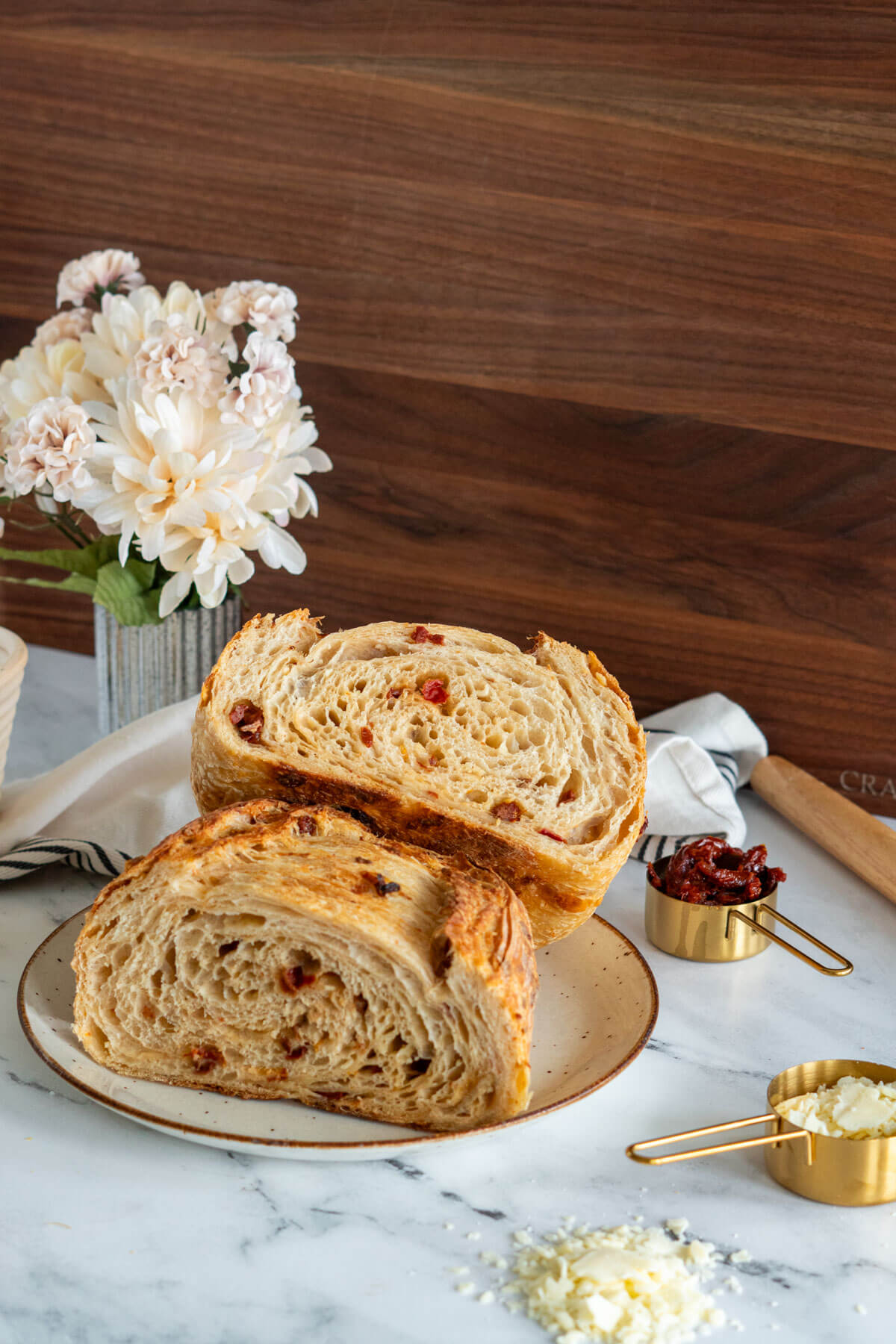
Serving Suggestions
This loaf is good straight off the cutting board with a thick smear of butter, honestly, that might be the best way. But here are a few of my favourite ways to put it to work:
Garlic toast for pasta night. This is my go-to. Brush thick slices with garlic butter and toast under the broiler when you’re serving spaghetti or lasagne. The tomato and parmesan already in the bread do half the work for you.
Loaded bruschetta. Toast slices, rub with a raw garlic clove, and top with diced fresh tomatoes, olive oil, and flaky salt. The sun-dried tomatoes in the bread and the fresh tomatoes on top are a great match.
Soup dunker. Tear it into chunks alongside a bowl of roasted tomato soup or minestrone. It holds up beautifully and the flavours are basically made for each other.
More Sourdough Recipes To Try


If you tried this Sun Dried Tomato Sourdough Bread recipe or any other recipe on my blog, please leave a 🌟 star rating and let me know how it went in the comments below. Thanks for visiting!
📖 Printable Recipe
Sun Dried Tomato Sourdough Bread With Parmesan Petals
Ingredients
- 300 g water, room temperature
- 65 g sourdough starter, active
- 50 g sun dried tomatoes, drained and chopped
- 400 g unbleached bread flour
- 8 g sea salt
- 50 g parmesan petals
Instructions
Make The Dough:
- In a large bowl, combine 300g of room temperature water and whisk in 65g of active sourdough starter until mostly combined. Chop 50g of sun dried tomatoes, then squeeze in a paper towel to remove excess oil. Add to sourdough starter mixture and whisk in.
- Dump 400g unbleached bread flour on top of the sourdough starter blend. Using a danish dough whisk, spatula, or spoon mix until a shaggy dough forms. Knead the dough with your hands until all the dry bits are incorporated. Sprinkle 8g of salt across the surface of the dough.
- Cover the bowl and set aside for 60 minutes.
Stretch + Fold:
- Prior to the first stretch and fold, sprinkle the 50g of Parmesan petals over the dough. Adding the petals at this point ensures even distribution through the dough throughout the stretch and fold process.
- Using damp hands, grab one side of the dough, stretch it upward, and fold it over the center. Rotate the bowl a quarter turn and repeat until you've completed four folds, this is one set of stretch and folds. Recover the bowl, and set it aside for 60 minutes.
- Repeat the stretch and fold process every 60 minutes for a total of 4 sets.
Bulk Ferment:
- After the final set, cover the bowl and allow the dough to bulk ferment for about 3 hours in a warm spot.
Pre-Shape + Shape:
- Observe your dough, the dough is ready when it has risen, looks slightly domed, and shows visible bubbles along the surface and edges. If it appears flat or dense, allow more time.
- Uncover the dough and transfer to a work surface or countertop. Gently press and spread the dough into a large rectangle. Fold up the bottom third of the dough as though you were folding a letter. Fold in the right side about a third of the way across width wise then repeat with the left. Roll from the folded bottom to the top creating a log. Rest the loaf uncovered for 30 minutes.
- After the rest, pick up the dough with a dough scraper and flip it over, gently press the dough flat then roll it again. Pinch the ends if you're making a batard or tuck them in if you're making a boule. Dust the dough with rice flour then tuck seam side up into a banneton.
Prove + Cold Retard:
- Prove your sourdough loaf in the banneton for 2-3 hours in a warm place before covering and placing in fridge to cold retard for up to 3 days.
Bake:
- Place your dutch oven, cloche, or desired baking dish in the oven and preheat to 450f.
- Once the oven is preheated, invert the banneton onto a sheet of parchment paper. Use a lame, sharp knife, or clean razor blade to score the dough, I usually like to make one deep curved slash, but you can get as fancy as you like!
- Carefully remove the dutch oven from the oven, and using the parchment paper as a sling, transfer the sourdough loaf from the counter into the dutch oven.
- Bake the dough at 450f covered for 30 minutes and uncovered at 450f for 10-15 minutes, or until the loaf is cooked through and the crust is nicely browned.
Cool:
- Remove baked bread from the dutch oven and transfer it to a wire mesh cooling rack to cool completely before slicing.


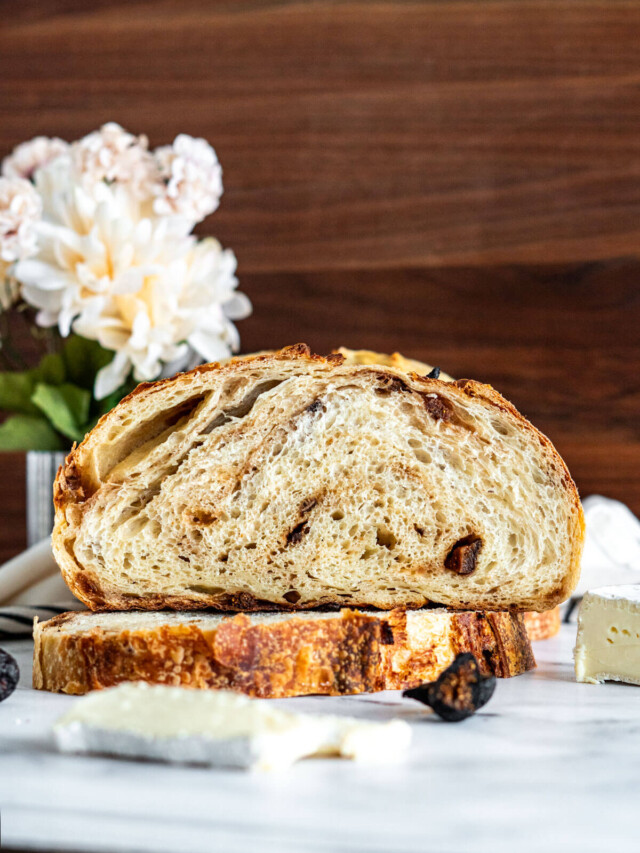

Can you think of a better loaf of bread to turn into garlic toast when you’re serving spaghetti or lasagne? I think not! This one is a real hit when we’re having pasta – my kids often eat it raw with a thick smear of butter on the side.