
Chai Sourdough Bread
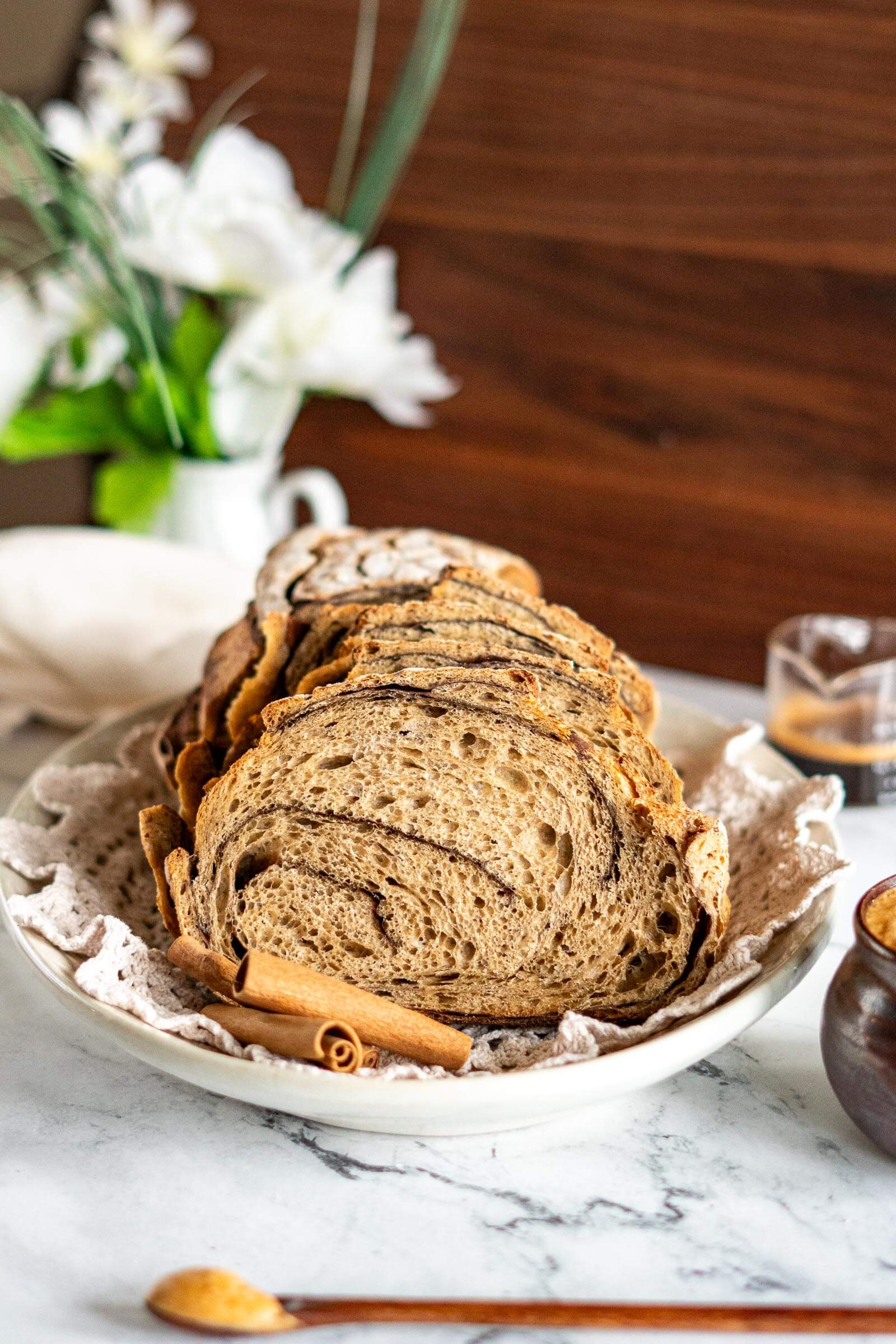
This chai sourdough bread is full of rich, warm flavors thanks to a real chai latte and chocolate chai ribbons swirled throughout. Transform your favorite latte into an artisan sourdough.
Craving The Recipe Details?

What it is: A warmly spiced sourdough loaf made with brewed chai latte, infused with cinnamon, cardamom, and tea flavors wrapped in a soft, chewy crumb.
Why you'll love it: It's a comforting twist on sourdough; aromatic, lightly sweet, and perfect for fall baking, morning toast, or pairing with butter and honey.
How to make it: Mix active sourdough starter with cooled chai latte and flour, then add salt and develop the dough with stretch and folds. Bulk ferment, shape, proof (optionally cold retard), then bake at 450°F until golden.
As the days shorten and the temperatures turn crisp, I find myself reaching for flavors that feel warm, layered, and just a little indulgent. This chai sourdough bread delivers on all of it!
This isn't your typical chai spiced sourdough. Instead of relying on brewed tea or a simple mix of dry spices, the entire dough is built around a real chai latte; steamed milk, chai syrup, and all.
And then there are the chocolate chai ribbons. Rather than mixing everything into one uniform dough, a cocoa spice blend is laminated into the dough during shaping. As it bakes, those layers turn into bold, distinct ribbons of flavor woven through each slice instead of getting lost in the crumb.
This chai sourdough bread recipe is dedicated to a little indulgence.

Master Your Sourdough Starter In 5 Days!
From Confused To Confident.
Find success with 5 simple, actionable secrets delivered to you. No more guessing games – just clear, proven steps to a thriving starter.
Jump to:
Key Ingredients
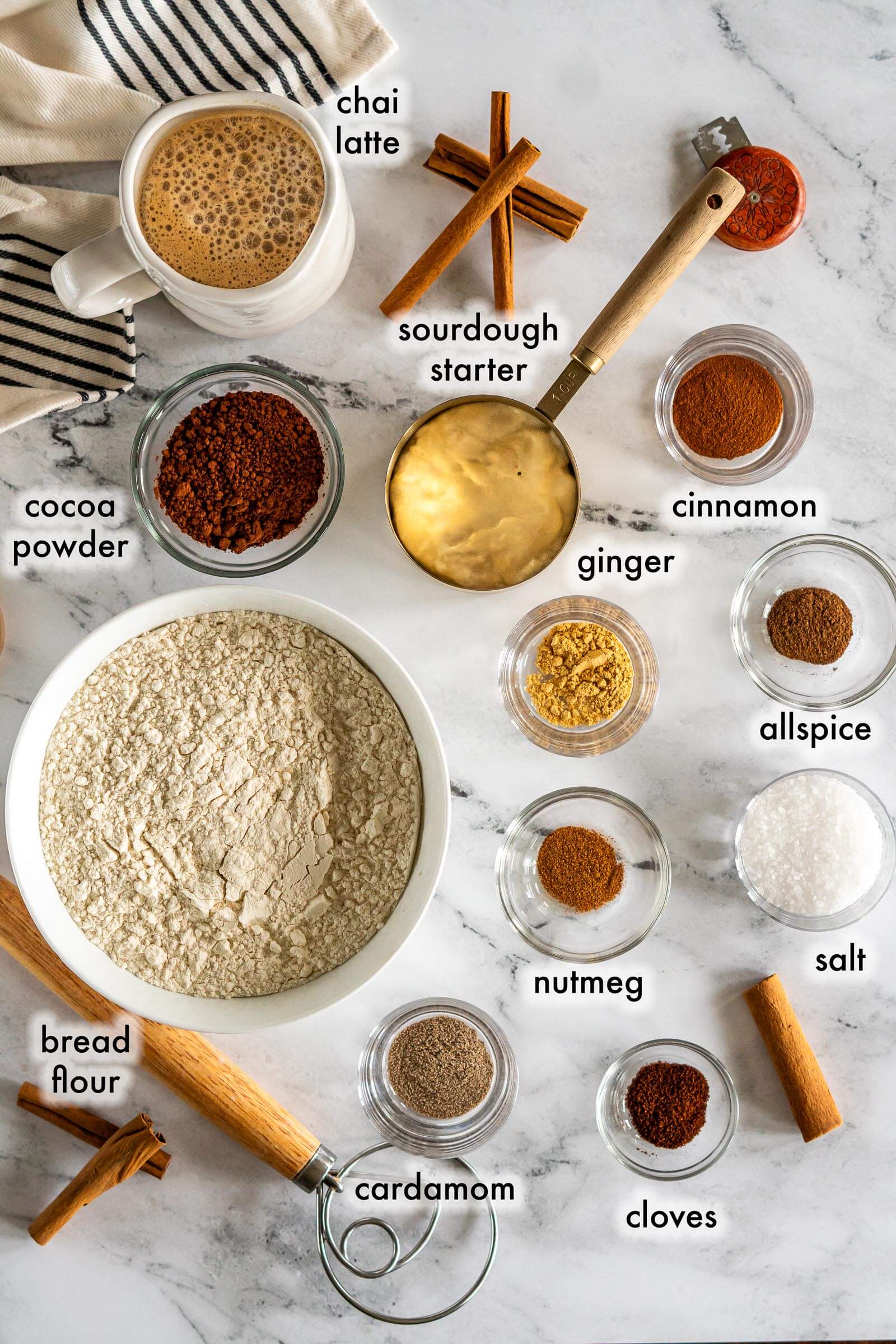
Chai latte: This recipe use an actual chai latte in the place of water to get that extra spicy punch. I made my own latte with my Breville Barista Express and full sugar chai tea spice syrup.
Sourdough Starter: For this recipe, you want to use a fed and active sourdough starter. Your starter should have been fed before beginning and have at least doubled in size.
Variations + Substitutions
- Store-bought chai latte instead of homemade. Any chai latte works, Starbucks, Tazo, homemade concentrate, as long as it’s cooled. Avoid anything labeled “chai-flavored creamer” as the fat content is too high. Note: I have not tested with sugar free syrup.
- Chai tea bags instead of a latte. Brew 2-3 bags in 340g of whole milk heated to 170°F, steep 5 minutes, cool completely. The flavor may be more subtle.
- Chai raisin version: Add 80g golden raisins at the last stretch and fold.
- Honey chai sourdough: Add 20g raw honey to the dough with the latte.
How To Make Chai Sourdough Bread
Make The Dough:
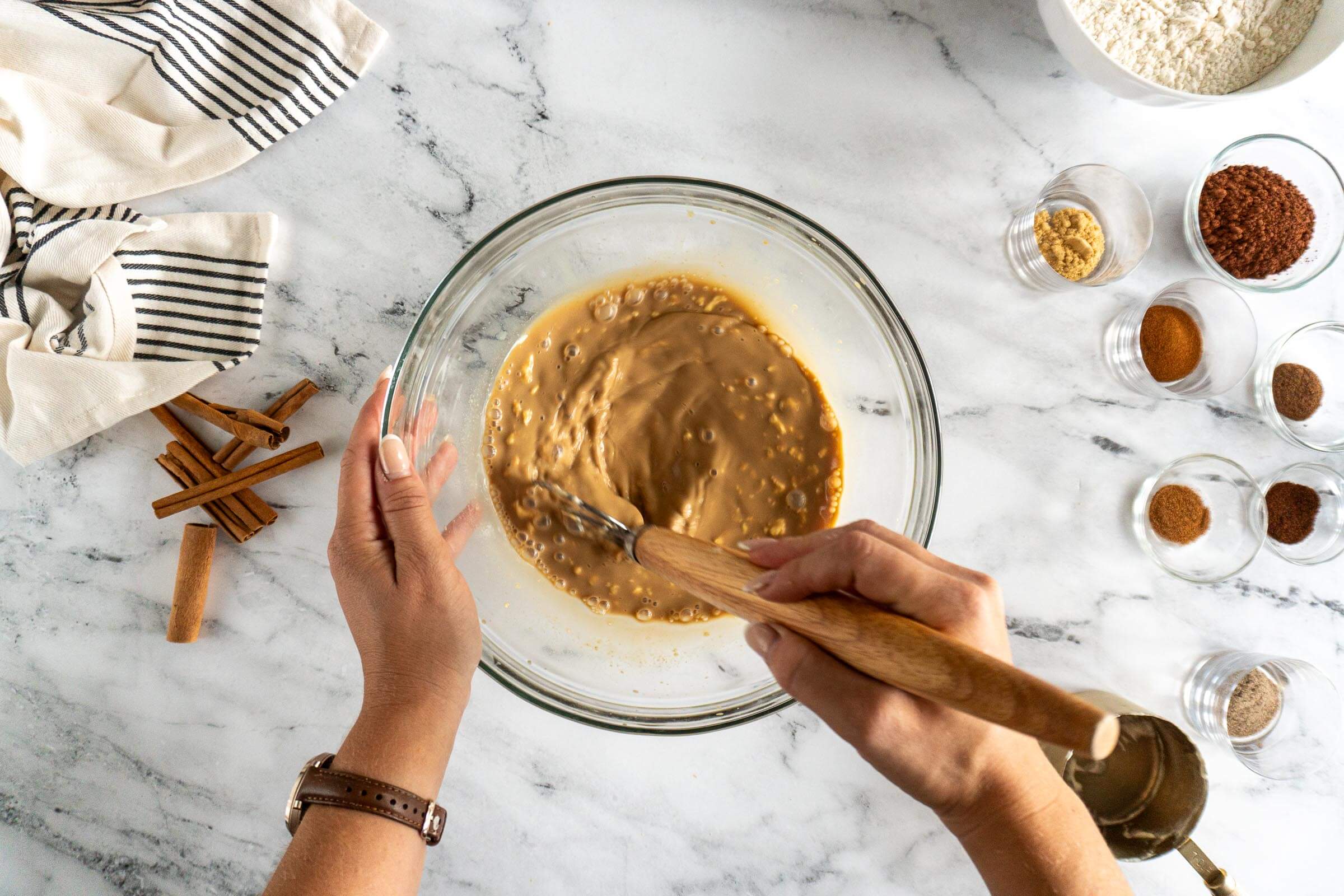
- Step 1: In a large bowl, combine 340g of cooled chai latte and whisk in 100g of active sourdough starter until mostly combined. I prefer to mix my liquid ingredients with the sourdough starter before adding the flour because it's much easier to ensure that the starter is more evenly distributed in the dough. Set aside.

- Step 2: In a small bowl, combine 1 teaspoon cinnamon, 1/2 teaspoon cardamom, 1/2 teaspoon ground ginger, 1/4 teaspoon ground cloves, 1/4 teaspoon all spice, and 1/4 teaspoon nutmeg. Stir until well combined.
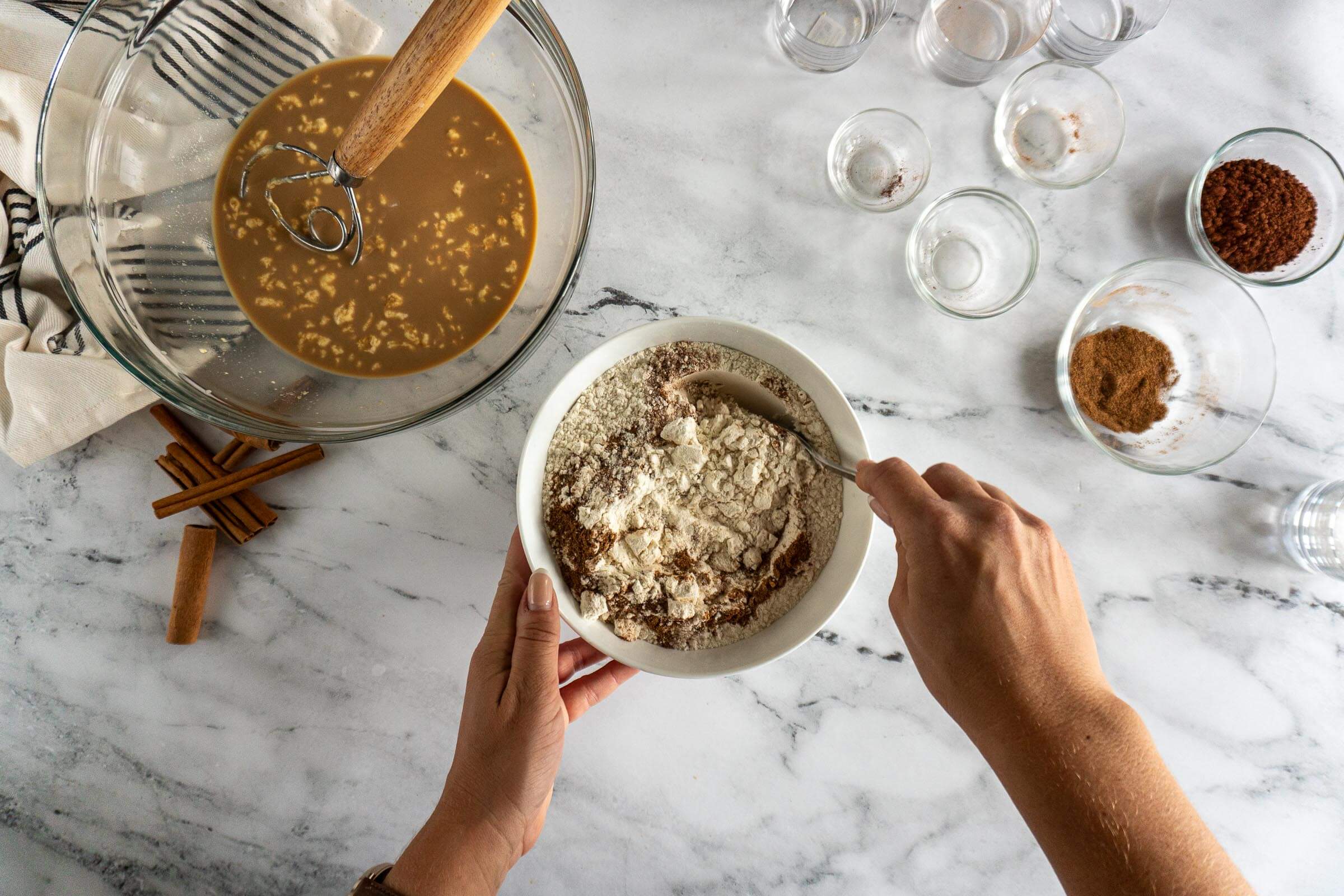
- Step 3: Add 450g unbleached bread flour to a medium sized bowl, then add 1/2 to 2/3 of the spice blend from step 2, plus 10g salt. Stir until completely combined. Reserve the remaining spice mixture for the shaping stage.
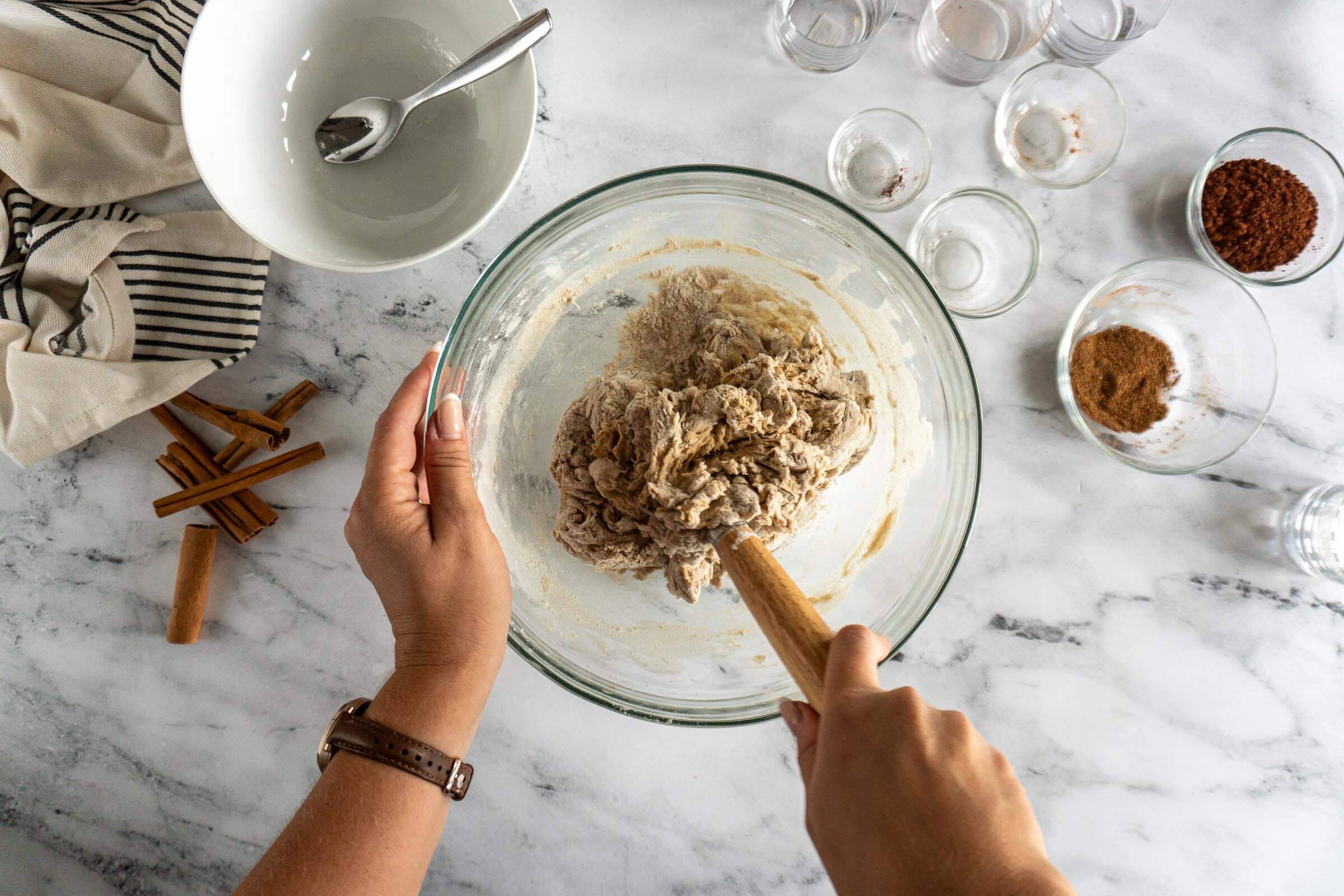
- Step 4: Add flour mixture to the sourdough starter/ latte blend and mix until a shaggy dough forms. Knead the dough with your hands until all the shaggy bits are incorporated.
Cover the bowl and set aside for 45 - 60 minutes.
Stretch And Fold:
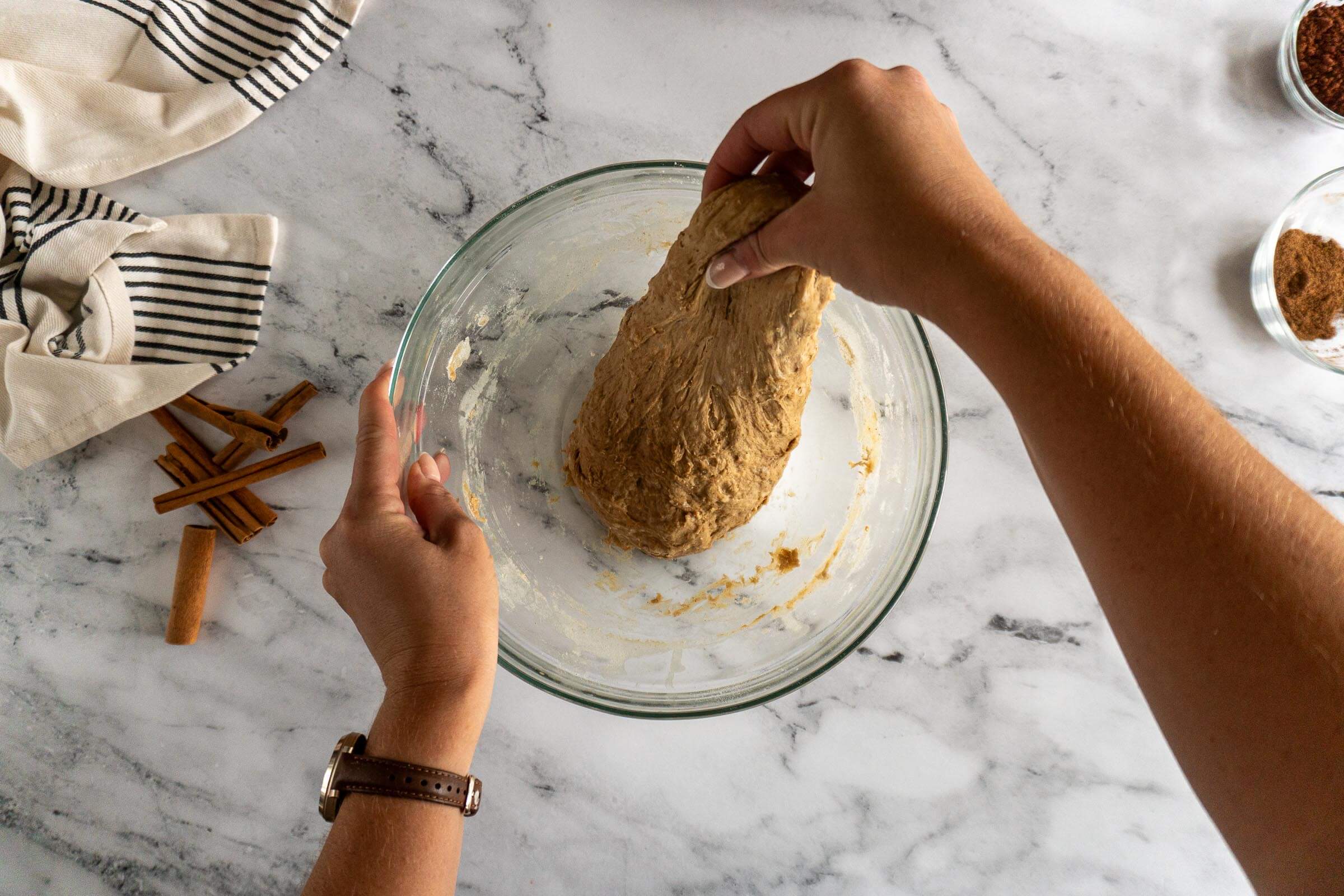
- Step 5: Uncover the bowl and using damp hands, grab the dough and gently pull it until the flap is long enough to fold over itself, then fold the flap, rotate the bowl 90 degrees, and repeat 3 more times, this is considered a set of stretch and folds. Recover the bowl, and set it aside for 60 minutes.
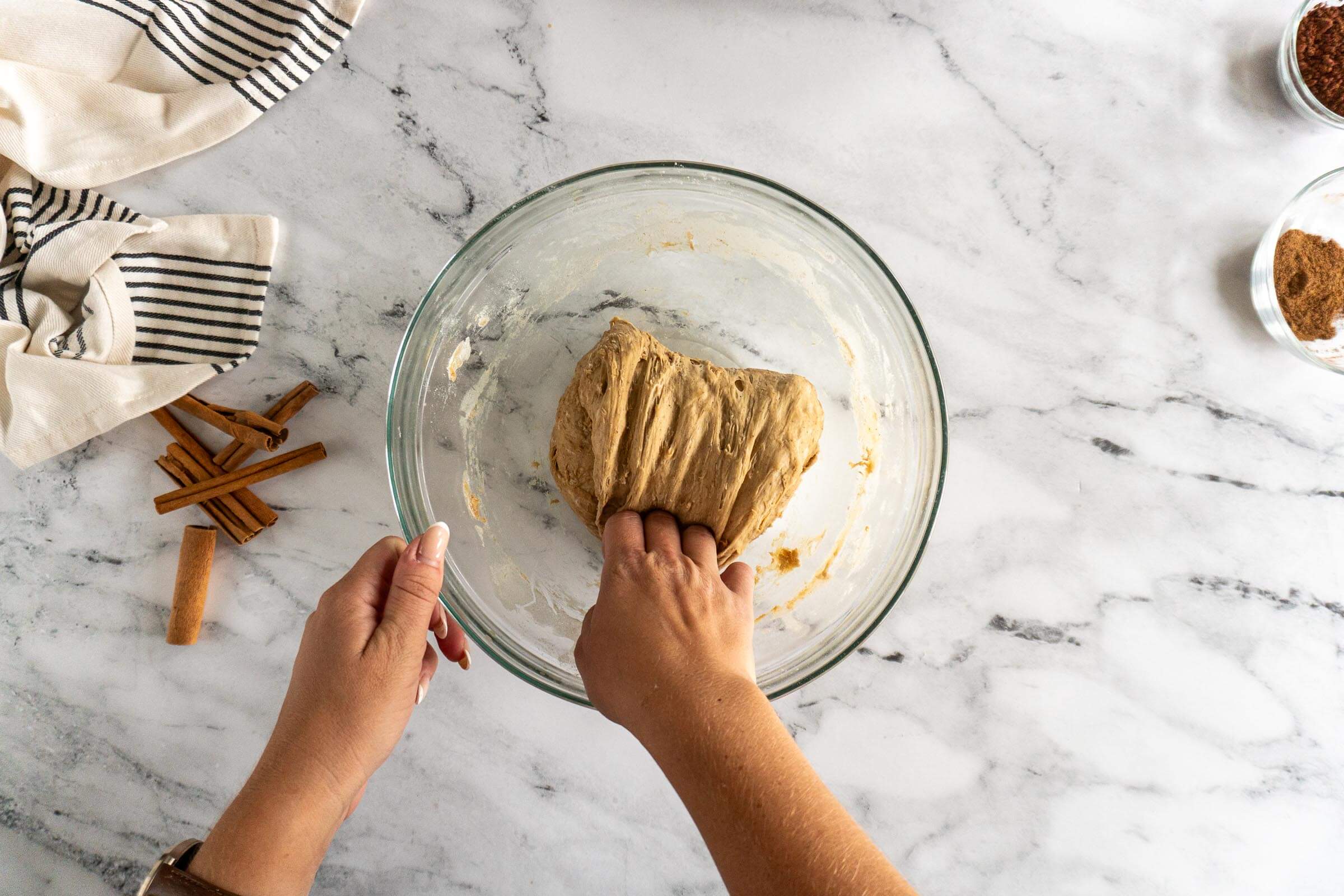
- Step 6: Repeat the stretch and fold process 3 times over 3 hours, for a total of 3 sets of stretch and folds each followed by a 60 minute rest.
Bulk Ferment:
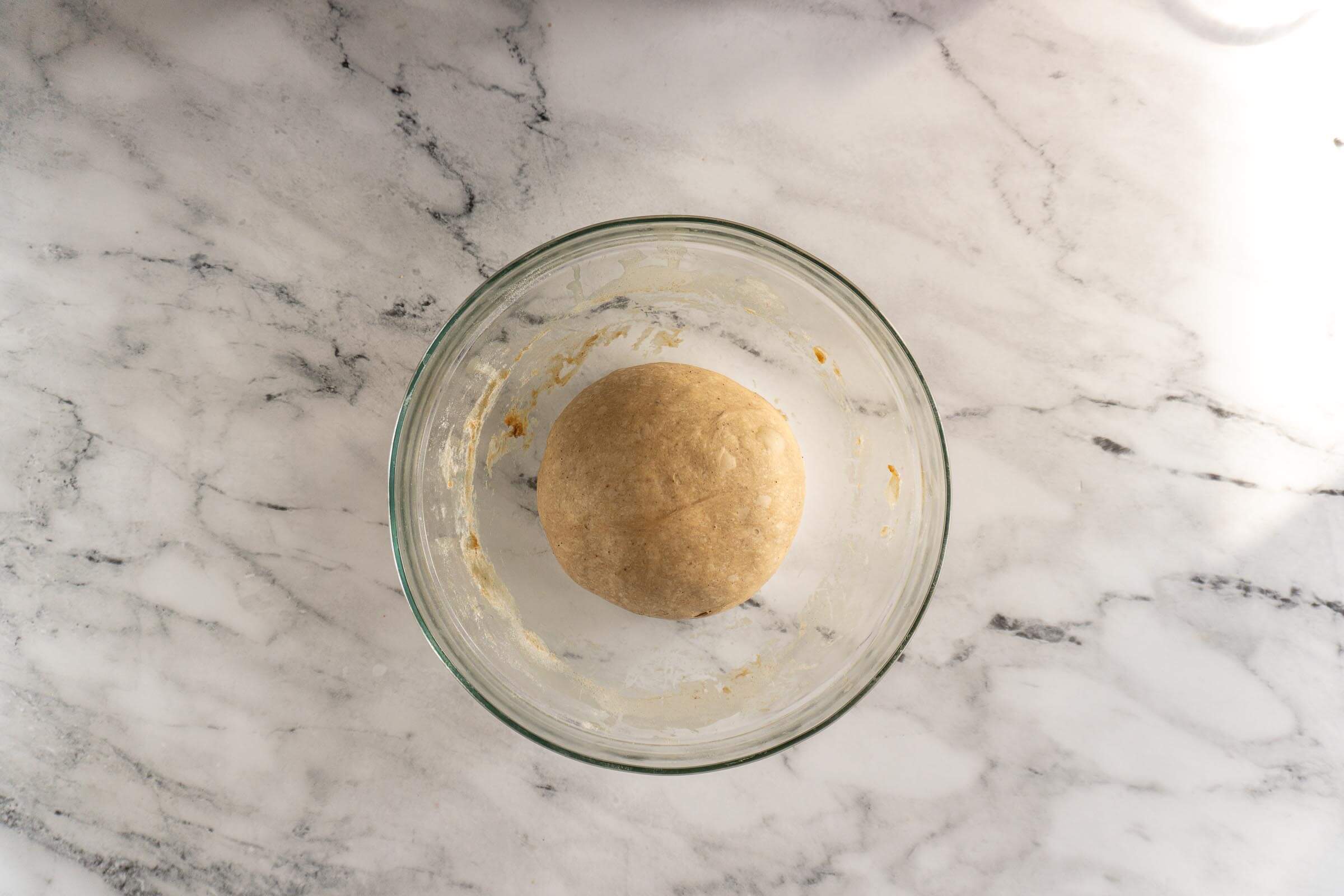
- Step 7: Complete a fourth and final stretch and fold then cover the bowl and set aside for 3 hours to finish the bulk ferment. It is important to keep the dough bowl somewhere warm to encourage the microbes to work quickly!
Shape:
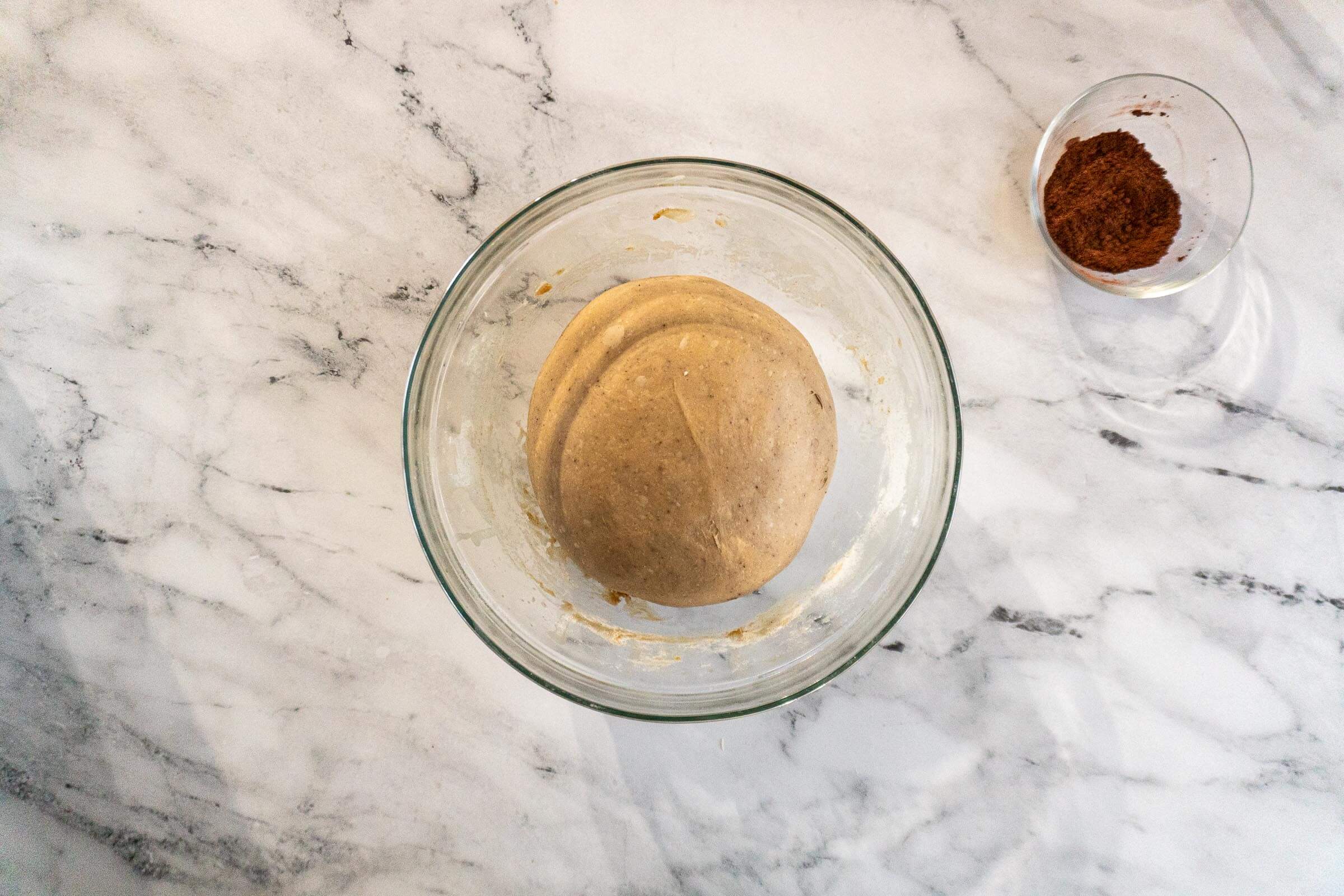
- Step 8: Observe your dough, at this point, the dough should have risen in the bowl, and have a smooth surface with visible bubbles. If the dough is domed in the bowl it is ready to work with, if the dough is flat it may need more time in the bulk ferment.
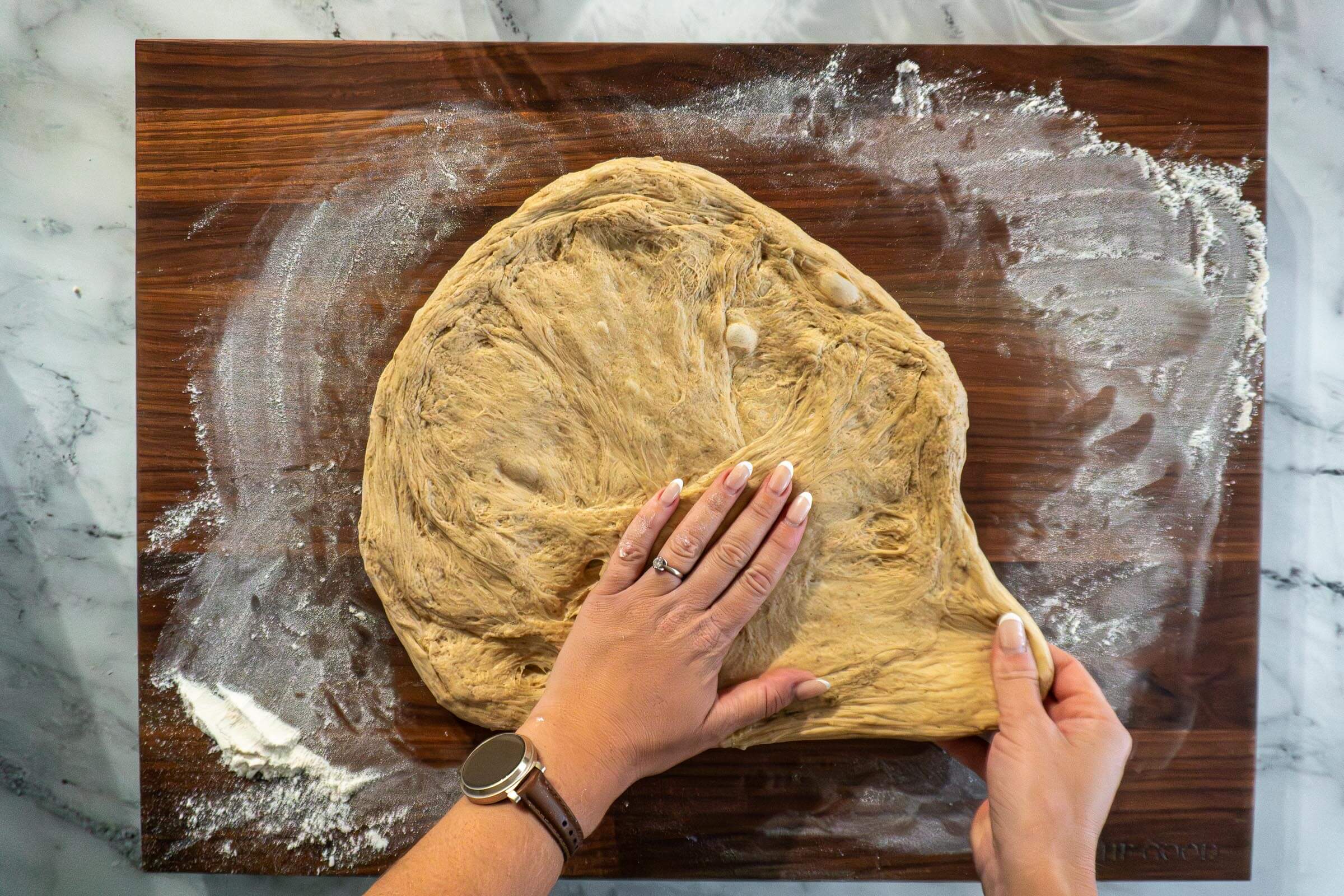
- Step 9: In a small bowl, combine the remaining spice mix and 1 tablespoon cocoa powder. Set aside. Uncover the dough and transfer to a work surface or countertop. Gently press and spread the dough into a large rectangle.
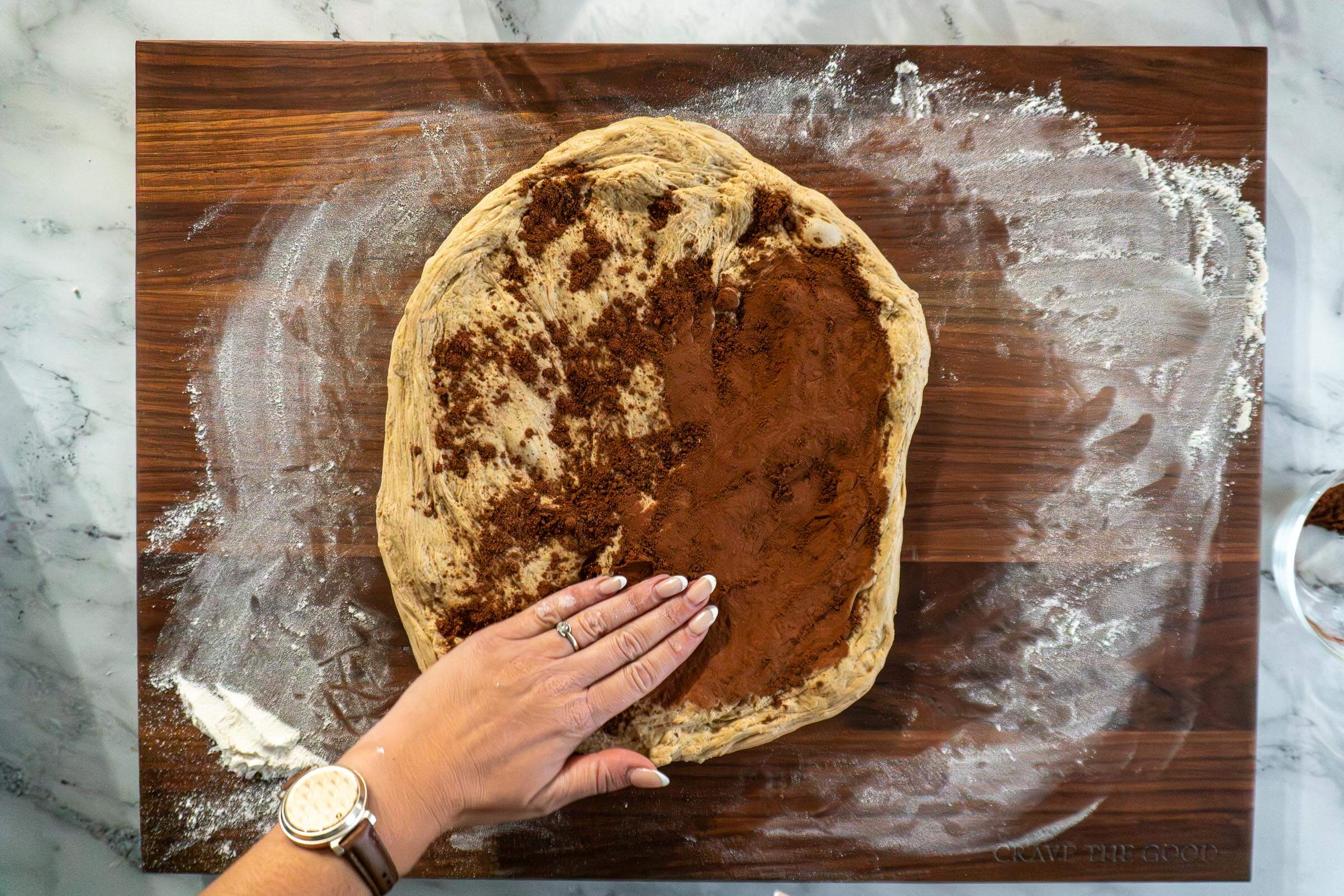
- Step 10: Sprinkle the cocoa powder mixture over the surface of the dough, and spread evenly across the surface, leaving a gap along the edges.
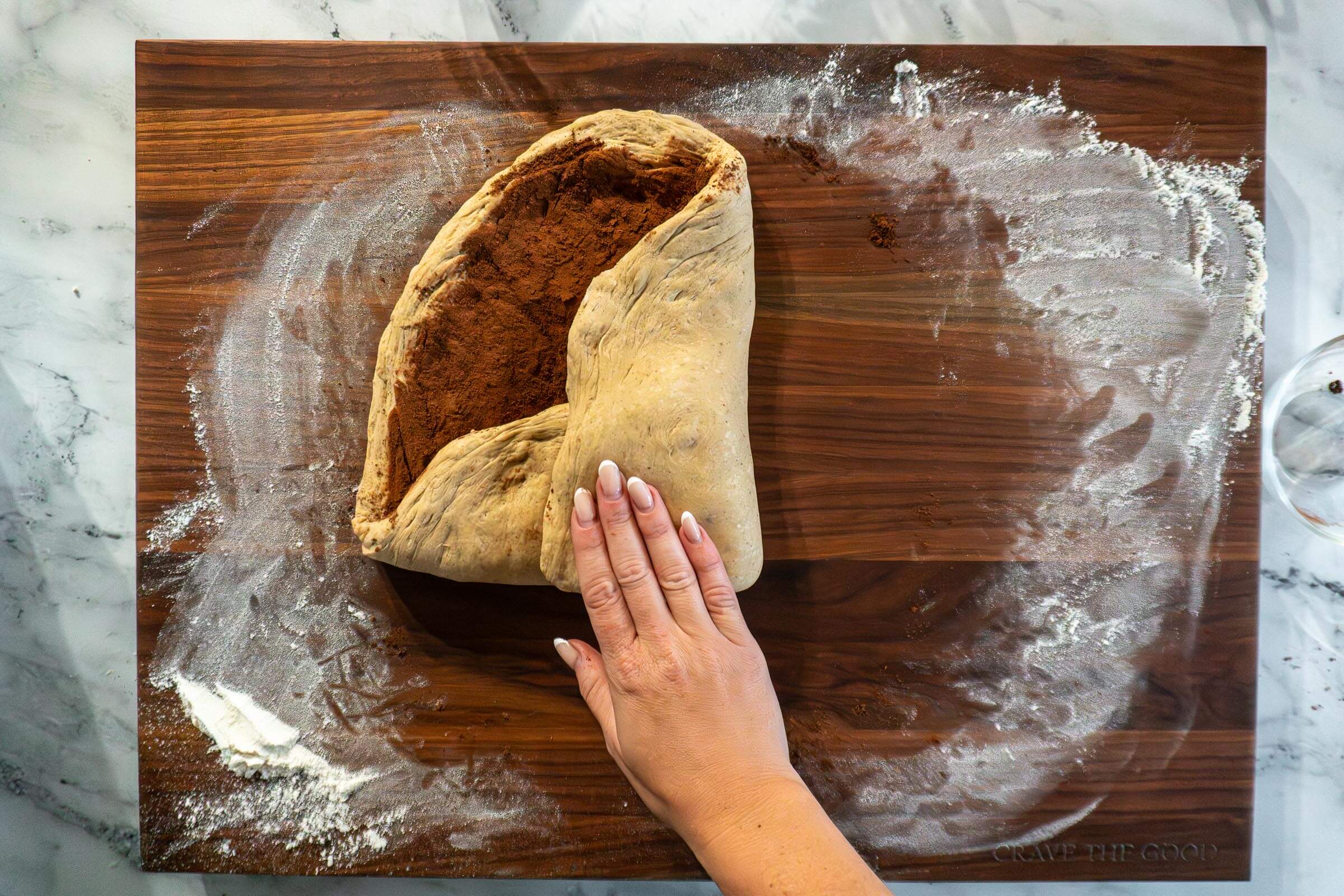
- Step 11: Fold up the bottom third of the dough as though you were folding a letter. Then fold in the right then left bottom corner towards the center.
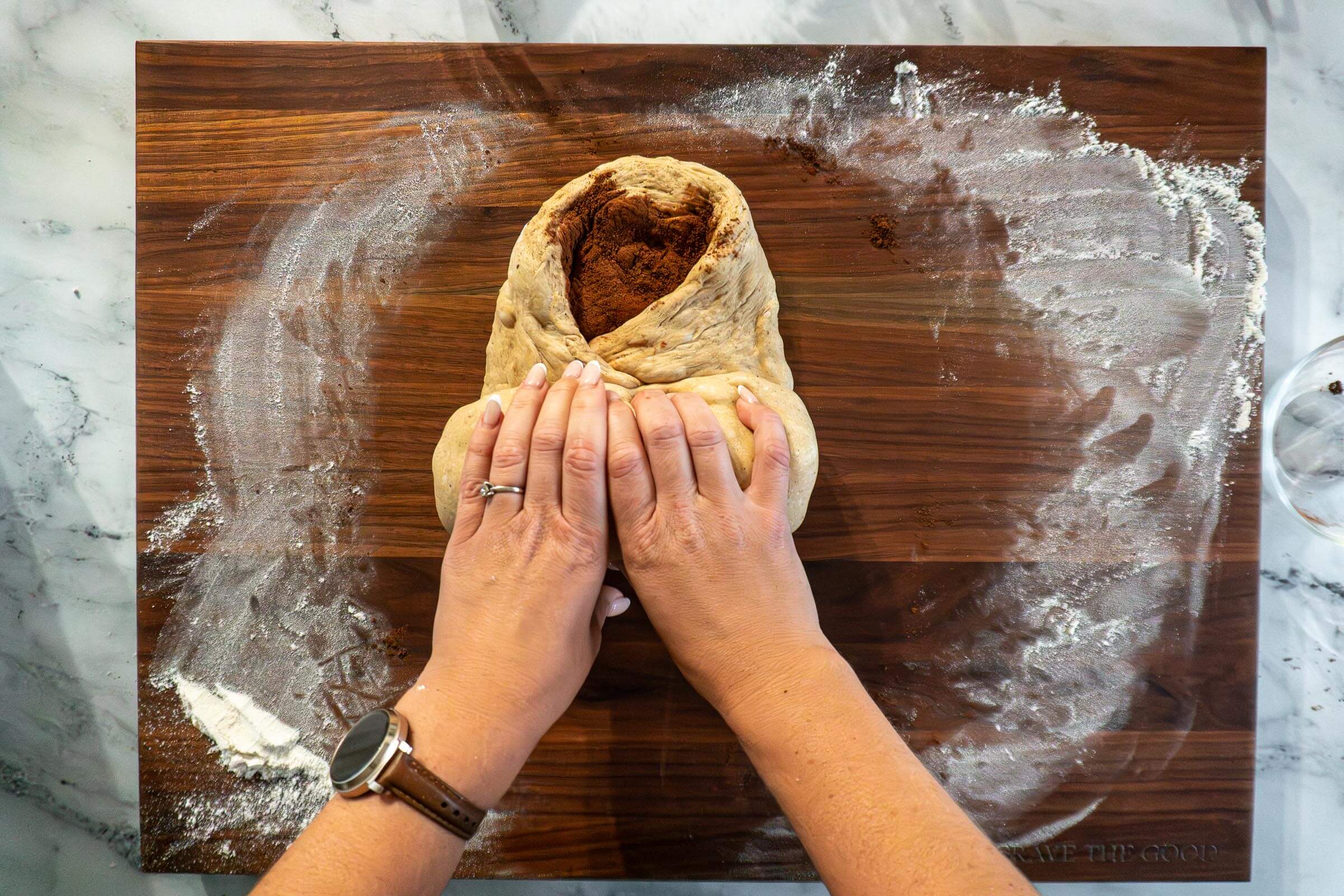
- Step 12: Continue rolling up into a batard or log shape.
Pinch the ends if you're making a batard or tuck them in if your making a boule.
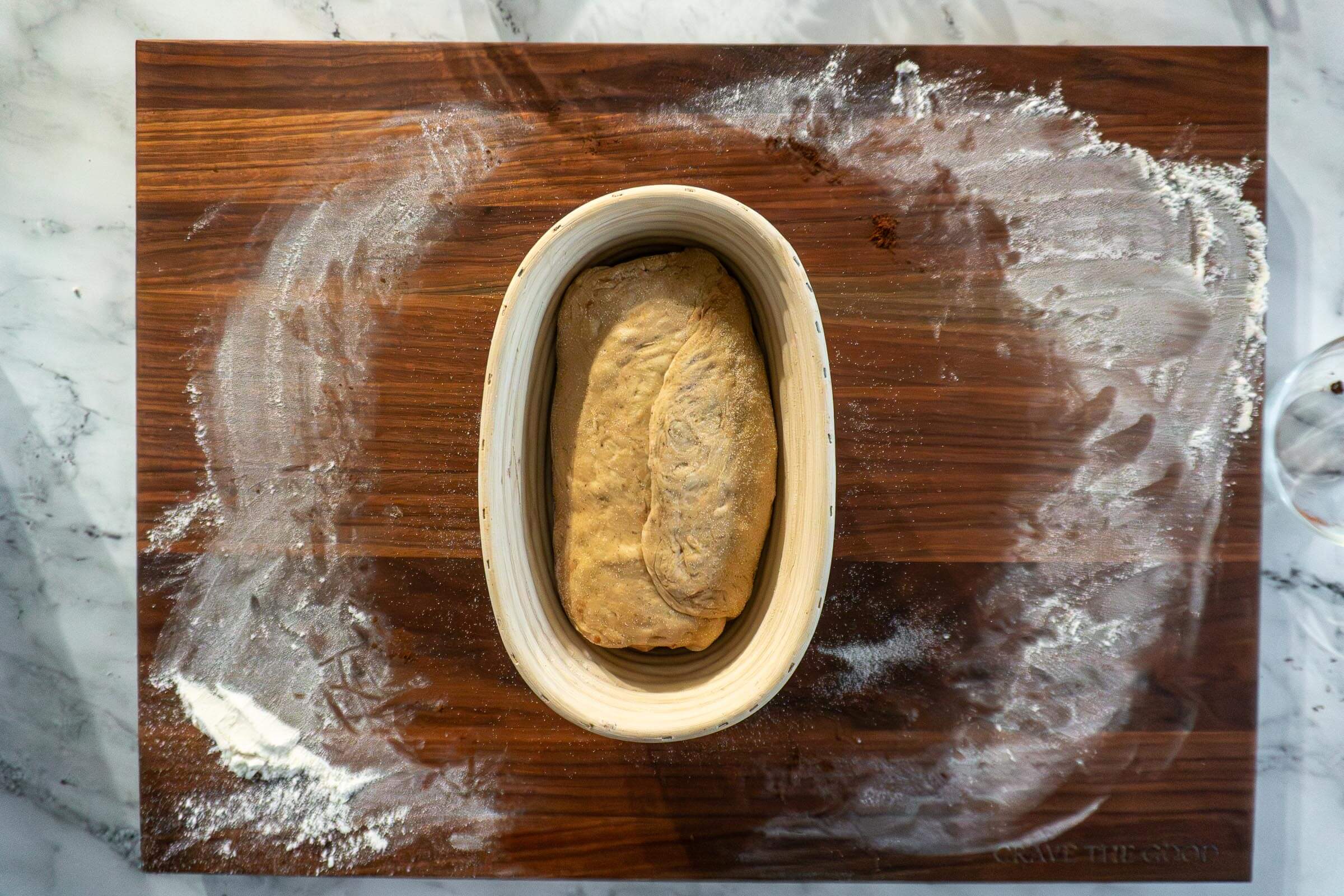
- Step 13: Dust the dough with rice flour then tuck seam side up into a banneton.
Don't have a banneton basket? I have a guide on how to use and maintain bannetons and one on banneton alternatives!
Prove + Cold Retard:
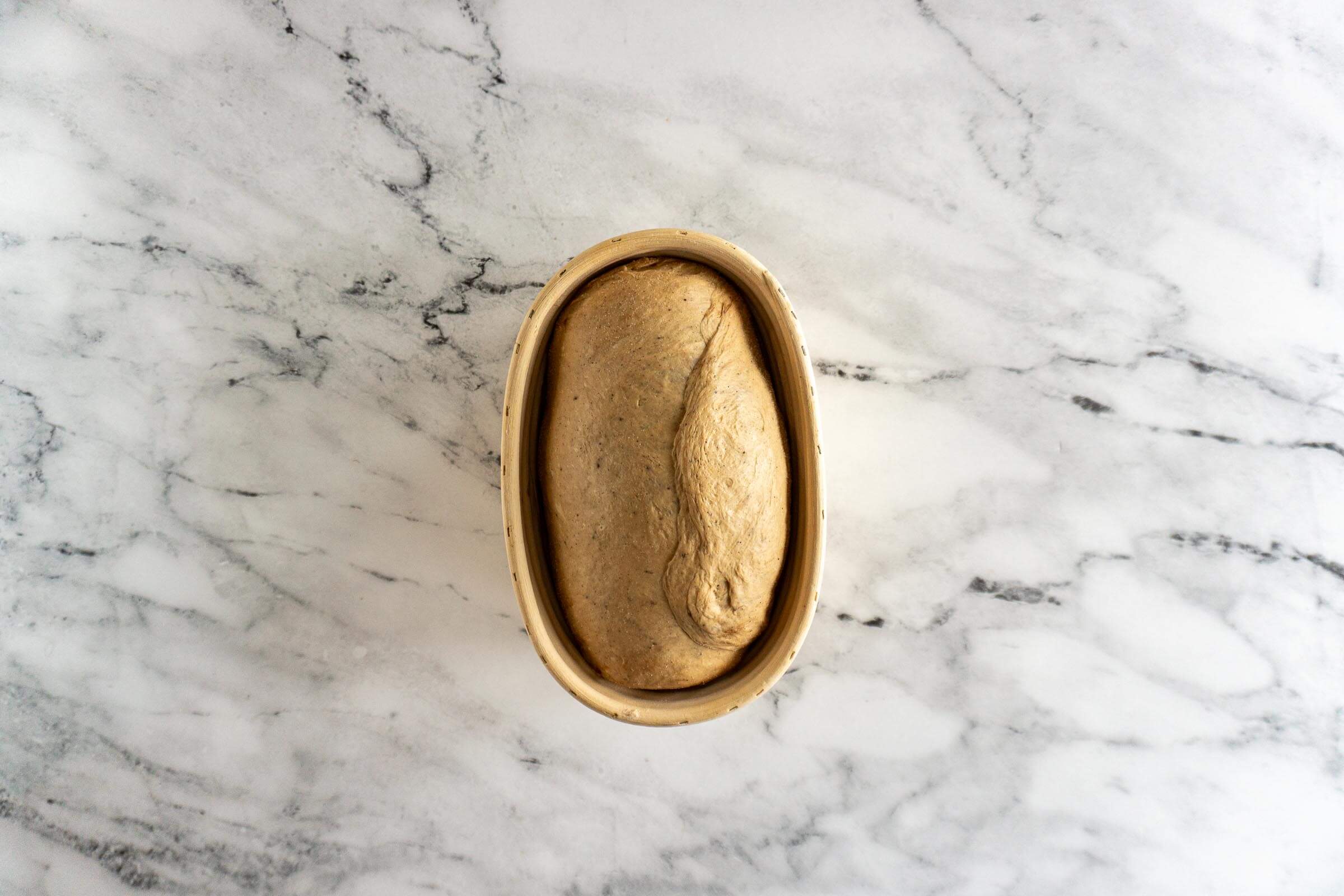
- Step 14: Prove the chai sourdough loaf in the banneton for 2 hours in a warm place before covering and placing in fridge to cold retard for up to 3 days. If you want to bake it right after proving, you're welcome to, but the flavor is better after resting in the fridge.
Bake:
- Step 15: Place your dutch oven, cloche, or desired baking dish in the oven and preheat to 450f. If you don't have a dutch oven, I do have a guide on open oven sourdough bread baking.
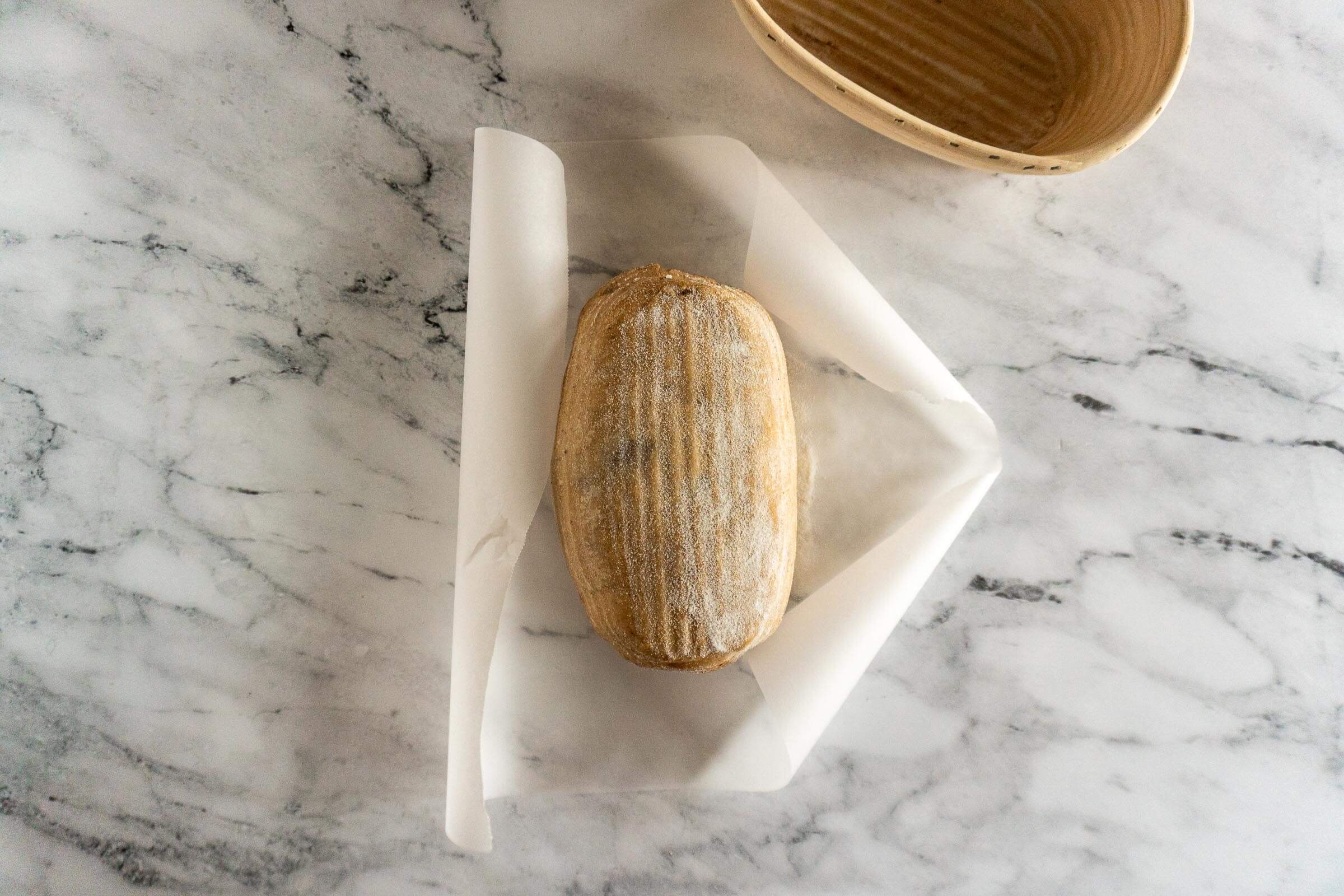
- Step 16: Once the oven is preheated, invert the banneton onto a sheet of parchment paper.
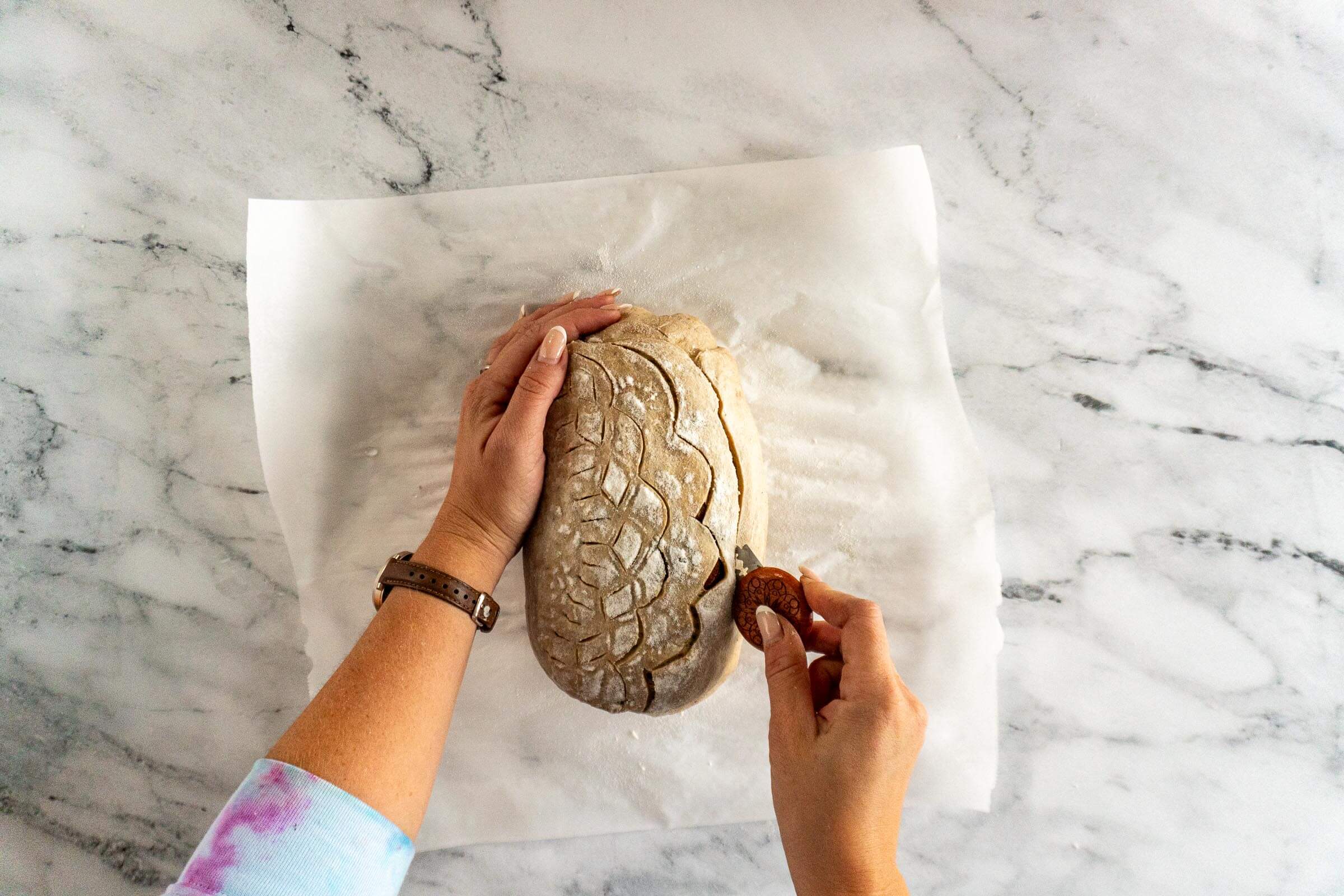
- Step 17: Use a lame, sharp knife, or clean razor blade to score the dough but you can get as fancy as you like!
- Step 18: Bake the dough at 450f covered for 30 minutes and uncovered at 450f for 10-15 minutes, or until the loaf is cooked through and the crust is nicely browned. You can test the doneness of the loaf with an instant-read thermometer. Bread is cooked once it reaches 205 - 210 degrees Fahrenheit internal temperature.
Cool:
- Step 19: Remove baked bread from the dutch oven and transfer it to a wire mesh cooling rack to cool completely before slicing. I like to leave it for at least 2 hours before slicing, as slicing too soon can affect the crumb and texture of your loaf.
Expert Tips
- We’ve replaced the water in this recipe with an actual latte, so dough is a little tighter than your standard sourdough dough – that’s ok. Be gentle with your stretch and folds and while shaping to ensure you’re not tearing the gluten strands.
- The addition of spices (and an entire coffee) tends to slow the fermentation in this recipe, so the process is a bit longer than my regular sourdough recipes.
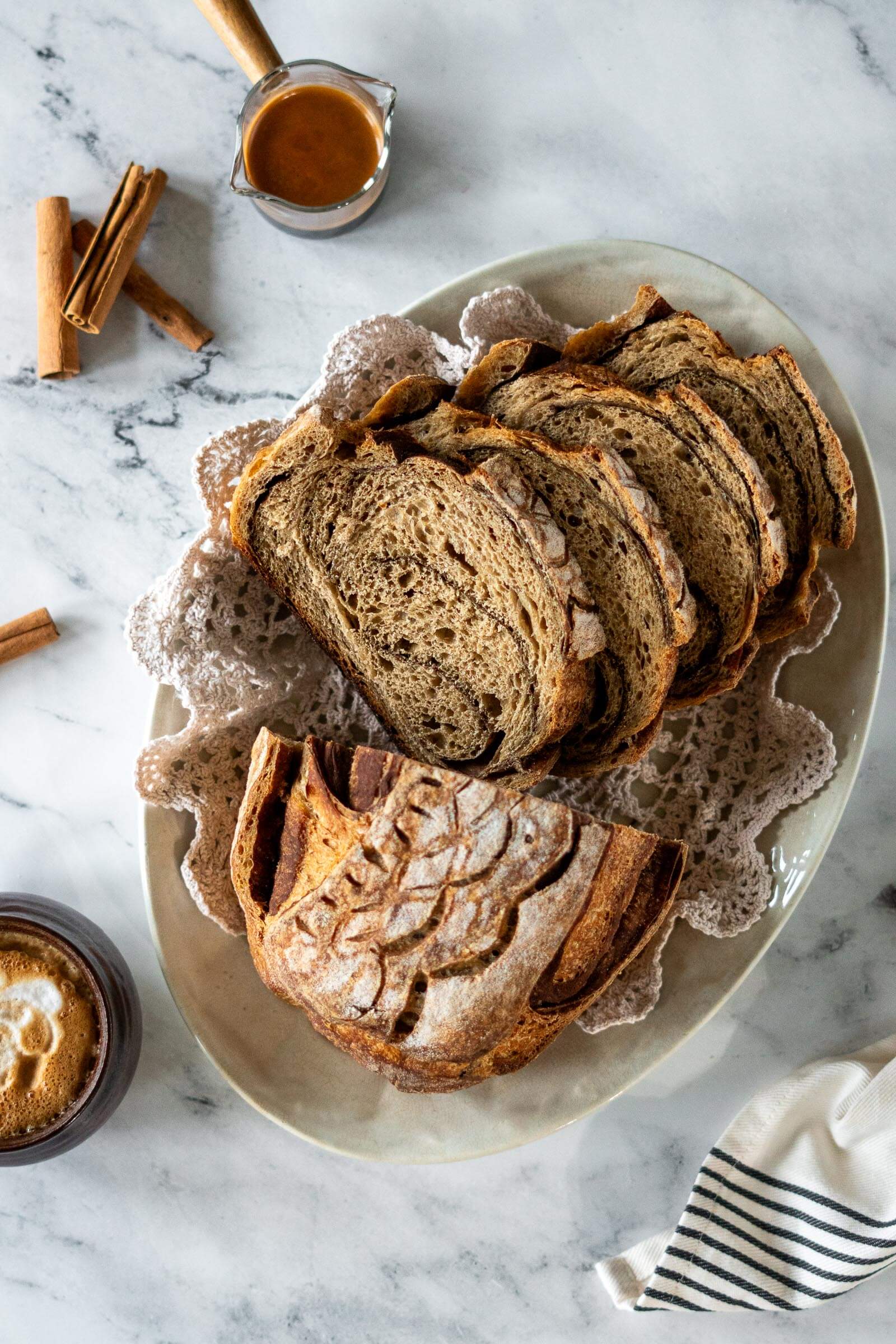
- Instead of doing a pre-shape and final shape for this recipe, I decided to laminate the cocoa powder into the dough to give it delicious chocolate chai flavor ribbons. Not only does it save a step and some time, the results are beautiful!
- I did a fancy score on this loaf and I feel that it lost some of it’s charm. I’d actually recommend a simple slash – the first couple I baked while recipe testing had just a simple slash and less of the swirls were disturbed that way.
Why This Recipe Works
Chai latte replaces water for layered flavor. Using a latte as the dough hydration instead of water infuses the dough itself with warm spices like cinnamon, cardamom, and cloves.
Milk and tea create a softer crumb. The milk in the chai enriches the dough with fats and proteins, resulting in a more tender, slightly softer texture compared to a lean sourdough.
Sugars support an active rise. Added sweetener in the chai syrup and the milk provides extra fuel for the yeast, helping maintain a steady fermentation despite the enriched dough.
Cold proofing enhances aroma and structure. A rest in the fridge deepens the spice profile and firms up the dough, making it easier to score while improving overall rise and texture.
Chai Sourdough Bread FAQs
Your loaf can be kept cut side down on a cutting board for around 12 hours before the crust becomes too crisp. This is our go-to sourdough storing method and usually we finish the loaf before the crust gets too crusty! I do recommend transferring it to a bread bag after 12 hours though.
Your sourdough loaf can also be frozen. To freeze sourdough bread, cool the loaf to room temperature, then tightly wrap it in plastic wrap, slide it into a bread bag, seal it up, and stick it in the freezer for 1-2 months. To use after freezing, remove the loaf from the freezer, unwrap, and allow it to come to room temperature (1 -2 hours) before slicing and enjoying.
Spices can slow fermentation slightly.
Chai spices (like cinnamon, clove, and cardamom) contain natural antimicrobial compounds. In high amounts, they can inhibit yeast and bacteria activity. In this recipe, they’re dispersed in the dough and in the swirl so the effect is subtle, you might see a slightly slower rise, but nothing dramatic.
Sugar can speed things up.
The chai latte contains sugar both through the flavor syrup and the milk which gives the yeast extra food. That can increase fermentation activity, helping offset any slowdown from the spices.
Chai sourdough dough is often tighter because milk and sugar change how the dough hydrates compared to water-only doughs. This is normal. Gentle handling during stretch and folds will help maintain structure without tearing the gluten.
Yes, chai sourdough bread can be baked without a Dutch oven using an open bake method. You'll need to introduce steam in the oven during the first part of baking to help achieve a good rise and crust.
Psst.. Want to know more about feeding your starter, storing sourdough starter, how to use discard, or even which is the best jar for your starter? I've got tons of guides to help you!
Baker’s Percentages
| Ingredient | Weight | Percentage (%) |
|---|---|---|
| Flour | 450g | 100% |
| Water | 350g | 78% |
| Starter | 100g | 22% |
| Salt | 10g | 2% |
Baker’s Timeline
Day 1:
- 9:00 AM: Combine ingredients to make dough
- 10:00 AM: First stretch and fold
- 11:00 AM: Second stretch and fold
- 12:00 PM: Third stretch and fold, bulk ferment
- 3:00 PM: Bulk ferment complete, shape, place chai loaf into banneton basket, beginning of the proof
- 5:00 PM: Proofing complete, place banneton in fridge to cold retard
Day 2:
- 9:00 AM: Place dutch oven into oven and preheat
- 9:45 AM: Bake chai sourdough bread
Serving Suggestions
Wondering how to fit chai latte sourdough into your life? Here are some of the ways we love to enjoy it!
- As French toast, smothered in whipping cream
- Toasted with a healthy smear of creamed honey
- Plain with butter
More Flavored Sourdough Bread Recipes


If you tried this Chai Sourdough Bread recipe or any other recipe on my blog, please leave a 🌟 star rating and let me know how it went in the comments below. Thanks for visiting!
📖 Printable Recipe

Chai Sourdough Bread
Ingredients
- 340 g chai latte, cooled
- 100 g sourdough starter, active
- 1 teaspoon cinnamon, ground
- ½ teaspoon cardamom, ground
- ½ teaspoon ginger, ground
- ¼ teaspoon cloves, gound
- ¼ teaspoon all spice, ground
- ¼ teaspoon nutmeg, ground
- 450 g bread flour, unbleached
- 10 g coarse sea salt, coarse
- 1 tablespoon dutch process cocoa powder
Instructions
Make The Dough:
- In a large bowl, combine 340g of cooled chai latte and whisk in 100g of active sourdough starter until mostly combined. Set aside.
- In a small bowl, combine 1 teaspoon cinnamon, 1/2 teaspoon cardamom, 1/2 teaspoon ground ginger, 1/4 teaspoon ground cloves, 1/4 teaspoon all spice, and 1/4 teaspoon nutmeg. Stir until well combined. Set aside.
- Add 450g unbleached bread flour to a medium sized bowl, then add 1/2 to 2/3 of the spice blend from step 2, plus 10 g salt. Stir until completely combined. Reserve the remaining spice mixture for the shaping stage.
- Add flour mixture to the sourdough starter/ latte blend and mix until a shaggy dough forms. Knead the dough with your hands until all the shaggy bits are incorporated.
- Cover the bowl and set aside for 45 - 60 minutes.
Stretch And Fold:
- Uncover the bowl and using damp hands, grab the dough and gently pull it until the flap is long enough to fold over itself, then fold the flap, rotate the bowl 90 degrees, and repeat 3 more times, this is considered a set of stretch and folds. Recover the bowl, and set it aside for 60 minutes.
- Repeat the stretch and fold process 3 times over 3 hours, for a total of 3 sets of stretch and folds spaced by three- 60 minute rests.
Bulk Ferment:
- Complete a fourth and final stretch and fold then cover the bowl and set aside for 3 hours to finish the bulk ferment. It is important to keep the dough bowl somewhere warm to encourage the microbes to work quickly!
Shape:
- Observe your dough, at this point, the dough should have risen in the bowl, and have a smooth surface with visible bubbles. If the dough is domed in the bowl it is ready to work with, if the dough is flat it may need more time in the bulk ferment.
- In a small bowl, combine the remaining spice mix and 1 tablespoon cocoa powder. Set aside.
- Uncover the dough and transfer to a work surface or countertop. Gently press and spread the dough into a large rectangle. Sprinkle the cocoa powder mixture over the surface of the dough, and spread evenly across the surface, leaving a gap along the edges.
- Fold up the bottom third of the dough as though you were folding a letter, then fold in the right then left bottom corner towards the center. Continue rolling up into a batard or log shape. Pinch the ends if you're making a batard or tuck them in if your making a boule.
- Dust the dough with rice flour then tuck seam side up into a banneton.
Prove + Cold Retard:
- Prove the chai sourdough loaf in the banneton for 2 hours in a warm place before covering and placing in fridge to cold retard for up to 3 days. If you want to bake it right after proving, you're welcome to, but the flavor is better after resting in the fridge.
Bake:
- Place your dutch oven, cloche, or desired baking dish in the oven and preheat to 450f.
- Once the oven is preheated, invert the banneton onto a sheet of parchment paper. Use a lame, sharp knife, or clean razor blade to score the dough, I usually like to make one deep curved slash, but you can get as fancy as you like!
- Carefully remove the dutch oven from the oven, and using the parchment paper as a sling, transfer the sourdough loaf from the counter into the dutch oven.
- Bake the dough at 450f covered for 30 minutes and uncovered at 450f for 10-15 minutes, or until the loaf is cooked through and the crust is nicely browned. You can test the doneness of the loaf with an instant-read thermometer. Bread is cooked once it reaches 205 - 210 degrees Fahrenheit internal temperature.
Cool:
- Remove baked bread from the dutch oven and transfer it to a wire mesh cooling rack to cool completely before slicing. I like to leave it for at least 2 hours before slicing, as slicing too soon can affect the crumb and texture of your loaf.
Notes
Expert Tips
- We’ve replaced the water in this recipe with an actual latte, so dough is a little tighter than your standard sourdough dough – that’s ok. Be gentle with your stretch and folds and while shaping to ensure you’re not tearing the gluten strands.
- The addition of spices (and an entire coffee) tends to slow the fermentation in this recipe, so the process is a bit longer than my regular sourdough recipes.
- Instead of doing a pre-shape and final shape for this recipe, I decided to laminate the cocoa powder into the dough to give it delicious chocolate chai flavor ribbons. Not only does it save a step and some time, the results are beautiful!
- I did a fancy score on this loaf and I feel that it lost some of it’s charm. I’d actually recommend a simple slash – the first couple I baked while recipe testing had just a simple slash and less of the swirls were disturbed that way.


Coffee + Sourdough? Doesn’t get much better than that! This loaf is such a guilty pleasure for me – seriously smear it with a little raw honey and OMG!
Hi! I’m pretty new to making sourdough and I tried your recipe today. Everything was going great until I started shaping… the loaf started ripping apart, became very thin and the cocoa powder started coming out! I’m not sure what I did wrong, but I tried to reshape which was probably a bad idea and cocoa powder was everywhere so I just chalked this one up as a fail on my part. I shaped it the same way I do all loaves with the push pull method, was that a mistake? I want to try this recipe again it looks so delicious!
Hey Nicole, I haven’t done the push pull method for shaping, so I can’t speak to that – but I am assuming that shaping method may have caused the outside of the dough to become very thin as it got tighter. When you try again, I’d either stop shaping once you can tell the surface of the dough is getting thin, or try the method I have in the article, there is a full photo guide in the body of the post, the “fold and roll” that I use works great for swirls like this.
Did you bake it anyways? lol