
Rosemary Salt Recipe

Rosemary salt is a coarse finishing salt made by blending fresh rosemary leaves with sea salt. A pinch transforms everything from fried potatoes and roast beef, to sourdough focaccia. This easy recipe takes five minutes of hands-on work and keeps for up to six months.

Craving The Recipe Details?
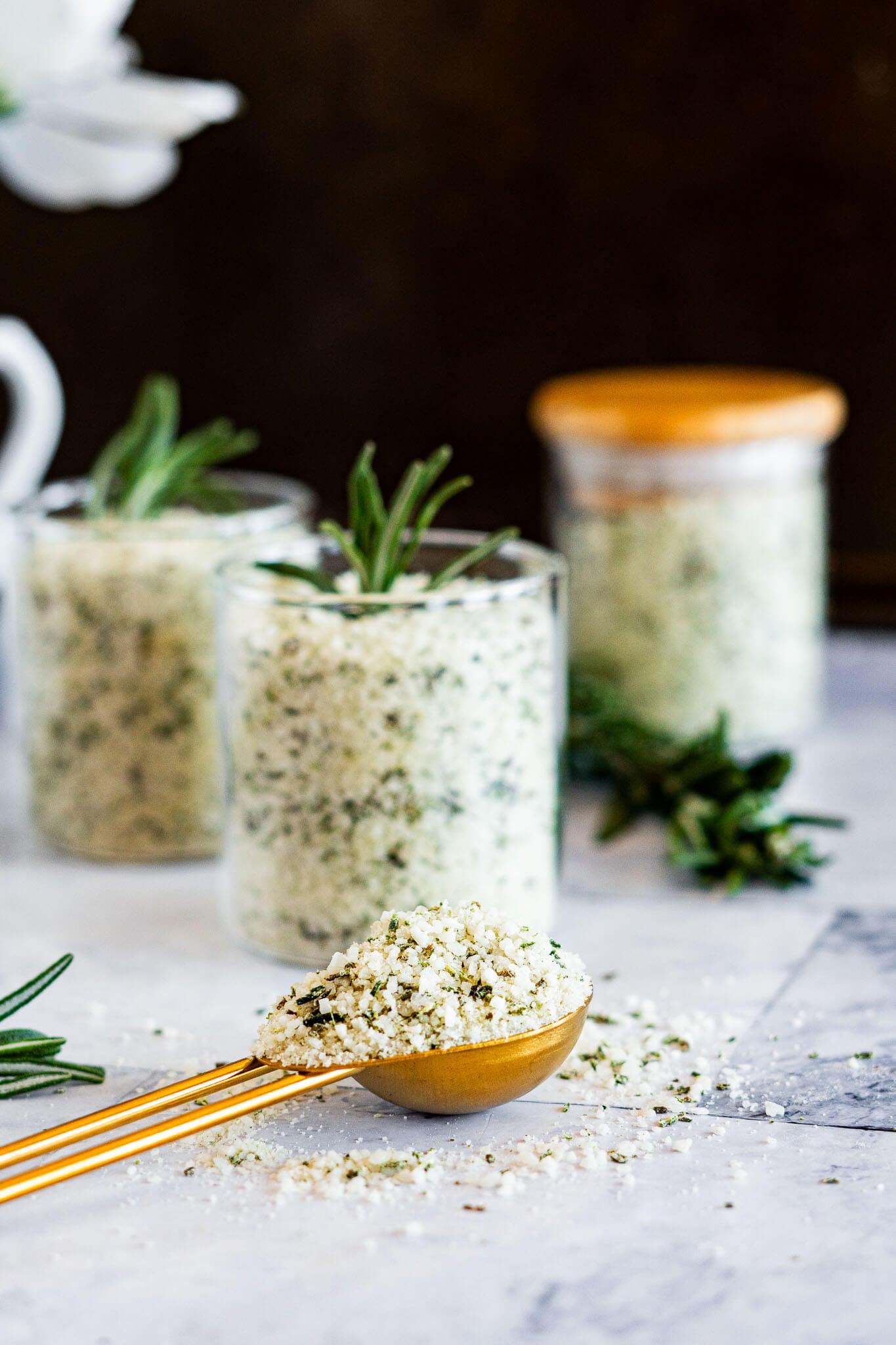
What it is: Rosemary salt is a two-ingredient finishing salt made by blending fresh rosemary leaves with coarse sea salt, then drying the mixture until shelf-stable. Unlike a dry rub or seasoning blend, it contains nothing but herb and salt.
Why you'll love it: It's an easy way to preserve fresh rosemary while creating a fragrant finishing salt that adds savory, herbal flavor to almost anything.
How to make it: Pulse fresh rosemary with coarse salt in a food processor until finely combined, then dry the mixture until the rosemary is completely moisture-free. Cool fully and store in an airtight jar for long-lasting flavor!
I had a little bit of fresh rosemary leftover from baking my rosemary sourdough bread the other day, and instead of sending the herb container to freezer purgatory like the basil I bought last week for sourdough pizza night, I decided to do something fun with it.
No fancy ingredients or complicated techniques here; just fresh herbs, coarse salt, and a few minutes of hands on time!
This rosemary salt recipe is dedicated to nothing fancy.
Jump to:
- Craving The Recipe Details?
- Why This Recipe Works
- Key Ingredients
- Variations + Substitutions
- How To Make Rosemary Salt
- Expert Tips
- Homemade Rosemary Salt FAQs
- Rosemary Salt Troubleshooting
- Can I Make Rosemary Salt Without A Food Processor?
- How To Use Rosemary Salt
- More Elevated Ingredient Recipes
- 📖 Printable Recipe
Why This Recipe Works
Fresh rosemary infuses the salt with stronger flavor. Using fresh rosemary instead of dried gives the salt brighter, more aromatic herbal notes because the essential oils are still highly concentrated in the leaves.
Salt naturally preserves the herbs. Coarse salt draws moisture out of the rosemary, helping inhibit spoilage while extending the shelf life of the mixture.
Processing the rosemary and salt together distributes flavor evenly. Pulsing them together bruises the rosemary leaves, releasing their oils directly into the salt so every pinch is evenly seasoned.
Drying prevents clumping and spoilage. Fresh herbs contain a lot of moisture, which can cause mold or hard clumps during storage. Fully drying the rosemary salt keeps it free-flowing and shelf stable.
Key Ingredients

Rosemary: Fresh rosemary is the herb of choice for this recipe because it retains the highest amount of its volatile essential oils. These oils are responsible for the herb’s distinctive taste and aroma. Alternatively, you could use frozen rosemary if you’ve got some left from your garden harvest! Avoid dried rosemary for this recipe as dried herbs have already lost most of their volatile oils, so the finished salt will taste flat rather than fragrant.
Salt: Coarse sea salt works best because the larger crystals absorb the rosemary oils without turning pasty during blending. I like combining bright white sea salt with Grey Atlantic sea salt for added mineral depth and texture. Kosher salt also works, though the finished flavor is slightly flatter because kosher salt is more neutral tasting. Avoid table salt, which is too fine and aggressively salty for a finishing salt.
Variations + Substitutions
- Lemon Rosemary Salt: Add 1 teaspoon of fresh lemon zest before blending for a bright citrus finish that pairs beautifully with chicken, seafood, and focaccia.
- Garlic Rosemary Salt: Stir 1/2 teaspoon garlic powder into the dried rosemary salt for a savory all-purpose seasoning blend.
- Rosemary Smoked Salt: Use smoked sea salt instead of regular sea salt for a smoky version that’s excellent on grilled meats and potatoes.
- Multi-Herb Salt: Combine rosemary, thyme, and oregano in equal parts for a more versatile herb salt blend.
How To Make Rosemary Salt
Prepare Ingredients:

- Step 1: Line a baking sheet with parchment paper and set aside. Then separate the rosemary leaves from the stems until you get 1/2 cup of leaves.
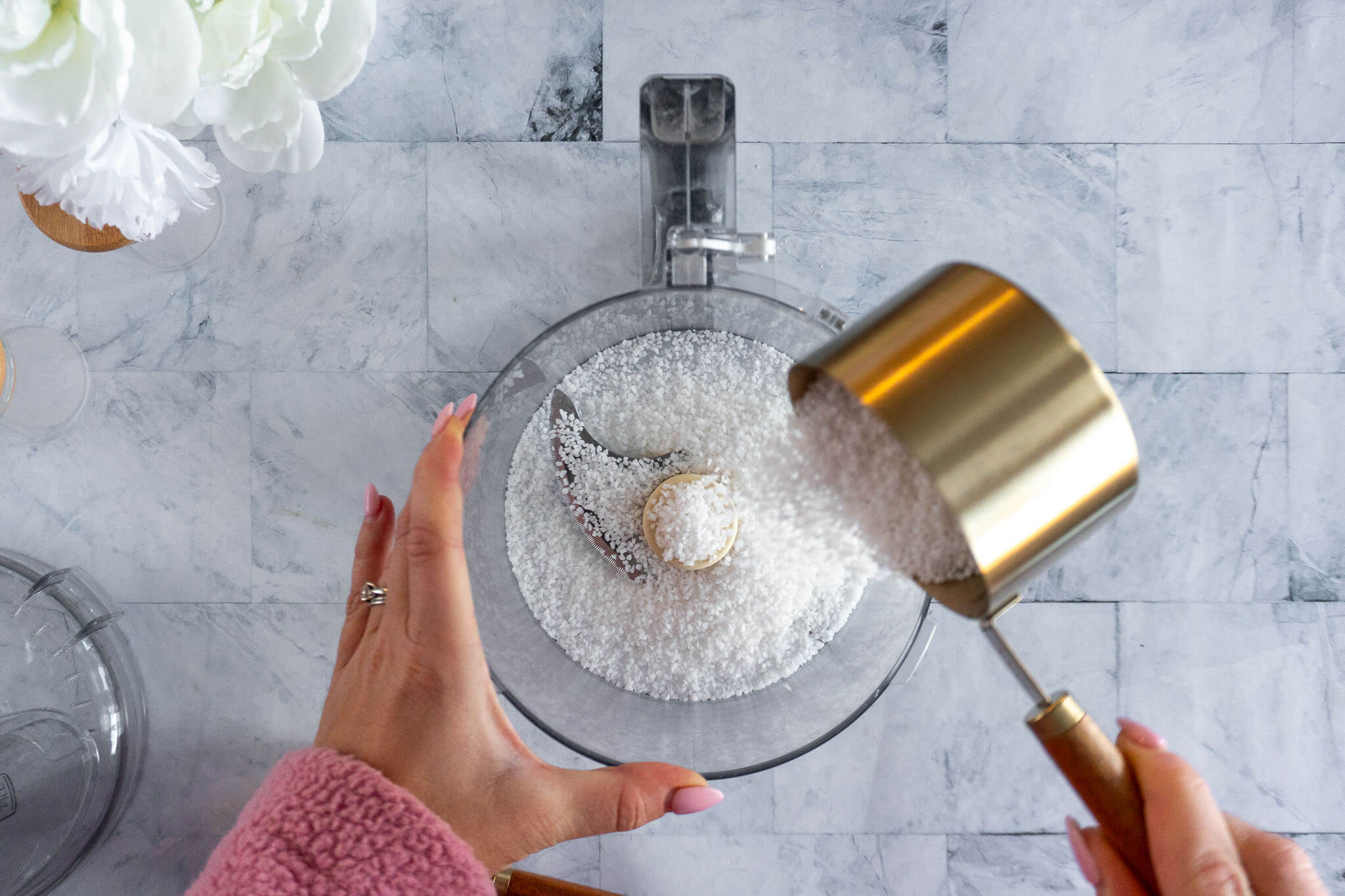
- Step 2: Add 1 1/2 cups of salt to the bowl of your food processor fitted with the S-blade or the jar of your blender.
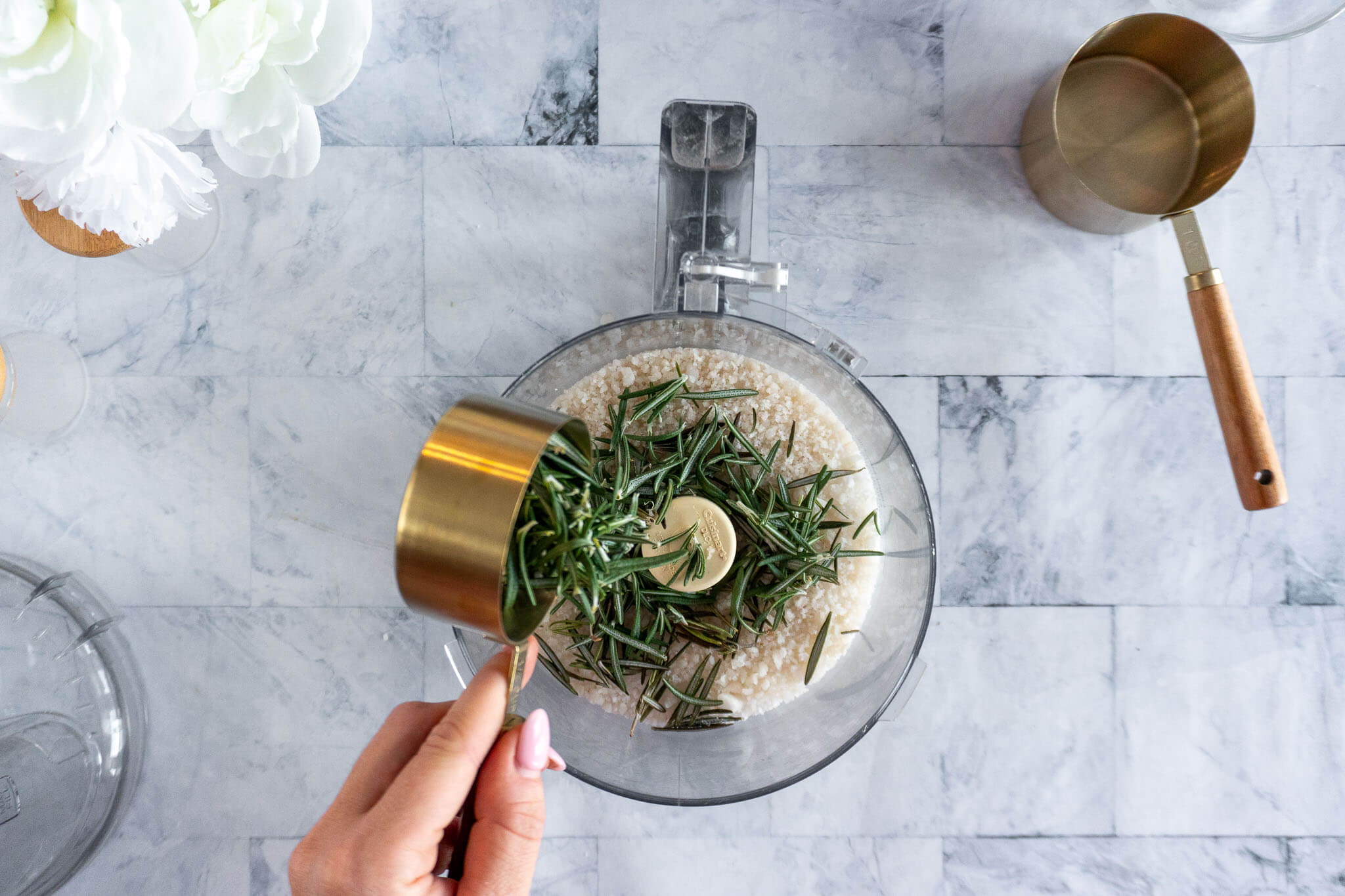
- Step 3: Add 1/2 cup of prepared rosemary leaves to the food processor.
Scale it: 1 part fresh rosemary leaves to 3 parts coarse salt by volume. This recipe uses ½ cup rosemary and 1½ cups salt, yielding approximately 1½ cups of finished rosemary salt.
Blend:
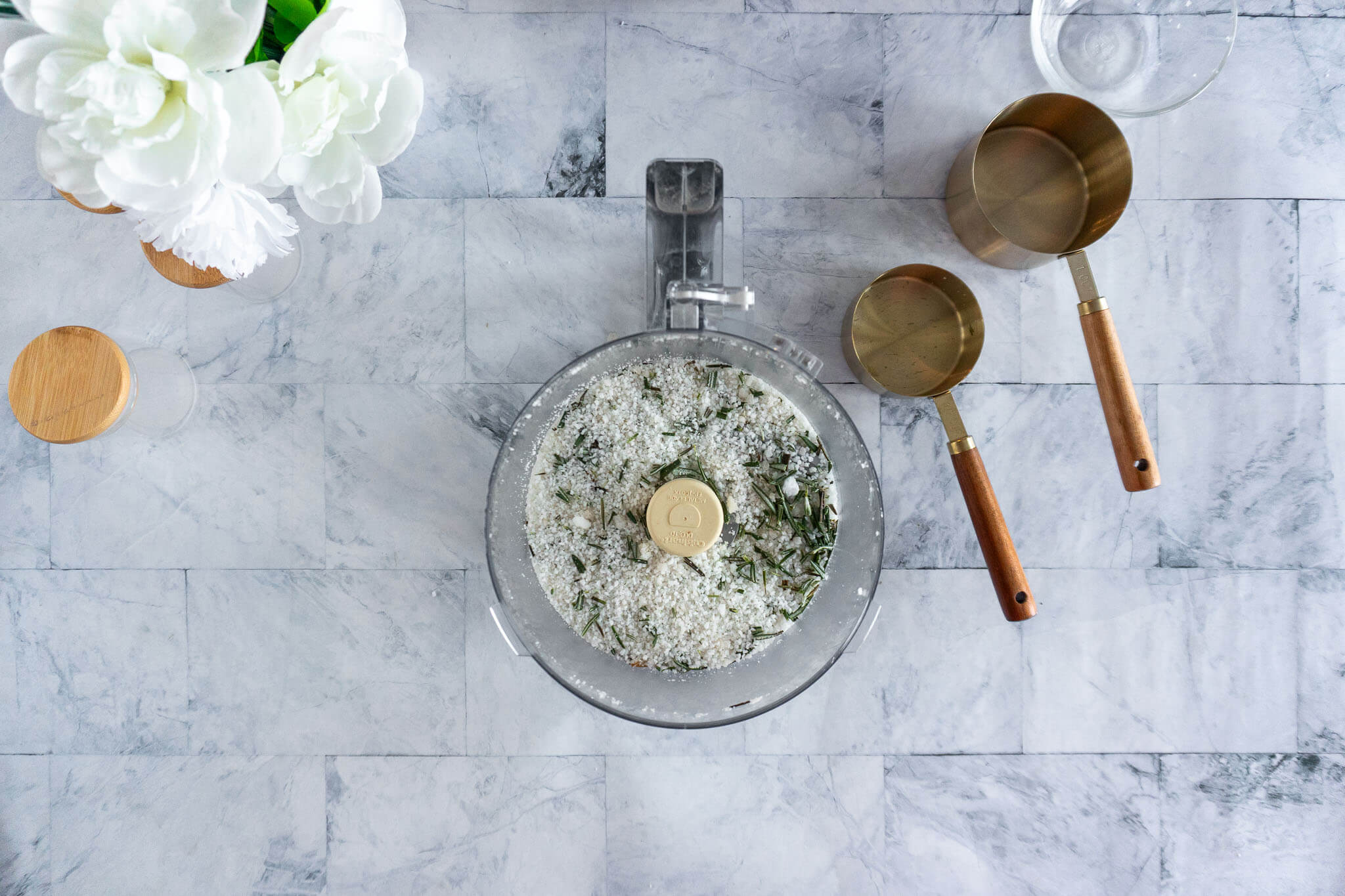
- Step 4: Pulse in 1 – 2 second bursts until the rosemary-salt mixture reaches your desired consistency.
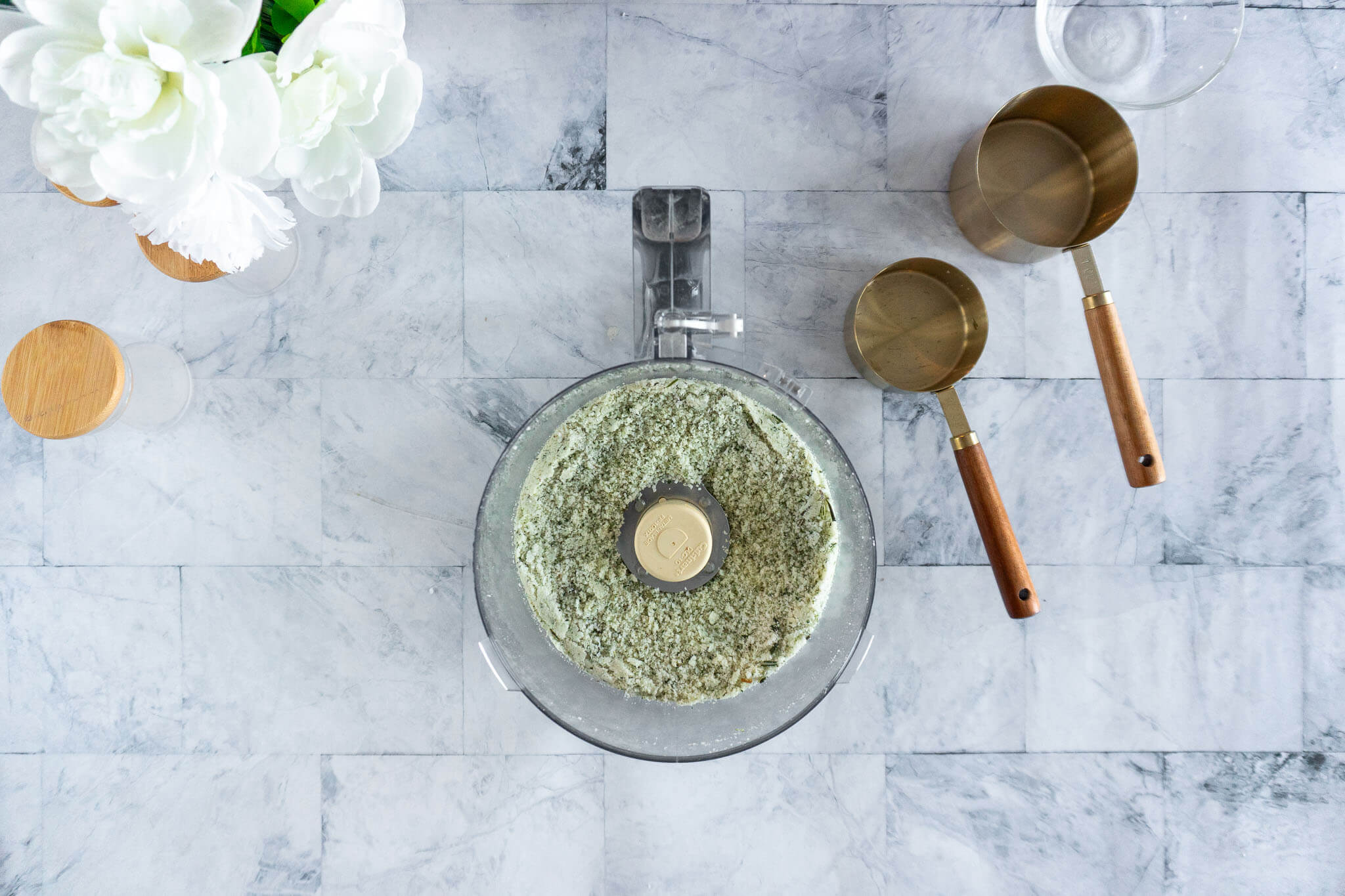
- Step 5: I like to leave mine a bit on the chunky side because this makes such a beautiful finishing salt.
Dry:
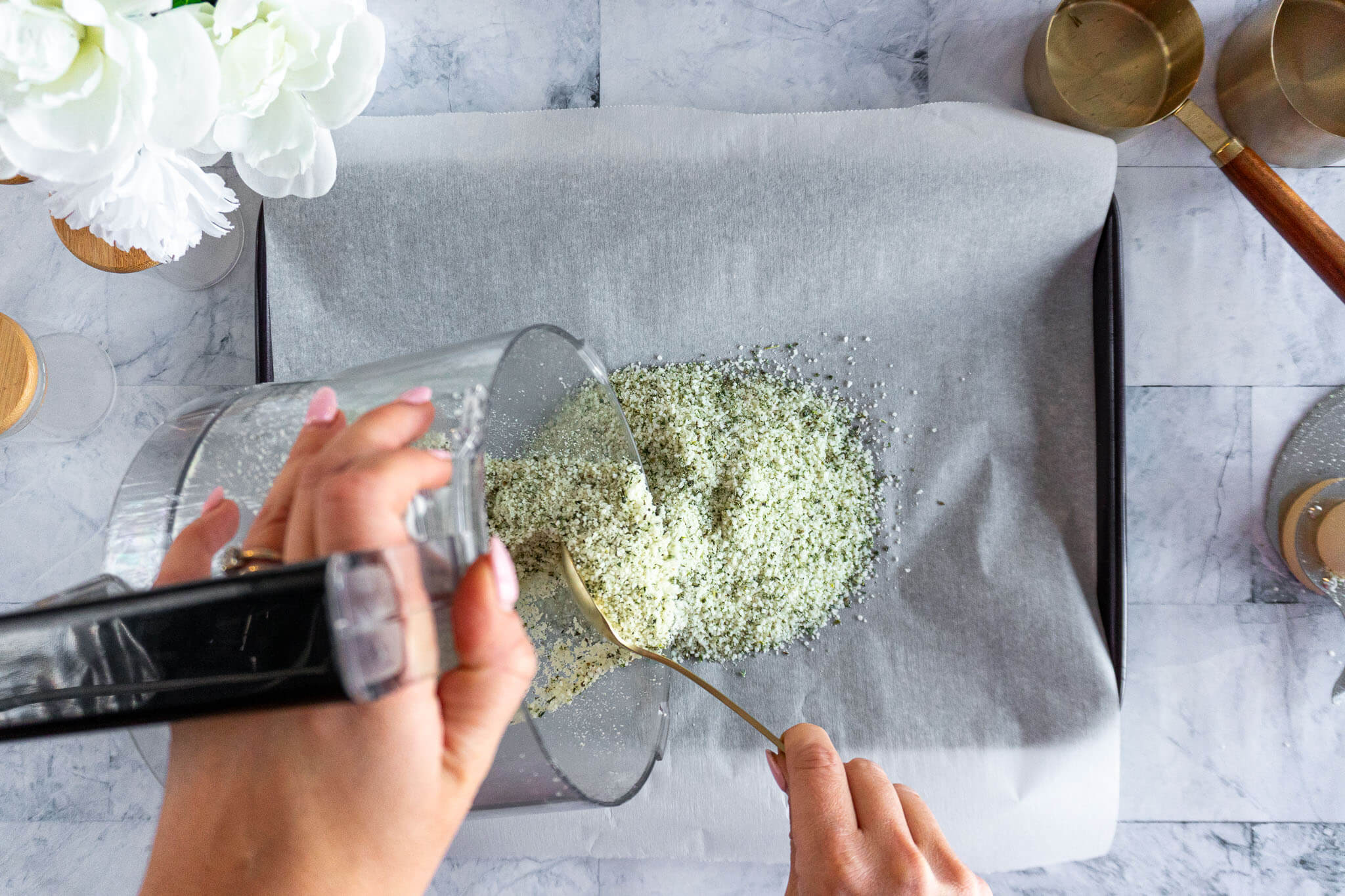
- Step 6: Spread the blended salt onto the prepared baking sheet and place in the oven with the light on for 2 or so hours.
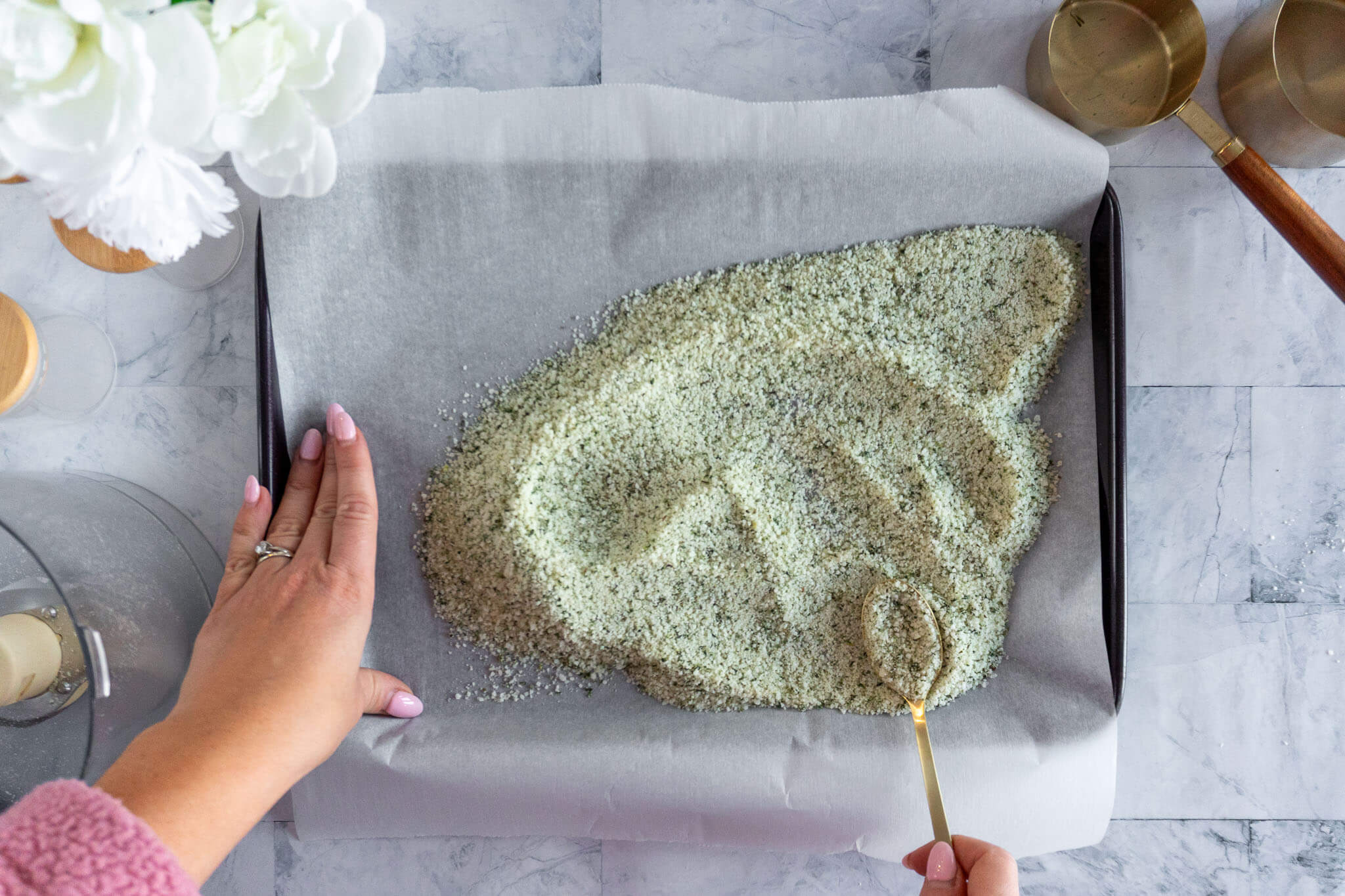
- Step 7: Stir the salt mixture at least once, until completely dried.
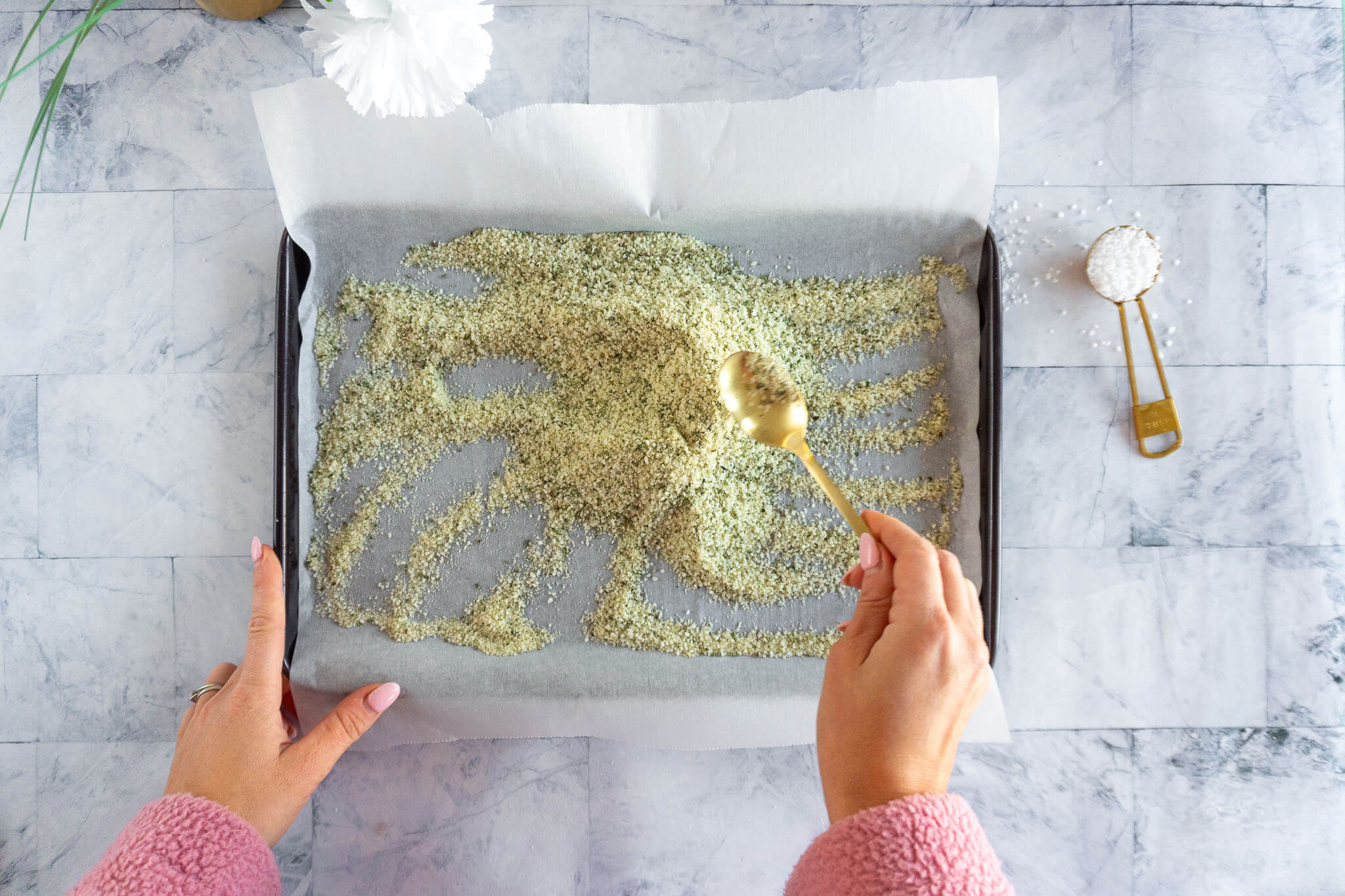
- Step 8: If you don’t want to tie up the oven, simply allow the salt to dry at room temp for 4-5 hours, stirring once or twice during the drying time.
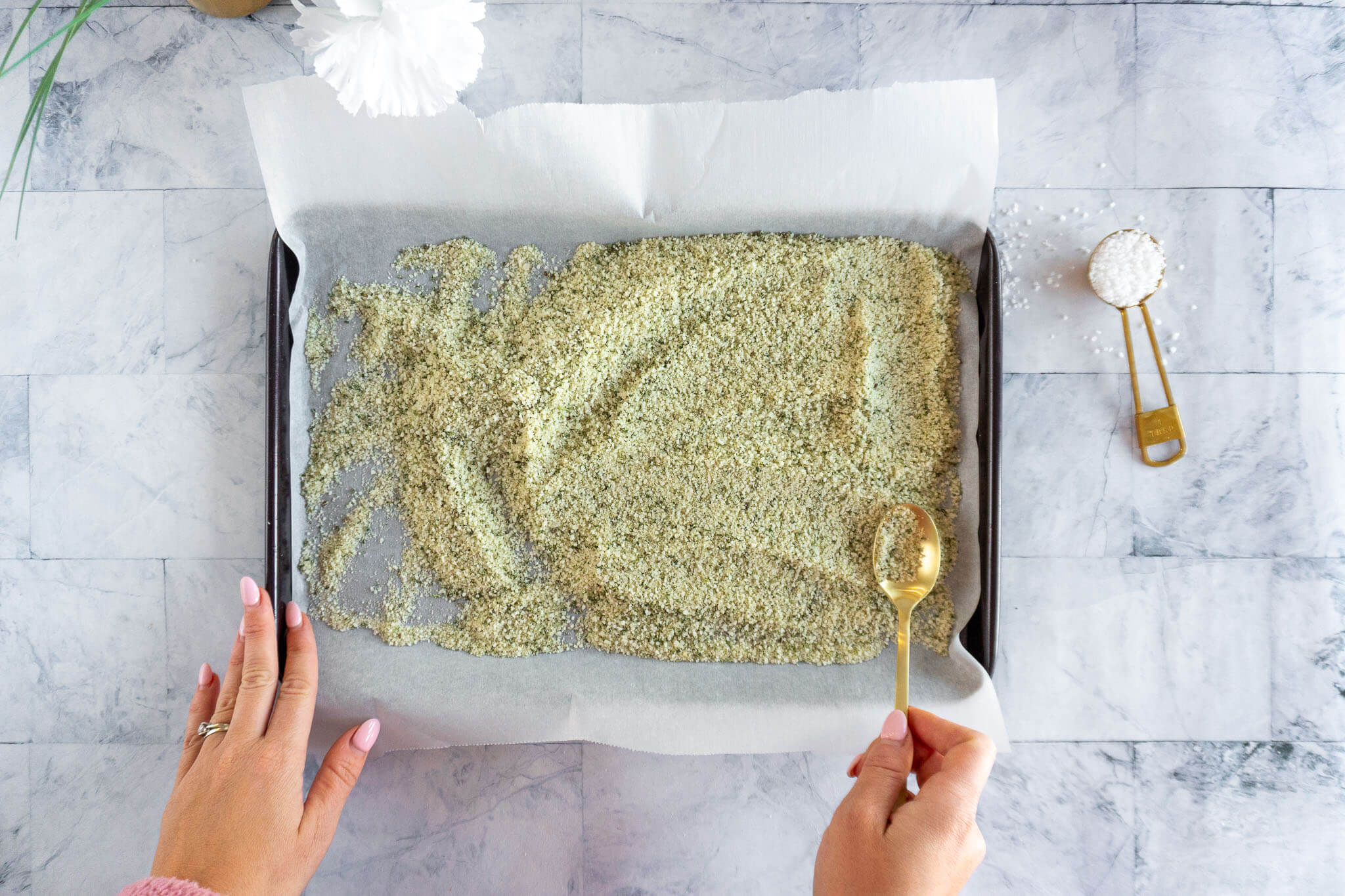
- Step 9: This process is important as it extends the shelf life of the salt.
Package:
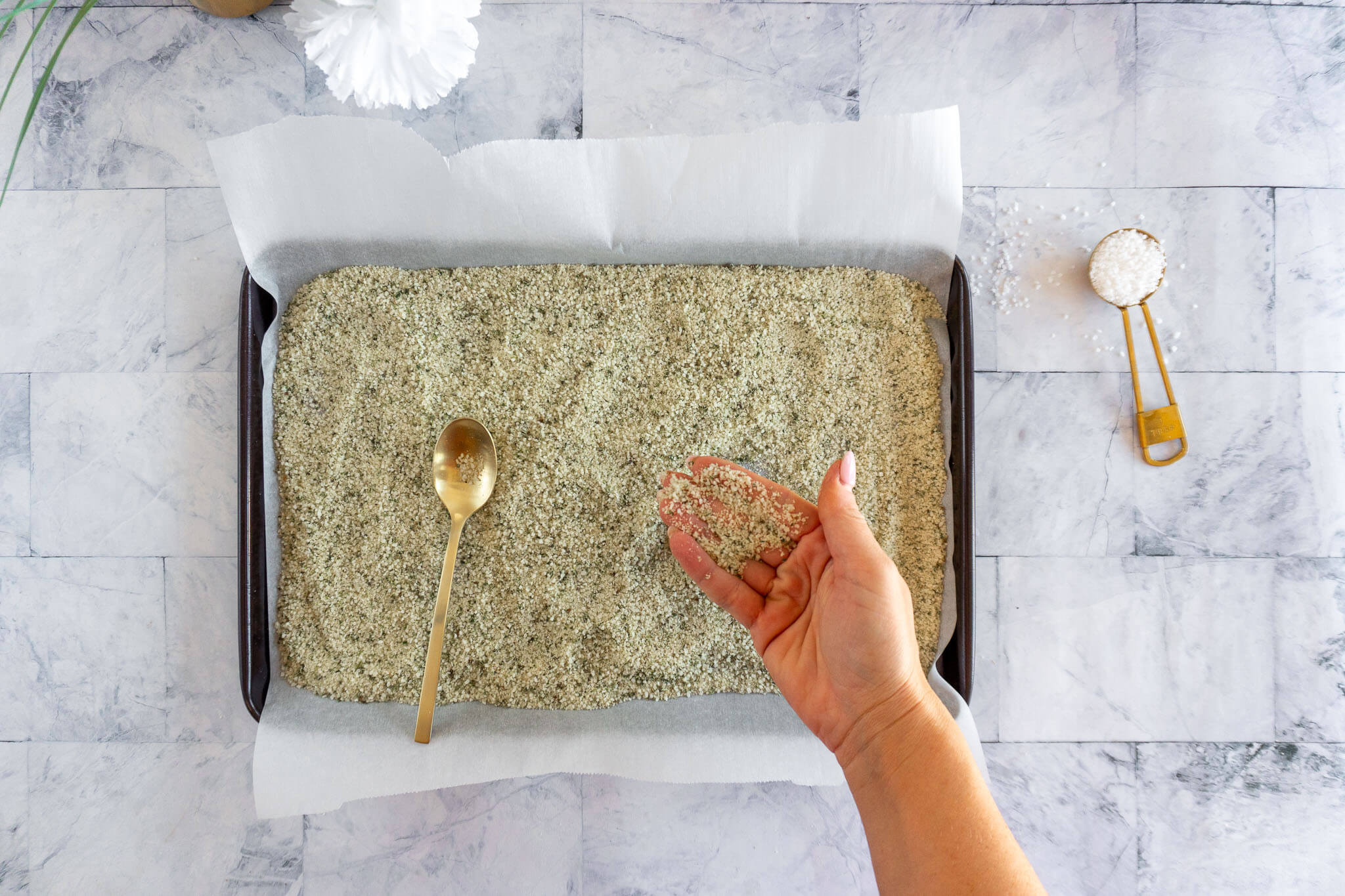
- Step 10: Check the dryness of the salt mixture by rubbing it between your fingers. If there is residual moisture the salt will clump together, if its completely dried the salt will spread like sand.
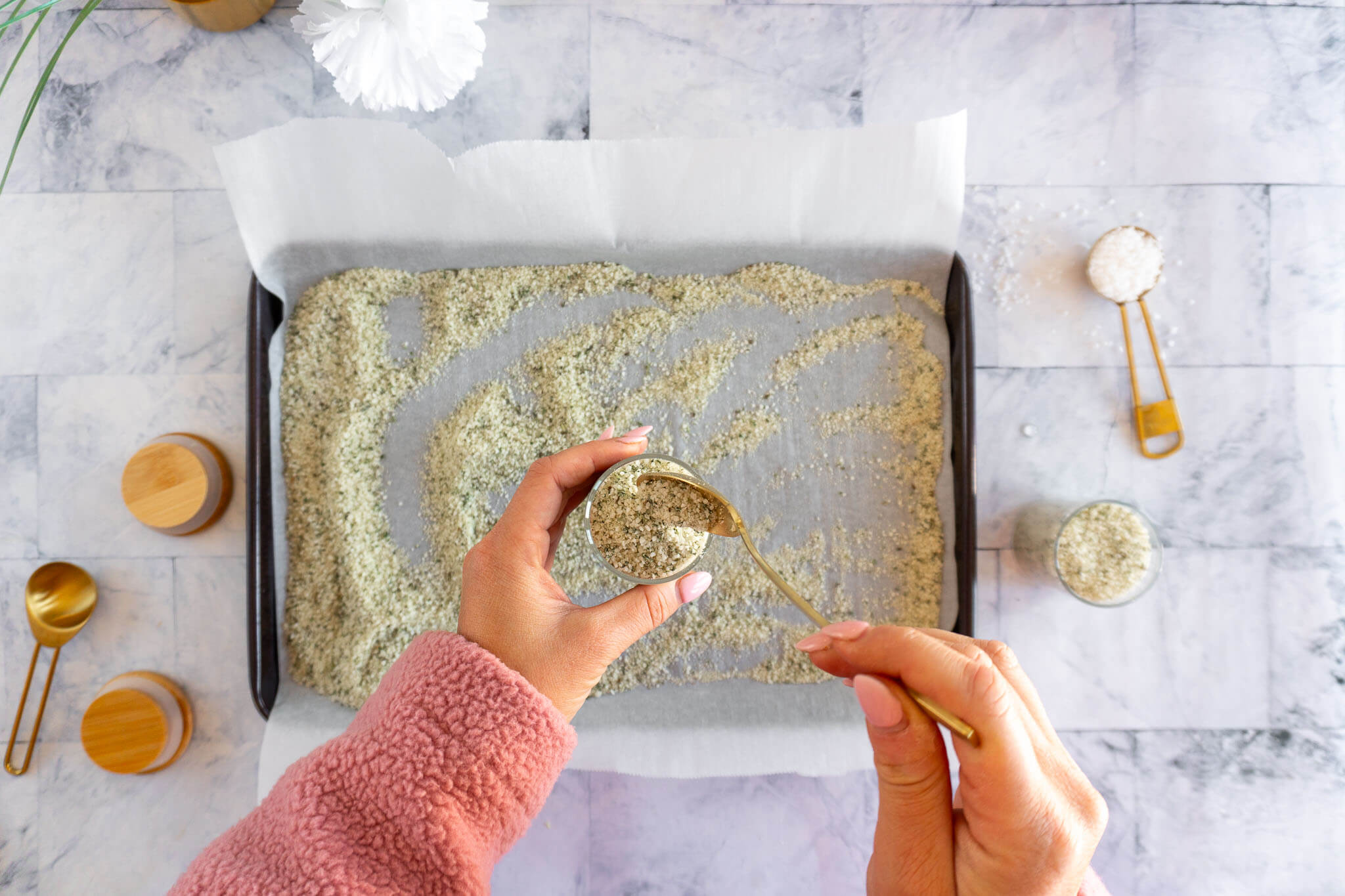
- Step 11: Transfer the dried salt to an airtight container.
Expert Tips
- Buy rosemary that passes the crush test. Before buying at the grocery store, pinch a needle between your fingers. If it’s fragrant and slightly tacky with oils, it’ll make great salt. If it smells faint or dusty, skip it. Weak rosemary produces weak salt no matter what you do.
- Don’t run the food processor continuously. Pulse in short 1 – 2 second bursts and stop when you hit your texture. Running it continuously generates heat, which accelerates oxidation and can turn your rosemary from green to brown.
- Keep your drying temperature under 95°F / 35°C. Anything hotter browns the rosemary and drives off the volatile oils you worked to preserve. The oven-light method works because the bulb produces gentle ambient warmth, not cooking heat. If your oven light runs hot, crack the door slightly.
- Make sure your storage jar is dry before filling it. Any residual moisture in the jar will undo your drying work within days. Wash jars in advance and let them air dry completely, or give them a quick 5 minutes in a warm oven.
- Skip the table salt for this recipe – it’s got the wrong texture and is too… salty. It’s not the best option for your herb flavored salt.
Homemade Rosemary Salt FAQs
Rosemary salt works as a finishing salt for roasted vegetables, grilled meats, focaccia, eggs, potatoes, and bread. It’s also popular as a homemade food gift and can be used anywhere you’d normally use flaky sea salt for an herby upgrade.
Use 1 part fresh rosemary leaves to 3 parts coarse sea salt. This recipe uses 1/2 cup rosemary leaves and 1 1/2 cups coarse salt.
Once the rosemary salt has been dried and transferred to storage containers, store it in a cool, dark space, like your spice cupboard! It’s best used within 3-6 months as that’s when the flavor will be the strongest, but it will keep indefinitely when properly stored.
Dried rosemary is not a good substitute here. The drying process has already driven off most of the volatile essential oils that give rosemary its flavor and fragrance. A salt made with dried rosemary will taste faintly herby at best. The reason this recipe works so well is that the salt is able to absorb the volatile, flavor rich oils from the fresh rosemary as they are released.
No. Rosemary seasoning is dried, ground rosemary used during cooking, it adds flavor but loses its aroma in heat. Rosemary salt is a finishing salt: the coarse crystals carry the herb’s essential oils and are sprinkled on after cooking, so the fragrance and flavor hit you fresh. They’re used at different stages of a dish and aren’t interchangeable.
Rosemary Salt Troubleshooting
The salt is clumping in the jar. It wasn’t fully dry before you transferred it to storage. Spread it back on a baking sheet and dry for another 2-3 hours with the oven light on.
The finger-rub test: if the salt clumps when you rub it between two fingers, it needs more time. Properly dried rosemary salt flows like coarse sand.
The rosemary lost its green color. Two causes. First: over-processing in the food processor can turn the rosemary to a paste and oxidize it quickly, ensure to pulse rather than running continuously, and stop when you reach your texture. Second: drying at too high a temperature (anything above about 95°F / 35°C) will brown the herb. The oven-light method works because the bulb produces gentle warmth, not actual cooking heat.
The flavor is weak. Either the rosemary-to-salt ratio was off (the correct ratio is 1 part rosemary to 3 parts salt by volume), or the rosemary was past its prime. Fresh rosemary should be fragrant and slightly sticky with oils when you crush a leaf between your fingers. If it smells faint, it won’t produce a flavorful salt.
The salt hardened into a solid mass. This is severe moisture retention, usually from skipping the drying step entirely or from humidity in the storage container. Break it up with a fork, spread it out, and dry it thoroughly before re-sealing. Going forward, make sure your storage jar is completely dry before adding the salt, and consider adding a small food-safe silica packet if you live in a humid climate.

Can I Make Rosemary Salt Without A Food Processor?
A mortar and pestle works well but may produce a slightly different result with a more rustic texture, and that’s totally OK!
Add the rosemary leaves to the mortar first and pound (not grind in circles, a straight up-and-down motion) for about 2 minutes until the leaves are broken down and the mortar smells strongly of rosemary. Add the salt in two additions, continuing to pound until you reach your preferred texture. Expect 5-8 minutes total for a coarse result.
The key difference from the food processor method: mortar-and-pestle herb salt tends to have more visible green flecks and a slightly more intense aroma right after making, but the flavor evens out after a few days of drying and resting.
Dry the same way, spread on a parchment-lined baking sheet and leave with the oven light on for 2 hours, or at room temperature for 4-5 hours.
How To Use Rosemary Salt
There are so many ways to use this tasty salt. Here are some ideas!
- Focaccia and bread: Sprinkle over sourdough focaccia. The resinous oils in the rosemary echo the olive oil in the dough, making the herb feel built-in rather than added on.
- Potatoes: Use as a finishing salt on rosemary mashed potatoes, pan-fried potatoes, or air fryer baked potatoes. Rosemary and potato is one of the most classic pairings in Italian cooking, the starchy sweetness of the potato balances the piney sharpness of the herb.
- Eggs: A pinch over fried or soft-scrambled eggs is a two-second upgrade. The mineral depth from grey sea salt cuts through the richness of the yolk.
- Meat: Finish pork chops, smoked pork tenderloin, or roast beef at the table rather than during cooking, the fragrance of rosemary volatilises in high heat, so finishing preserves the aroma.
- Olive oil dip: Stir into a small dish of good olive oil as a sourdough bread dipping seasoning. The chunky texture means it doesn’t dissolve immediately, so you get small pockets of herbed salt with each dip.
- Compound butter: Mix into softened butter with a squeeze of lemon. Use 1 teaspoon per 4 tablespoons of butter. Excellent on smoked steak, roasted chicken, or spread directly onto warm bread machine bread.
- Vegetables: Finish smoked brussels sprouts or smoked asparagus just before serving. Rosemary salt adds savoury, herbal depth without the heaviness of a sauce.
- As a gift: Transfer the finished salt into small glass spice jars, add a kraft paper label with the date made and a 6-month use-by note, and tie with twine. It ships well because it’s fully shelf-stable, and it’s one of the most practical food gifts you can give a cook!
More Elevated Ingredient Recipes


📖 Printable Recipe
Homemade Rosemary Salt Recipe
Ingredients
- 1 ½ cups coarse sea salt
- ½ cup fresh rosemary leaves, about 1 6″ sprig
Instructions
- Line a baking sheet with parchment paper and set aside.
- Separate the rosemary leaves from the stems until you get 1/2 cup of leaves.
- Add 1 1/2 cups of salt and the fresh rosemary leaves to the bowl of your food processor fitted with the S-blade or the jar of your blender.
- Pulse until the salt reaches your desired consistency. I like to leave mine a bit on the chunky side because this makes such a beautiful finishing salt.
- Spread the blended salt onto the prepared baking sheet and place in the oven with the light on for 2 or so hours, stirring at least once, until completely dried. If you don't want to tie up the oven, simply allow the salt to dry at room temp for 4-5 hours, stirring once or twice during the drying time.
- Check the dryness of the salt mixture by rubbing it between your fingers. If there is residual moisture the salt will clump together, if its completely dried the salt will spread like sand.
- Transfer the dried salt to an airtight container.


This is my favorite salt for seasoning beef! It’s so good sprinkled on to a beautiful pot roast before it hits the oven.
Can I used already dried rosemary?
You could, but I don’t think the flavor would be as impactful, as the salt kinda soaks up some of the moisture from the rosemary and becomes flavored itself, while dried rosemary would not have that same effect
What temperature so you set oven ??
Hey Jen, the oven isn’t actually on, but the heat from the light helps to dry things out!
Hi Ally, I would love to know more about the container you have in the photos and what looks like a second lid with moisture absorber in-between? I don’t think I saw you reference that in any of the comments?
Hey Karen, the containers I used are glass jars with a bamboo lid and silicone rubber. I got them at a local store but these ones from Amazon are very similar!