
Sourdough Peanut Butter Cookies

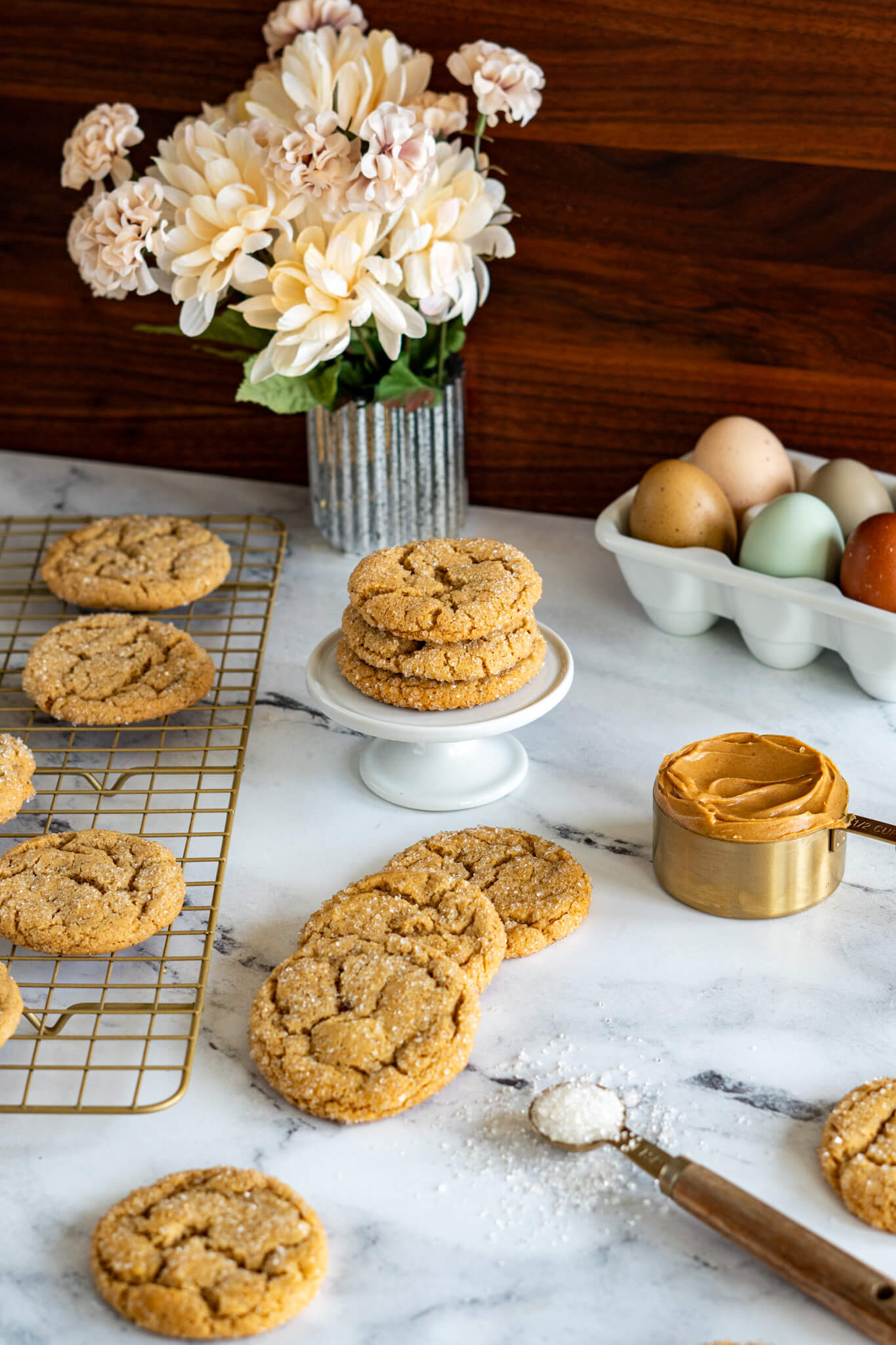
These sourdough peanut butter cookies have crispy golden edges, a soft and tender center, and a flavor so rich and layered that people will ask what your secret is… and the answer is brown butter. Most peanut butter cookie recipes skip it. This one doesn’t, and you’ll taste the difference in every single bite.

Craving The Recipe Details?
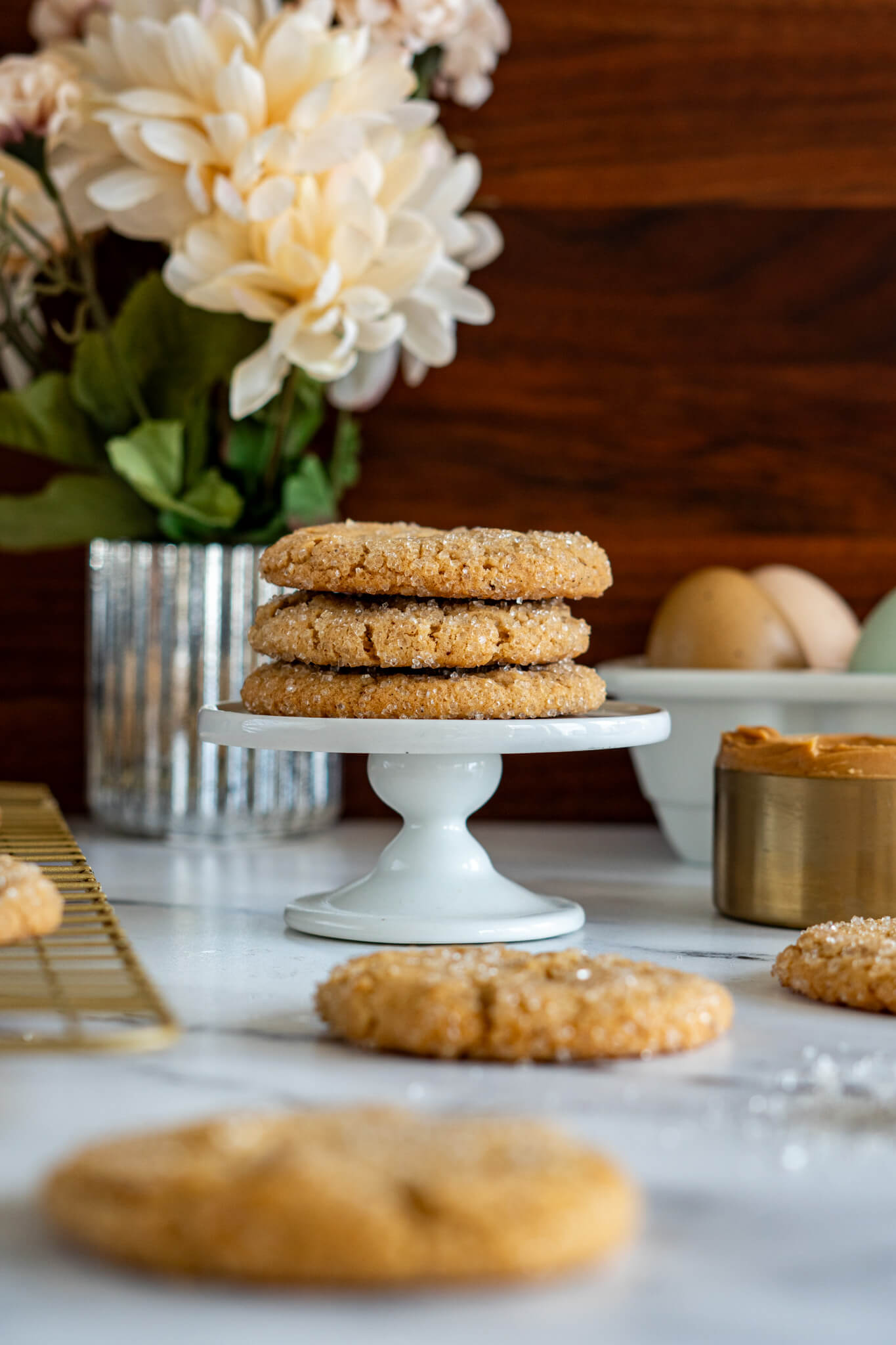
What it is: Soft, chewy sourdough discard peanut butter cookies made with nutty brown butter and rolled in sugar for a lightly crisp, bakery-style finish.
Why you'll love it: Rich, nutty browned butter adds deep flavor, while the sourdough discard makes the cookies extra tender and slightly complex without tasting overly sour.
How to make it: Brown the butter, then cream it with sugars and peanut butter. Mix in sourdough discard, egg, and vanilla, stir in dry ingredients, scoop and roll in sugar, then bake at 350°F until set at the edges with soft centers.
You know you’re on to something when your teenager tastes a fresh from the oven sourdough peanut butter cookie and instead of saying anything just gives you a hug before snatching another couple of cookies from the baking tray and scampering off to do teenager things.
Truly, I should have known it was coming. I swear both of my kids have a sixth sense for when I’m using brown butter! At least I know they love this recipe as much as I do!
This brown butter sourdough peanut butter cookie recipe is dedicated to the sixth sense.

Master Your Sourdough Starter In 5 Days!
From Confused To Confident.
Find success with 5 simple, actionable secrets delivered to you. No more guessing games – just clear, proven steps to a thriving starter.
Jump to:
- Craving The Recipe Details?
- Why Brown Butter Makes These Sourdough Peanut Butter Cookies Better
- Key Ingredients
- Variations + Substitutions
- How To Make Sourdough Peanut Butter Cookies
- Expert Tips
- Long Fermented Cookies
- Why This Recipe Works
- Sourdough Discard Peanut Butter Cookies FAQs
- More Sourdough Discard Recipes
- 📖 Printable Recipe
Why Brown Butter Makes These Sourdough Peanut Butter Cookies Better
Most peanut butter cookie recipes call for softened butter. You cream it, it does its job, and that’s that. But softened butter is, honestly, just kind of there. Brown butter, on the other hand? Brown butter shows up!
When you simmer butter until the milk solids turn amber and the kitchen starts smelling like toasted hazelnuts and caramel, something genuinely exciting is happening. The heat evaporates some of the moisture and triggers what food scientists call the Maillard reaction, the same browning reaction responsible for that incredible crust on a seared steak or the color on a perfectly baked loaf of sourdough. The milk proteins in the butter break down and recombine into hundreds of new flavor compounds. What comes out the other side is deeply nutty, butterscotch-adjacent, and unmistakably complex.
Now here’s why this matters so much in a peanut butter cookie specifically. Peanuts are already roasted before they ever become peanut butter, which means they’re already sitting at the intersection of toasty and nutty, exactly where browned butter lives. These two flavors amplify each other. The result is a cookie that tastes more peanut buttery than any cookie made with regular butter has a right to be.
One last thing worth mentioning: when you scrape your browned butter into the bowl, do not leave a single one of those tiny toasty bits behind. Those little dark specks are the whole point. They’re where all that flavor lives, scoop every last one out of the pan.
Key Ingredients
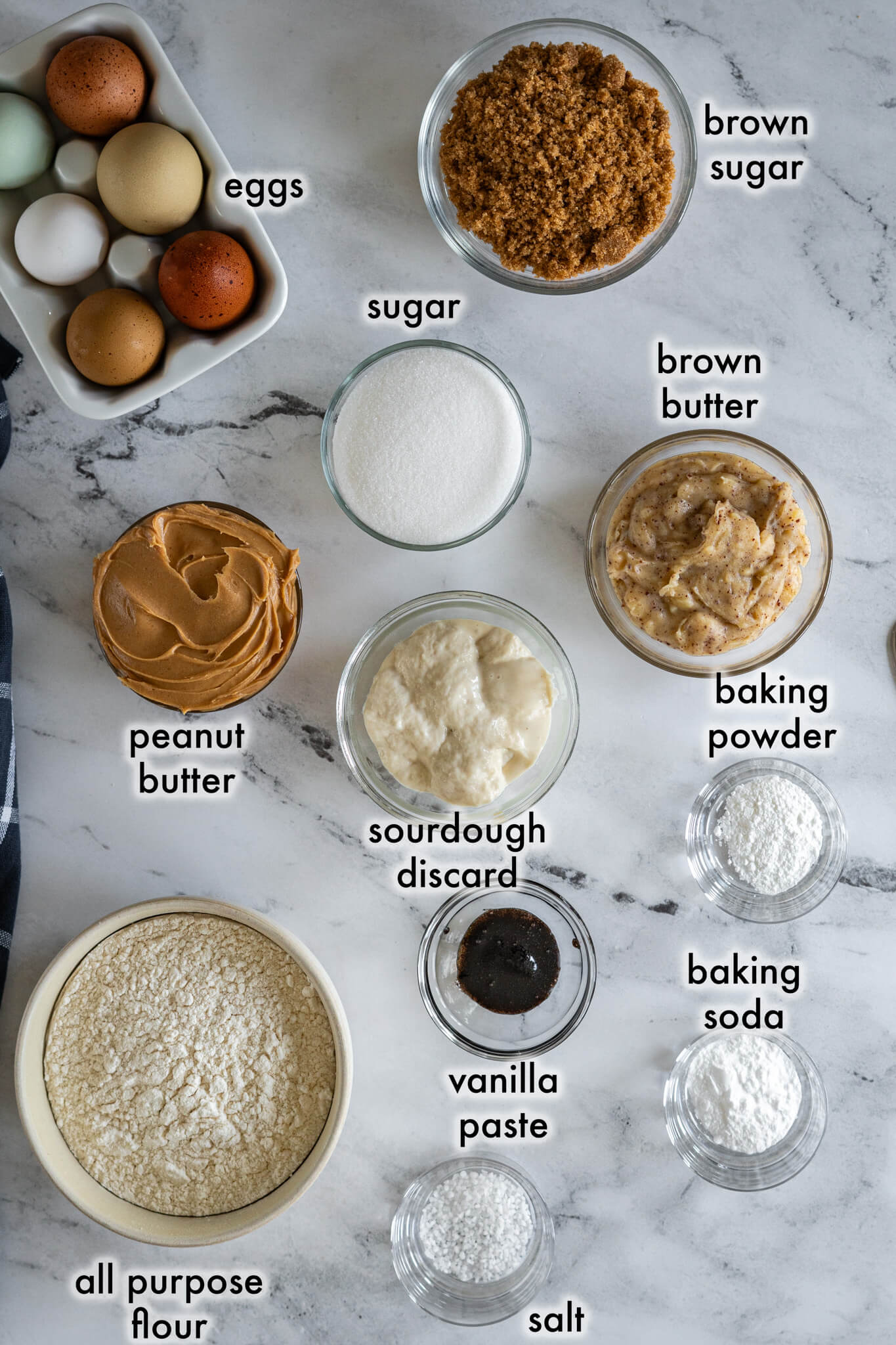
Brown Butter: You’ll brown a full cup of butter but only use 110g in the dough, the browning process reduces the volume unpredictably, so we make extra. The rest is extraordinary on toast or melted into a latte!
Peanut Butter: Conventional creamy peanut butter (Kraft, Jif, Skippy) is what this recipe is built around. The stabilizers keep fat evenly distributed through the dough, which gives you a consistent chew. Natural PB can work, see the FAQ, but stir it thoroughly.
Sourdough Discard: The discard in this recipe isn’t just a clever way to use up what’s in your fridge, though it is that too. The acids it contains interact with the flour proteins to create genuine chew and add a subtle complexity that makes the peanut butter flavor taste richer and more developed. For this recipe, fresher is better. Discard that’s a day or two old keeps the flavor balanced and peanut-butter-forward. If your discard has been sitting in the fridge for a week or more, it’ll still work, but expect a slightly more pronounced tang.
Variations + Substitutions
- Vanilla Paste: Sub the vanilla bean paste for vanilla extract 1:1.
- Peanut Butter: Crave reader Deana tested these cookies with natural peanut butter with great success, but notes that you’ll have to ensure your peanut butter is well stirred to ensure the oil is evenly distributed!
- Decorative/ Sanding Sugar: If you don’t have coarse sanding sugar, you can always roll these cookies in granulated sugar. Sometimes I do a mix of both!
How To Make Sourdough Peanut Butter Cookies
Brown The Butter:
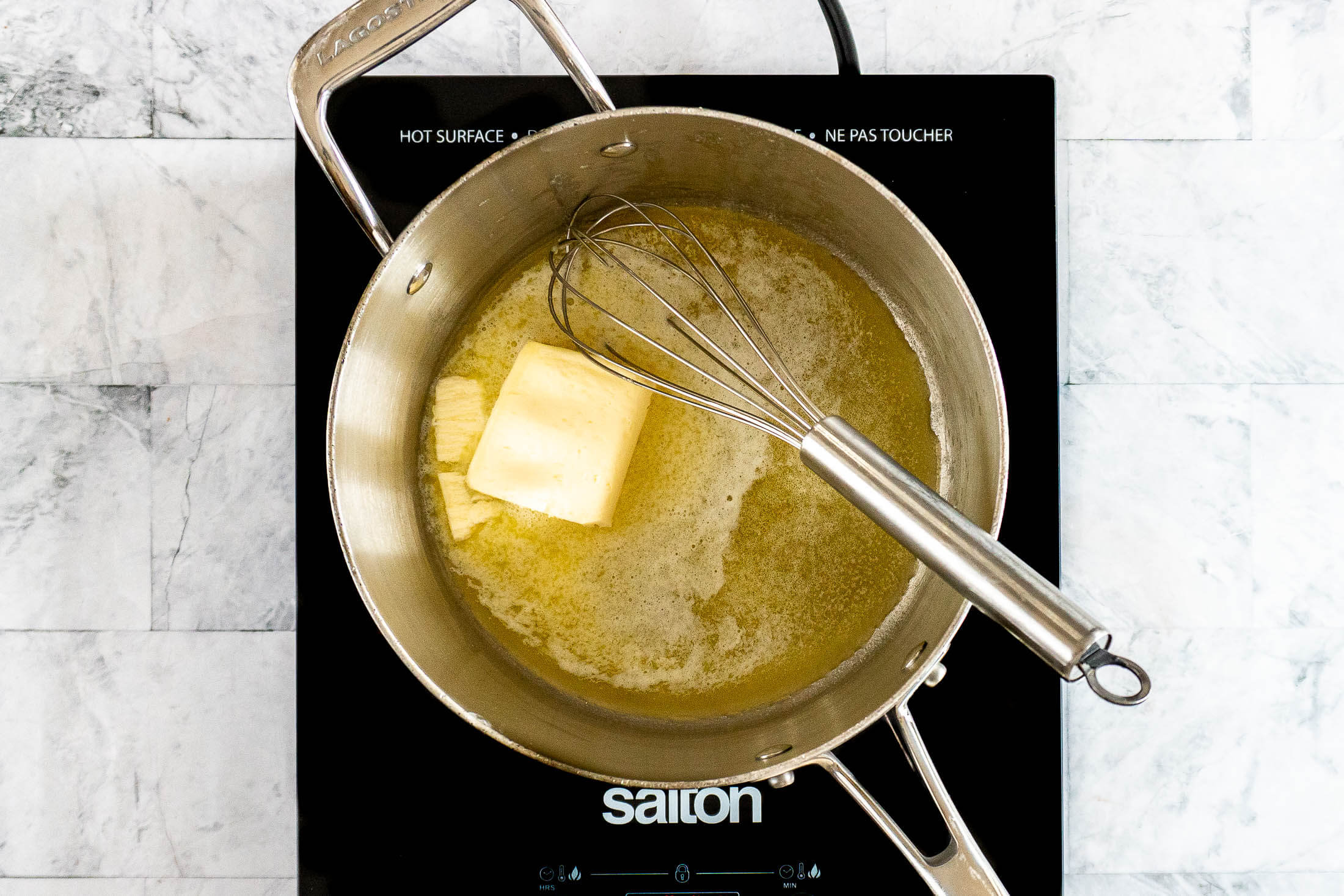
- Step 1: In a medium-sized sauce pan, over medium-low heat, melt 1 cup unsalted butter and simmer, stirring regularly, until it takes on an amber color, the milk solids have browned, and it smells nutty. This will take between 3-5 minutes of simmering, but do watch it closely because the butter can burn quickly.
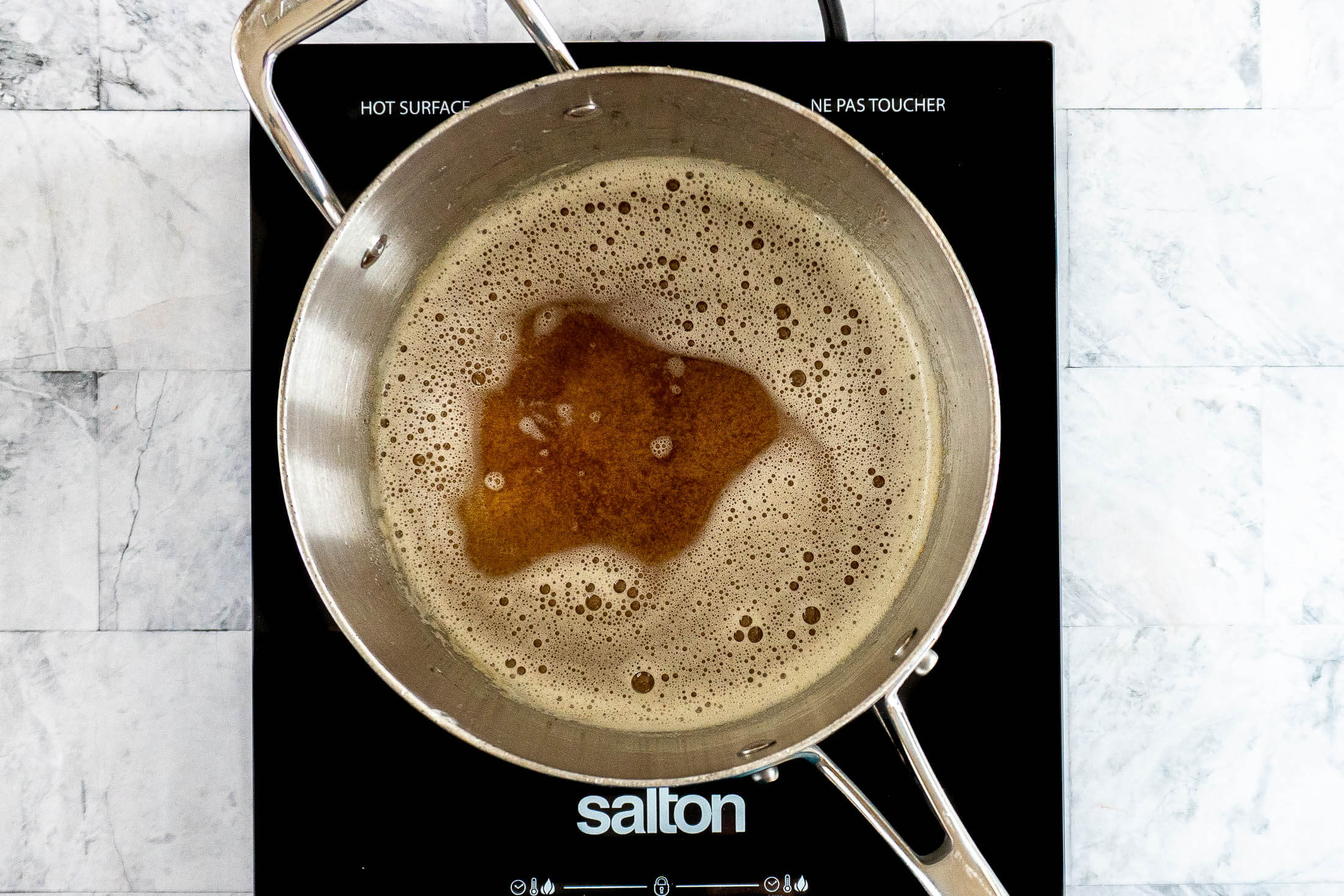
- Step 2: Transfer the brown butter to a heat proof container and place in the fridge to cool for at least 30 minutes. I like to wait till it’s nearly opaque and a soft spreadable consistency.
Note: You’ll only be using 110g of the browned butter. Unfortunately, each brick of butter is slightly different when it comes to how much it reduces during the browning process so we have to brown more butter than required. The good news is that the leftovers are delicious spread on toast!
Make The Cookie Batter:
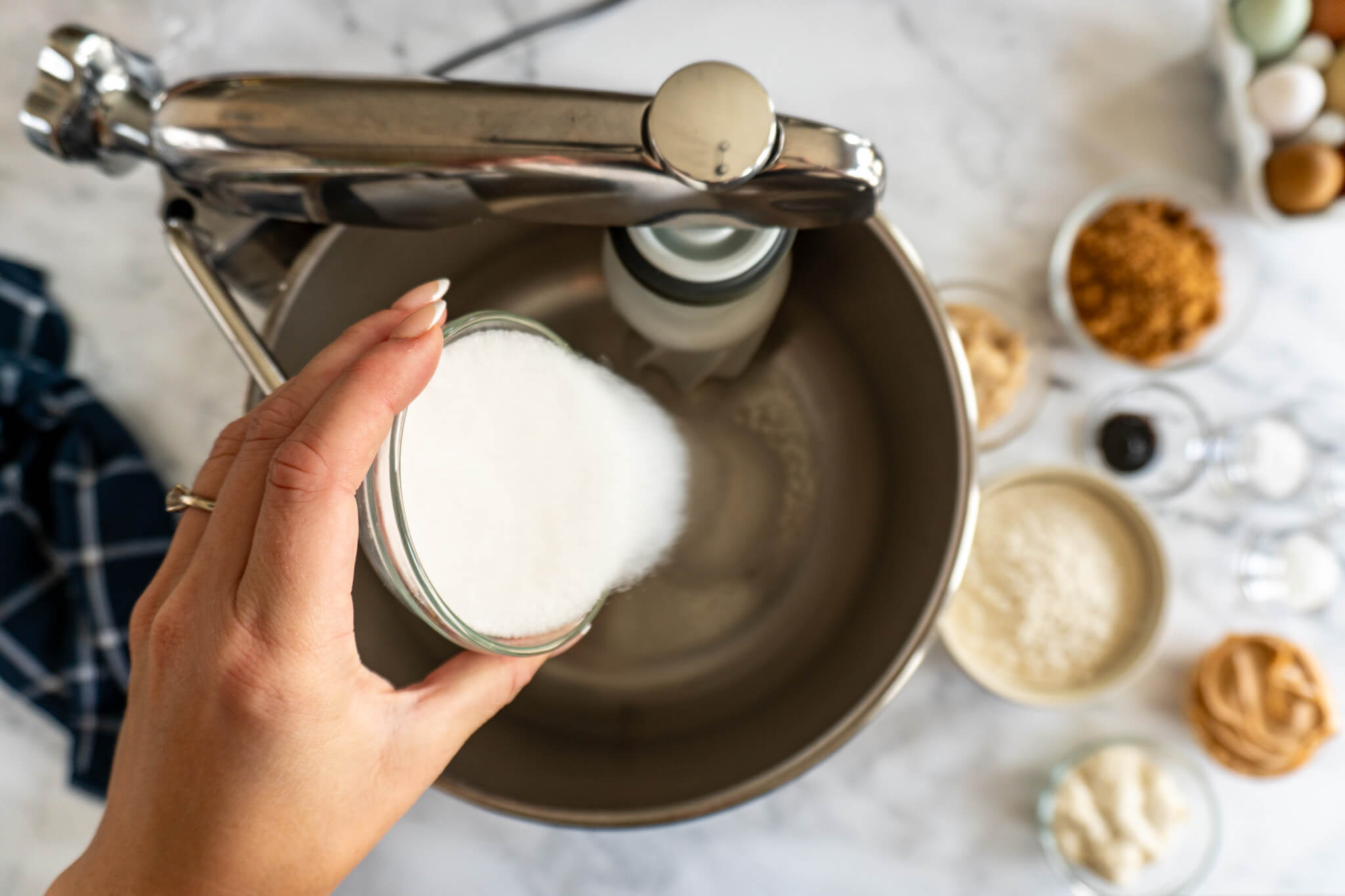
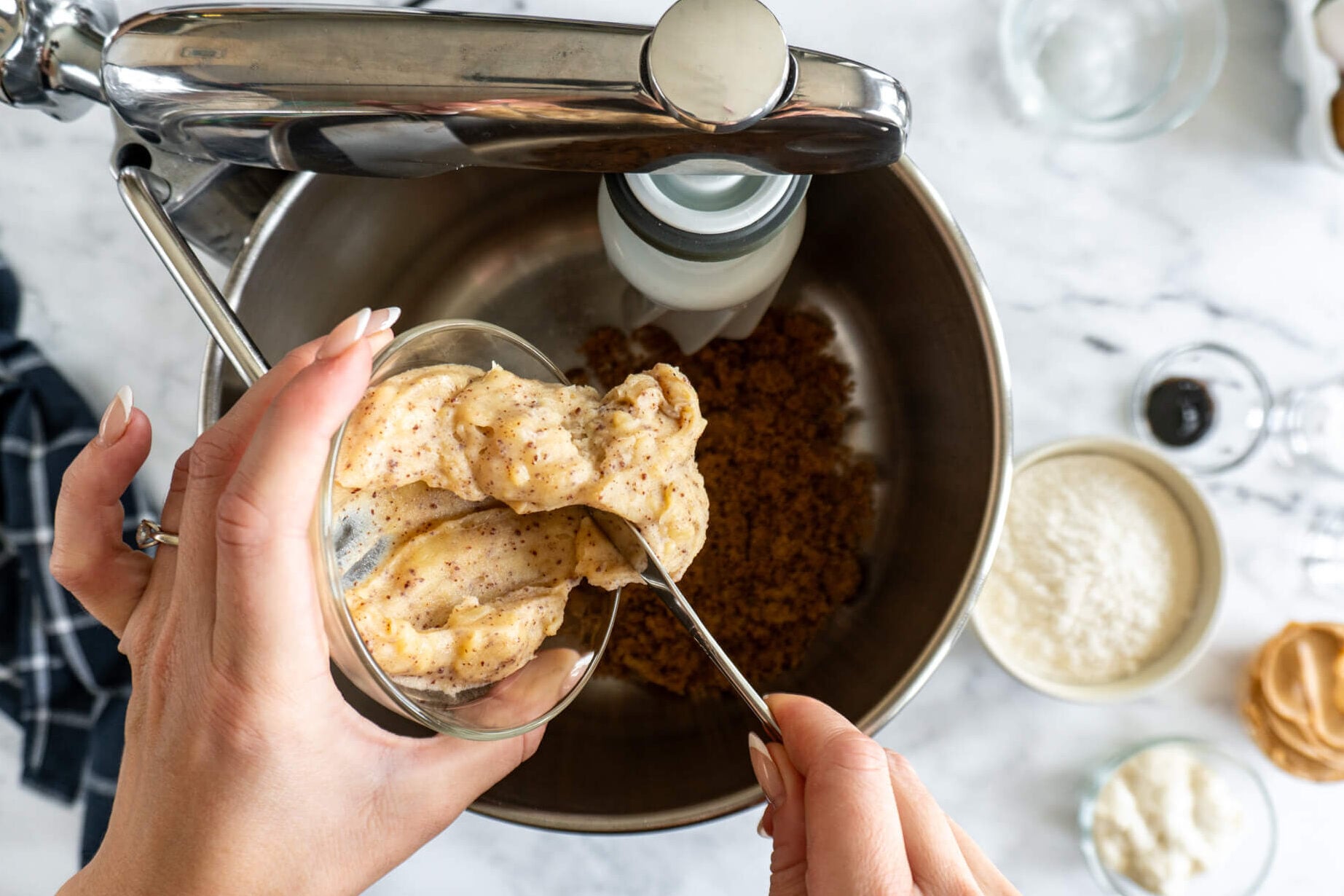
- Step 3: In the bowl of a stand mixer, add 110g brown butter, 100g granulated sugar, 140g brown sugar and cream together on medium speed until fully combined. I use my Ankarsrum mixer, so I use the scraper and roller, but if you’re using a standard stand mixer, use the paddle attachment.
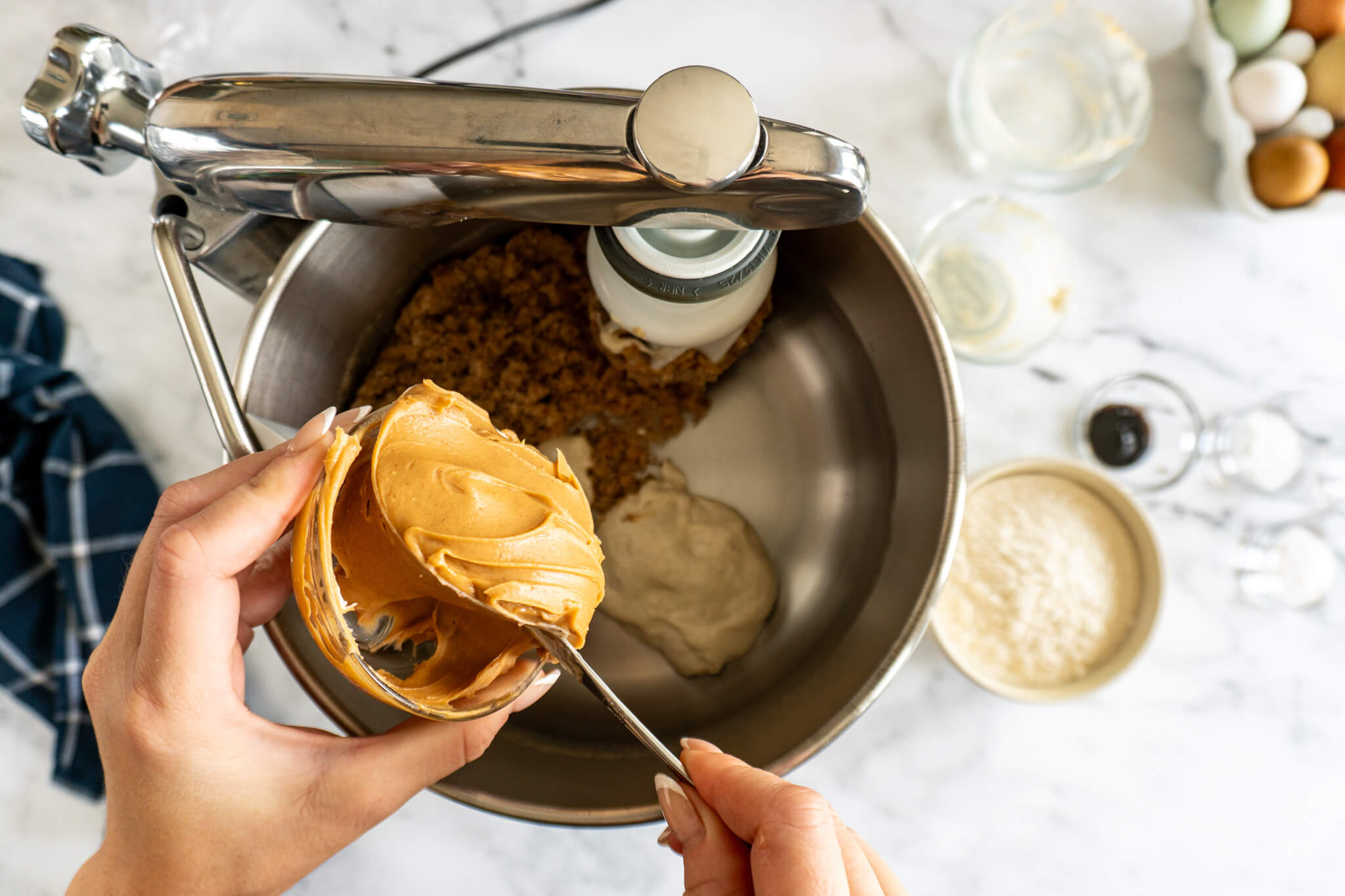
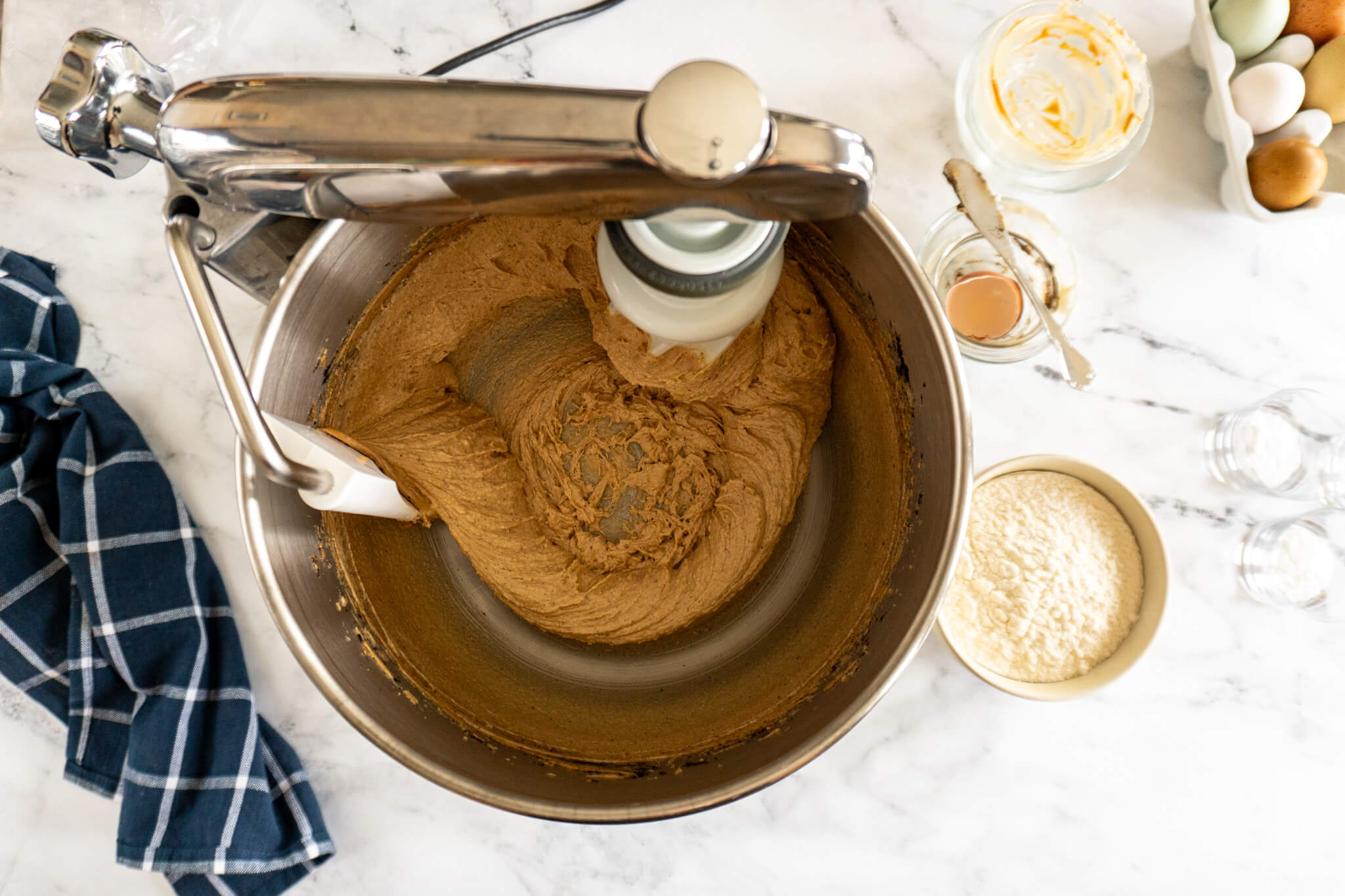
- Step 4: Add 170g creamy peanut butter, 100g sourdough discard, 5g vanilla paste, and 1 large egg. Mix on low speed until completely combined, then beat together on medium high speed until airy and creamy in color.
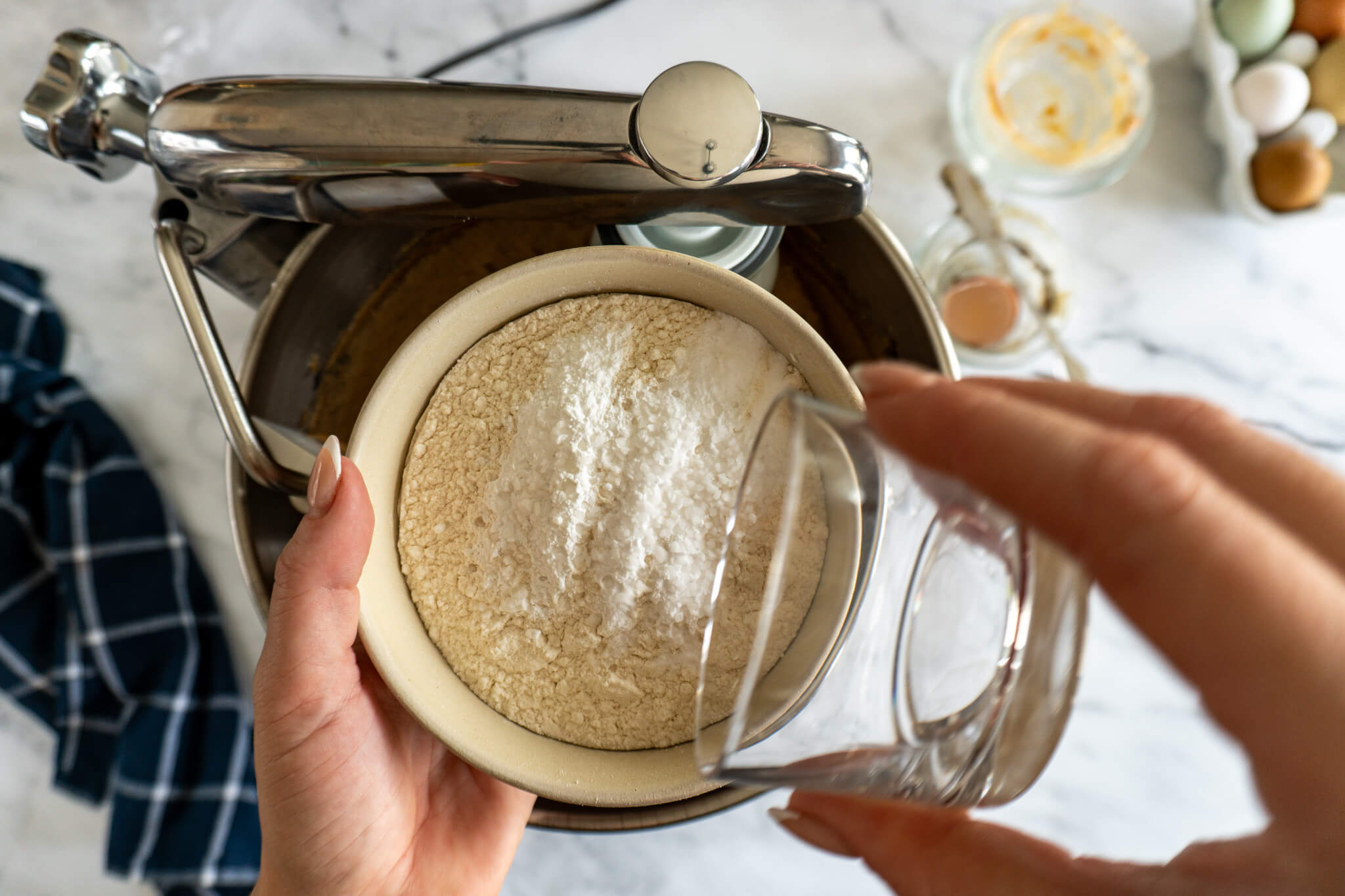
- Step 5: In a medium sized bowl, add 220g all purpose flour, 4g salt, 1/2 teaspoon baking powder, and 3/4 teaspoon of baking soda. Whisk together dry ingredients before adding to the wet ingredients.
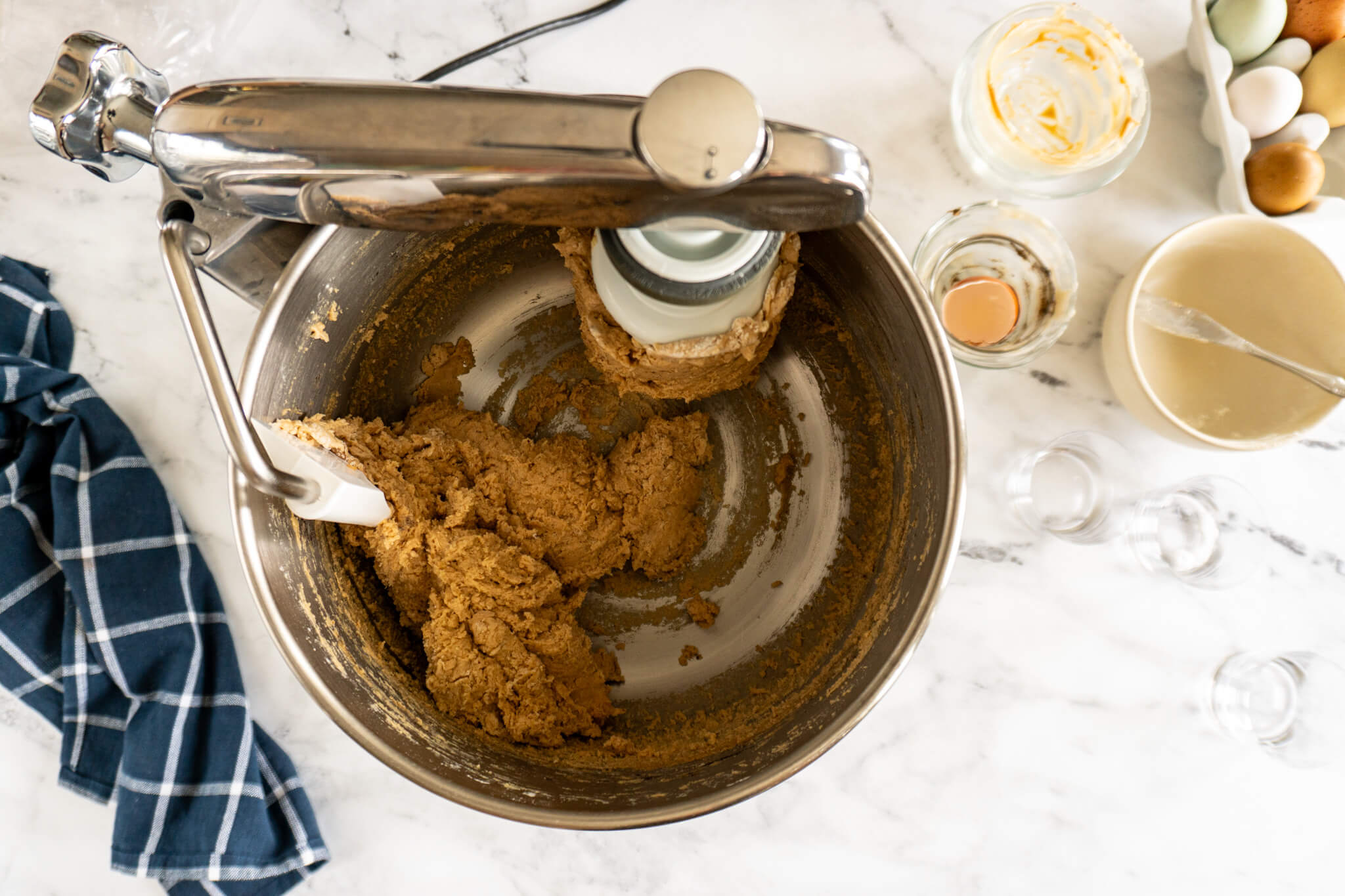
- Step 6: Stir the flour into the peanut butter mixture on low speed until just combined and all flour is incorporated, making sure to scrape the sides of the bowl at least once. This only takes about 60 seconds.
Cover the bowl and rest at room temperature while preheating the oven to 350f degrees Fahrenheit.
Bake The Cookies:
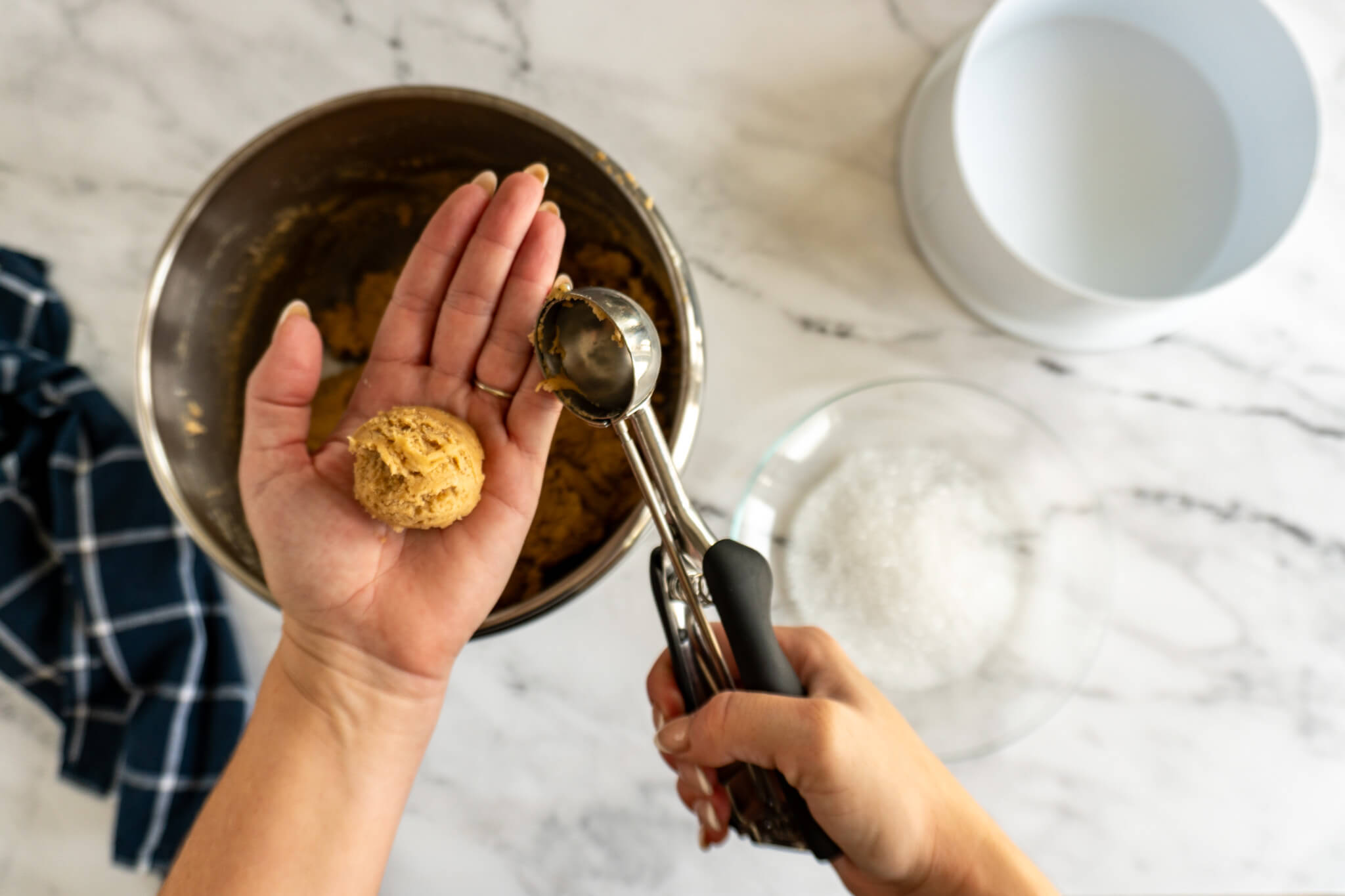
- Step 7: Prepare a baking sheet by lining with parchment paper or a silicone baking liner, set aside. Add about 1/2 cup of decorative or granulated sugar to a saucer or shallow bowl for rolling.
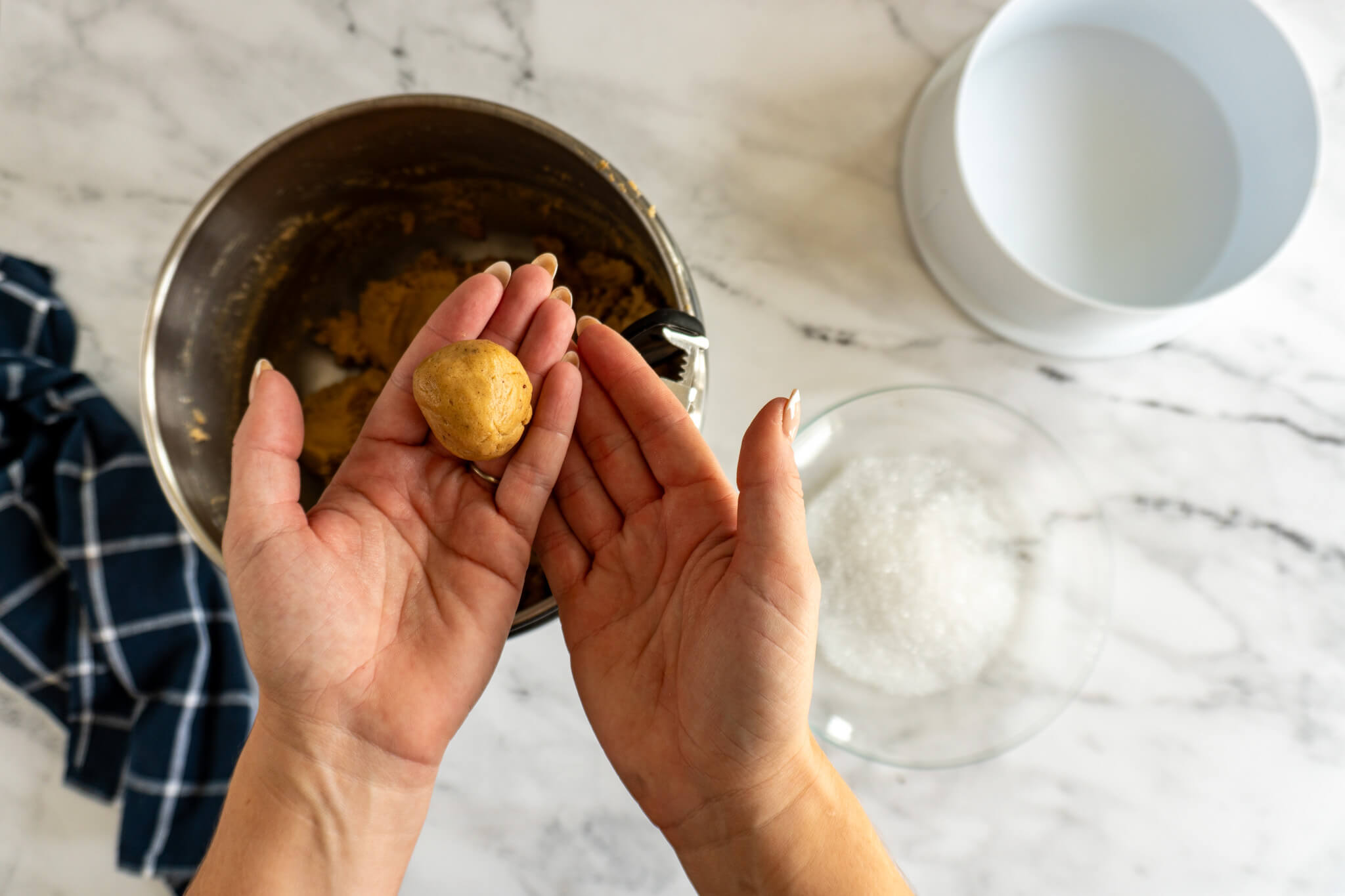
- Step 8: Using a #40 cookie scooper (about 2 tablespoons) scoop cookie dough into your hands and roll gently to form into a ball – the dough is really soft and fluffy at this point.
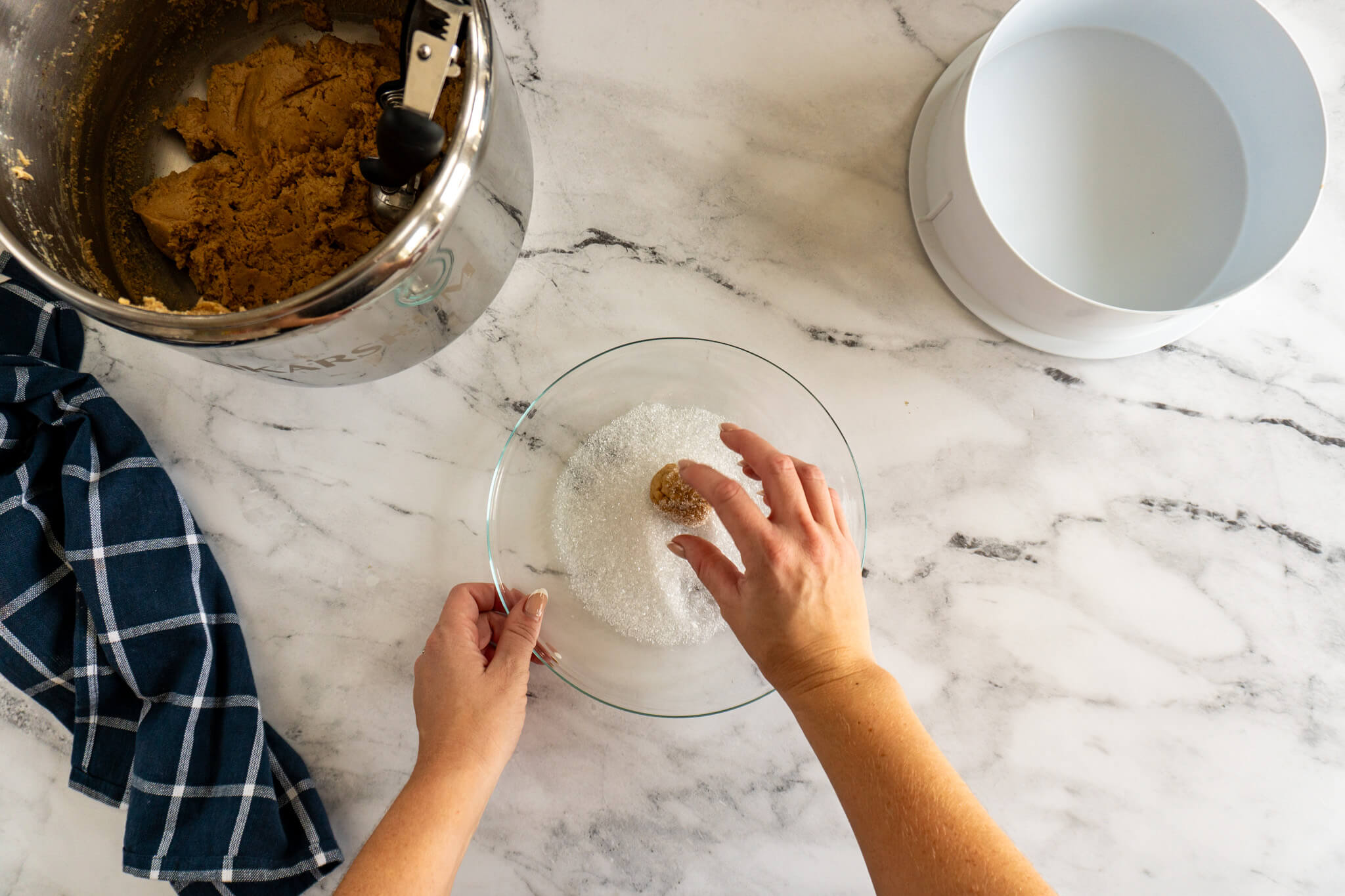
- Step 9: Roll each ball into the sugar then place onto the prepared baking sheet spaced a couple of inches apart – I usually bake 12 cookie per baking sheet.
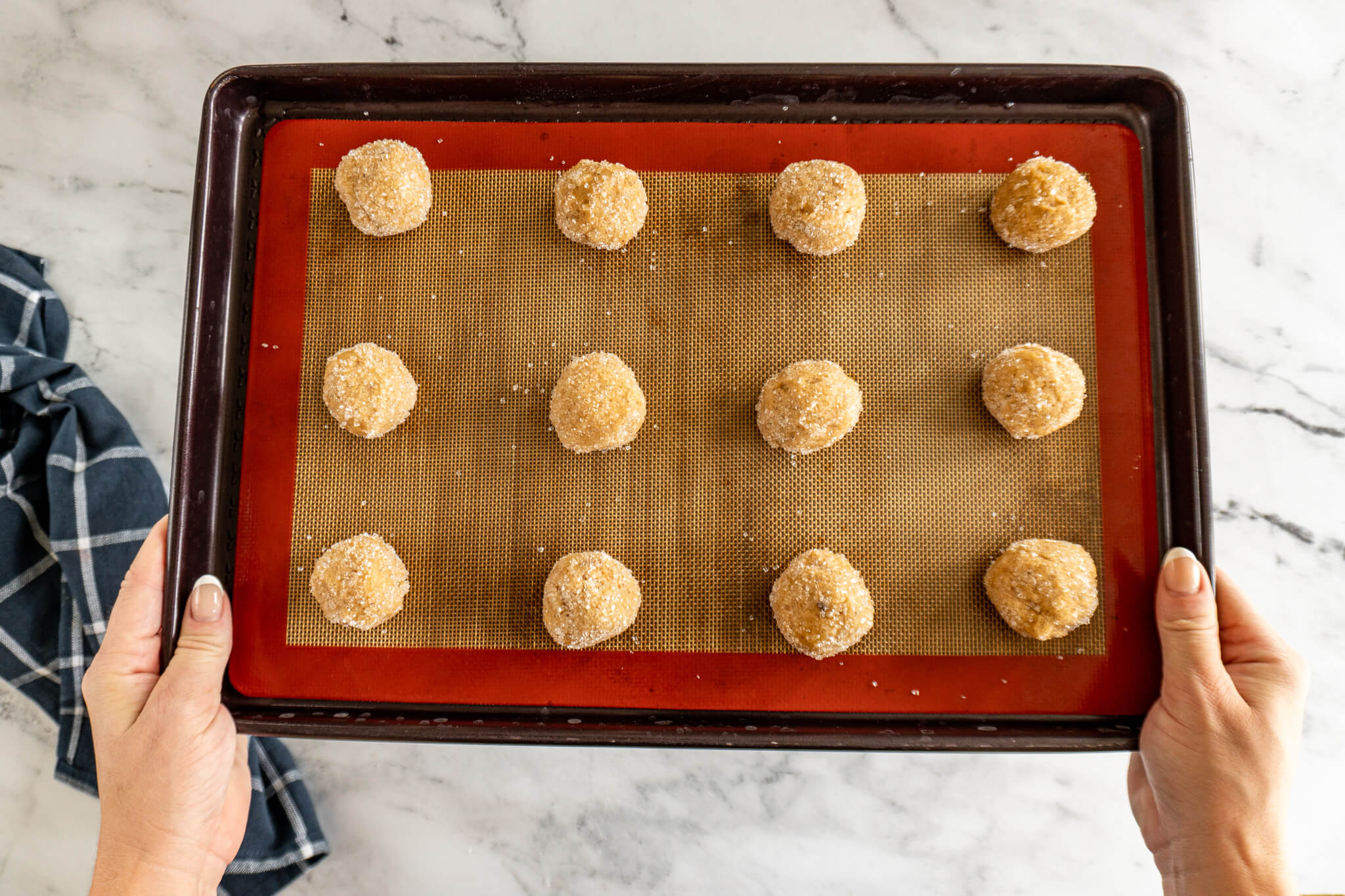
- Step 10: Bake at 350f for 12 -14 minutes, or until the edges are set and the bottoms are just barely golden brown.
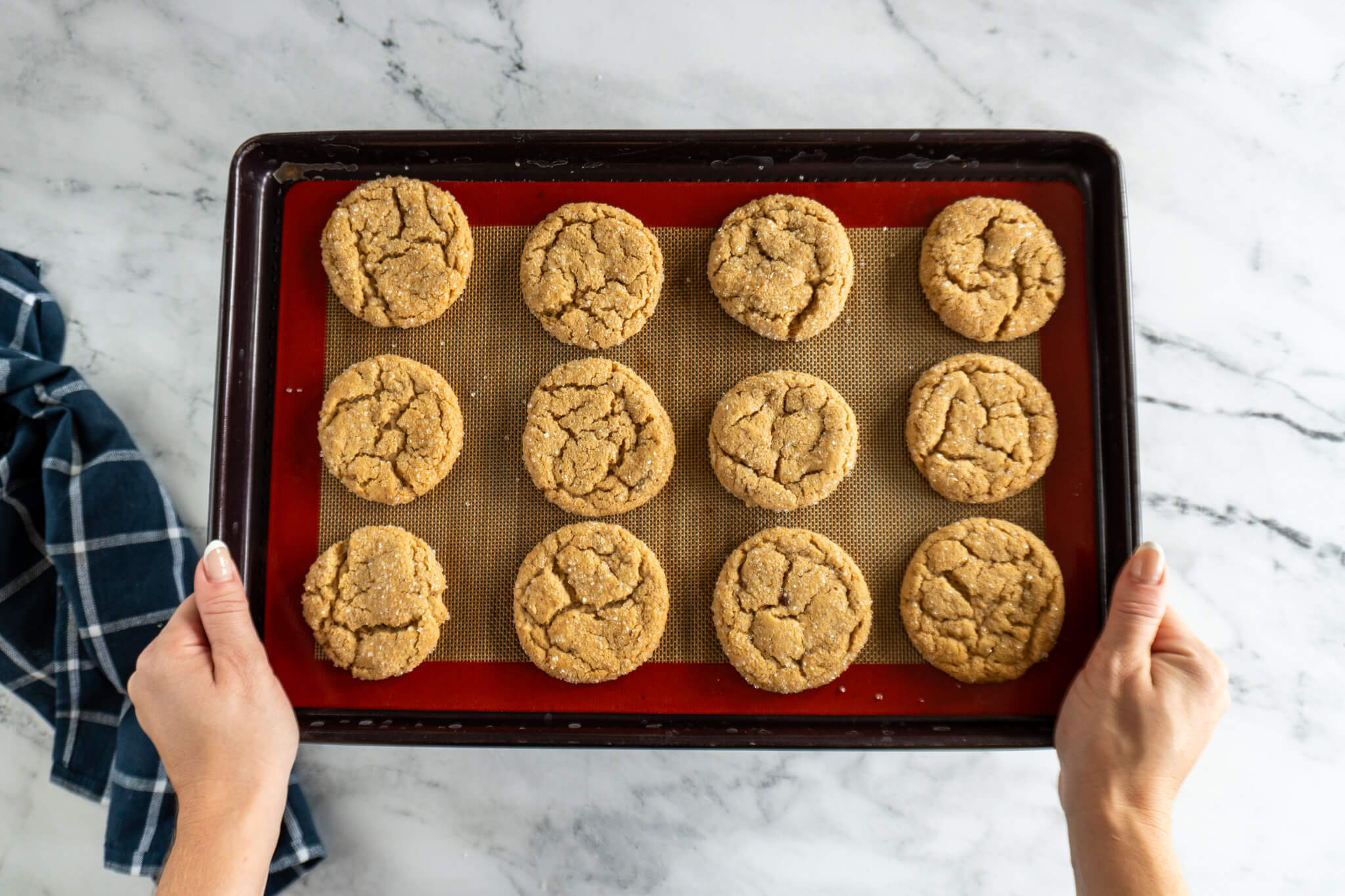
- Step 11: Allow peanut butter sourdough cookies to cool on baking sheet for 4-5 minutes before transferring to a cooling rack.
Expert Tips
- When adding the browned butter to the cookie batter, use a spatula and get ALL those little bits of browned milk solids. Those little nuggets add so much caramel, nutty flavor to the cookies!
- I like to use pretty fresh sourdough starter discard for this recipe, like discarded yesterday fresh. These cookies aren’t overly sweet and an aged discard may deliver too much sourdough tang. If you don’t have fresh discard, you can use active starter in it’s place.
- Currently, I’m on a huge vanilla paste kick these days – I find the flavor to be more intense. Feel free to sub in vanilla extract if you don’t have vanilla bean paste.
- This recipe is written as a bake right away recipe, but I’ve also aged the dough in the fridge and it turns out excellent. See the long fermented section below for more information.
- If the cookies puff up during the baking process, you can bang the cookie sheet on the counter to deflate them after baking!
- This recipe makes about 26 (2+ dozen) cookies when using a #40 cookie scoop. If you're rolling balls by hand, this may be less accurate.
Long Fermented Cookies
These cookies are genuinely excellent baked right away, but if you have the patience, cold fermenting takes them somewhere a little better.
Here’s what’s happening in the fridge: the enzymes in the flour and the wild cultures in the discard keep working, slowly breaking down proteins and converting starches into simple sugars. The result is a chewier cookie throughout, deeper browning in the oven, and a richer, more developed flavor.
My sweet spot is around 18 hours, especially if you’re using active starter. You can push to 36 hours, but beyond that the tang starts competing with the sweetness instead of supporting it.
How to long ferment: Scoop, roll in sanding sugar, place in a covered container in the fridge. Roll in the sugar before the fridge, cold dough is harder to work with and the sugar won’t adhere as well. When ready to bake, place the dough balls on a parchment-lined sheet while the oven preheats to 350°F, then bake for 14 minutes.
If you're new to baking with discard, check out my guides on how to use sourdough discard and how to store sourdough discard so you always have some ready to bake with.
Why This Recipe Works
Brown butter builds flavor before the oven even turns on. By the time these cookies hit 350°F, the butter has already undergone its transformation. You’re not relying on baking time to develop complexity, you’ve front-loaded it into the fat itself.
The sourdough discard does more than you think. It’s not here just to use up what’s in your fridge. The lactic and acetic acids in the discard interact with the proteins in the flour and the peanut butter, tightening the gluten structure just enough to give these cookies a satisfying chew without being tough. It also contributes to a more complex, less one-dimensional sweetness, you’d struggle to put your finger on it, but you’d absolutely notice its absence.
Two sugars, one team. Granulated sugar melts into the edges of the cookie as it bakes, creating those slightly crispy, golden borders. Brown sugar holds moisture in the center, it’s hygroscopic – meaning it actively attracts water, which is why the middles stay soft and chewy even after the cookies cool down. You need both!
Rolling in sanding sugar is not just decorative. That crunchy sugar shell gives each bite a textural contrast that keeps the soft center from feeling too rich. It’s a small step that makes a big difference in how the finished cookie eats.
Sourdough Discard Peanut Butter Cookies FAQs
Yes, absolutely, and honestly, it’s a great option if you don’t have discard on hand. Active starter works in this recipe with no changes to the quantities.
One thing to keep in mind: if your starter is very recently fed and very active, it may have a slightly milder flavor than aged discard. That’s not a bad thing in a sweet cookie, but if you’re specifically after that subtle sourdough complexity, a day-old discard will give you more of it. Either way, the cookies will be delicious.
You can… but, conventional creamy peanut butter (like Kraft, Jif, or Skippy) contains stabilizers that keep the oil and solids emulsified and blended together. That stable fat structure blends seamlessly into the butter and sugar, creating a cohesive dough with a consistent chew. Natural peanut butter, the kind where the oil pools at the top, doesn’t have those stabilizers. If it’s not stirred thoroughly and completely before measuring, the uneven oil distribution can make your dough greasy in some spots and crumbly in others.
Crave reader Deana has made these successfully with natural peanut butter, so it is doable! Just make sure it’s stirred all the way to the bottom of the jar before you measure, and use it at room temperature (not cold, which causes the oil to seize back up). If your natural PB has added salt, you might dial back the recipe’s sea salt by a pinch.
Once the cookies have cooled completely, transfer them to a cookie jar or airtight container and keep them at room temperature. They’ll stay soft and fresh for up to 5 days, though in my house they’ve never made it past day two!
For longer storage, these cookies freeze beautifully. Wrap them individually or layer them between sheets of parchment in a freezer-safe bag, and they’ll keep for up to 3 months. Thaw at room temperature for about 30 minutes and they taste like they just came out of the oven.
Yes, and honestly I think this is the best way to operate if you want fresh-baked cookies on demand!
After scooping and rolling the dough balls in sanding sugar, place them on a parchment-lined baking sheet and pop the whole sheet into the freezer for 2-3 hours until the balls are frozen solid. Then transfer them to a freezer-safe ziplock bag. They’ll keep for up to 3 months.
When you’re ready to bake, pull the dough balls out, place them on a parchment-lined sheet, and let them sit at room temperature while your oven preheats to 350°F.
Bake for 14 minutes, the extra two minutes accounts for the chill still in the center of the dough. Do not thaw them overnight first; baking from frozen gives you a better result.
Love browned butter? Try these: Sourdough Discard Chocolate Chip Cookies, Sourdough Discard Brownies, Sourdough Discard Cinnamon Bread, & Sourdough Cinnamon Roll Christmas Trees.
More Sourdough Discard Recipes


If you tried this Sourdough Discard Peanut Butter Cookie recipe or any other recipe on my blog, please leave a 🌟 star rating and let me know how it went in the comments below. Thanks for visiting!
📖 Printable Recipe
Sourdough Peanut Butter Cookies
Ingredients
- 230 g butter, (1 cup)
- 140 g brown sugar
- 100 g granulated sugar
- 170 g peanut butter, smooth
- 100 g sourdough discard
- 5 g vanilla paste
- 1 large egg
- 220 g all purpose flour
- 4 g sea salt
- ¾ teaspoon baking soda
- ½ teaspoon baking powder
- ½ – 1 cup sanding sugar or granulated sugar, for rolling
Instructions
Brown The Butter:
- In a medium-sized sauce pan, over medium-low heat, melt 1 cup unsalted butter and simmer the butter, stirring regularly, until it takes on an amber color, the milk solids have browned, and it smells nutty. This will take between 3-5 minutes of simmering, but do watch it closely because the butter can burn.
- Transfer the browned butter to a heat proof container and place in the fridge to cool for at least 30 minutes.Note: You'll only be using 110g of the browned butter. Reserve the remainder for use in other recipes.
Make The Cookie Batter:
- In the bowl of a stand mixer, add 110g brown butter, 100g granulated sugar, 140g brown sugar and cream together on medium speed until fully combined.
- Add 170g creamy peanut butter, 100g sourdough discard, 5g vanilla paste, and 1 large egg. Mix on low speed until completely combined, then beat together on medium high speed until airy and creamy in color..
- In a medium sized bowl, add 220g all purpose flour, 4g salt, 1/2 teaspoon baking powder, and 3/4 teaspoon of baking soda. Whisk together dry ingredients before adding to the wet ingredients.
- Stir the flour into the peanut butter mixture on low speed until just combined and all flour is incorporated, making sure to scrape the sides of the bowl at least once. This only takes about 60 seconds.
- Cover the bowl and rest at room temperature while preheating the oven to 350f degrees Fahrenheit.
Bake The Cookies:
- Prepare a baking sheet by lining with parchment paper or a silicone baking liner, set aside. Add about 1/2 cup of decorative or granulated sugar to a saucer or shallow bowl.
- Using a #40 cookie scooper or a tablespoon, scoop cookie dough into your hands and roll gently to form into a ball - the dough is really soft and fluffy at this point.
- Roll each ball into the sugar then place onto the prepared baking sheet spaced a couple of inches apart.
- Bake at 350f for 12 -14 minutes, or until the edges are set and the bottoms are just barely golden brown.
- Allow peanut butter sourdough cookies to cool on baking sheet for 4-5 minutes before transferring to a cooling rack.
Long Fermented Cookies:
- Scoop and roll dough balls in sanding sugar before refrigerating, cold dough won't hold the sugar as well. Place in a covered container in the fridge for 12–36 hours. The sweet spot is around 18 hours for deeper flavor and chew without excess tang. When ready to bake, place dough balls on a parchment-lined sheet while the oven preheats to 350°F and bake for 14 minutes.
Notes
Expert Tips
- When adding the browned butter to the cookie batter, use a spatula and get ALL those little bits of browned milk solids. Those little nuggets add so much caramel, nutty flavor to the cookies!
- I like to use pretty fresh sourdough starter discard for this recipe, like discarded yesterday fresh. These cookies aren't overly sweet and an aged discard may deliver too much sourdough tang. If you don't have fresh discard, you can use active starter in it's place.
- This recipe makes about 26 (2+ dozen) cookies when using a #40 cookie scoop. If you’re rolling balls by hand, this may be less accurate.
- If the cookies puff up during the baking process, you can bang the cookie sheet on the counter to deflate them after baking!


Oops I don’t have vanilla paste! Can I use vanilla extract as a substitute?
Yup! You may want to add a bit extra as I find vanilla paste has more flavor 😉
Hi,
I just wanted to let everyone know who might want to use natural peanut butter instead of the more processed ones, this recipe works VERY well with natural peanut butter. Just make sure your natural peanut butter is well stirred before measuring it out. I also did a long ferment for about 18 hours in the refrigerator, and I didn’t roll and sand until after I took the dough out of the refrigerator (while the oven was preheating). I baked them for 14 minutes.
Hey Deana, thank you for sharing with everyone! Happy to hear you enjoyed the recipe!
Curious if it seemed oily with the natural PB. I blended mine but the dough as of now (it’s in the fridge overnight) was super oily. I doubled the recipe to use all the butter up…. Will see if it soaks in tomorrow when it comes out of the fridge
How did this turn out Krista?
Oh man. What a pleasant surprise these were! I followed the “always bake” rule and as sticky and messy as they were the next day, I baked them. I lightly dusted the parchment with sea salt and rolled them in sugar first and just popped them in the oven! Have never had such an amazing cookie and everyone loved them!
Sorry to hear your cookie dough was sticky! I didn’t find mine too bad! But really happy to hear you enjoyed them!
Second go round way less sticky! So clearly first time I did something off… haha. Can’t say it was wrong as they were so good… but this outing the dough was perfectly manageable and so far theyre baking beautifully
Ahh yay! Great to hear 🙂
Hey Krista,
It might have been that your natural peanut butter wasn’t thoroughly stirred. Before using it in baking, I try to start with a fresh container, stir it the day before I want to use it, and then I stir it thoroughly again right before using it. I just tripled the batch and didn’t have any oiliness. I also used salted peanut butter and reduced the salt in the recipe by 1/2 teaspoon.
So, where are the directions for the person that forgot to separate the brown butter and put it all in? I started with 170g butter, and I know that when you brown it, your finished product is less grams of butter, bc it evaporates. So, mine is greasy sitting in the fridge … 🤦🏻♀️😁
Oh no 🙁 Sorry!
Here’s what I would do; try adding 25g extra flour and 25g granulated sugar, mixing to see how it is, then adding more if required.
These are very good cookies and I will be making them again! I have never used a PB cookie recipe other than my grandmother’s, but I wanted to use sourdough and I’m so glad I found this recipe. It’s the closest to my grandmother’s less the sourdough.
That is awesome to hear, Tammy! It’s so cool how a single scent or flavor can remind us of someone so special!
Will gluten free starter and gluten free flour work for this recipe?
Hi Deborah, I have not tried this. But If you give it a shot, please leave a comment to let me know how it went – this answer may benefit future readers!