
24 Hour Sourdough Starter

This quick sourdough starter is made with a pinch of yeast to jump-start fermentation. It’s easy to make and ready in 24 hours, versus the 7-10 days of a traditional starter.
Once your quick starter is ready, you can bake same day sourdough bread, make sourdough discard pasta, or try sourdough pizza dough.
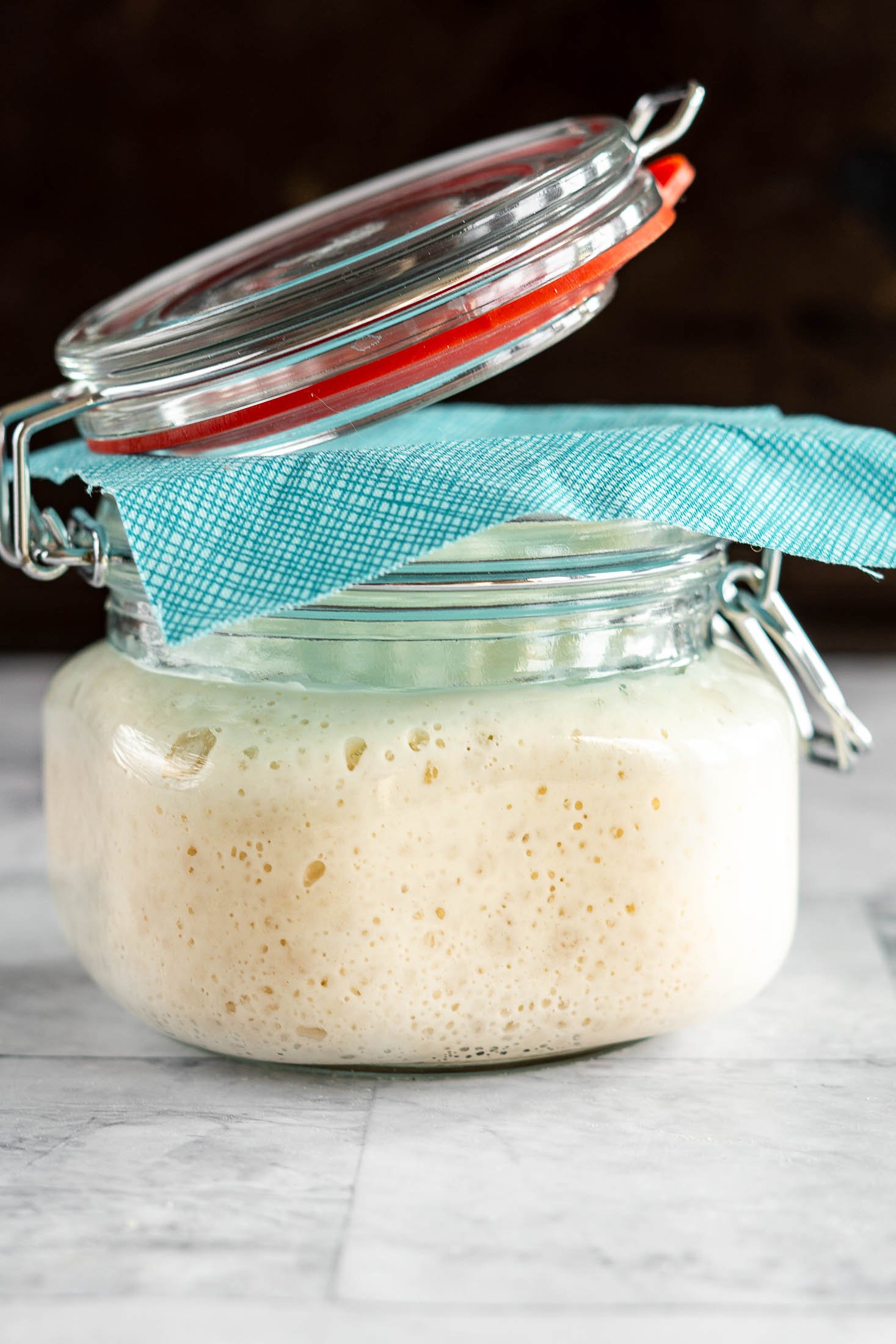
Craving The Recipe Details?
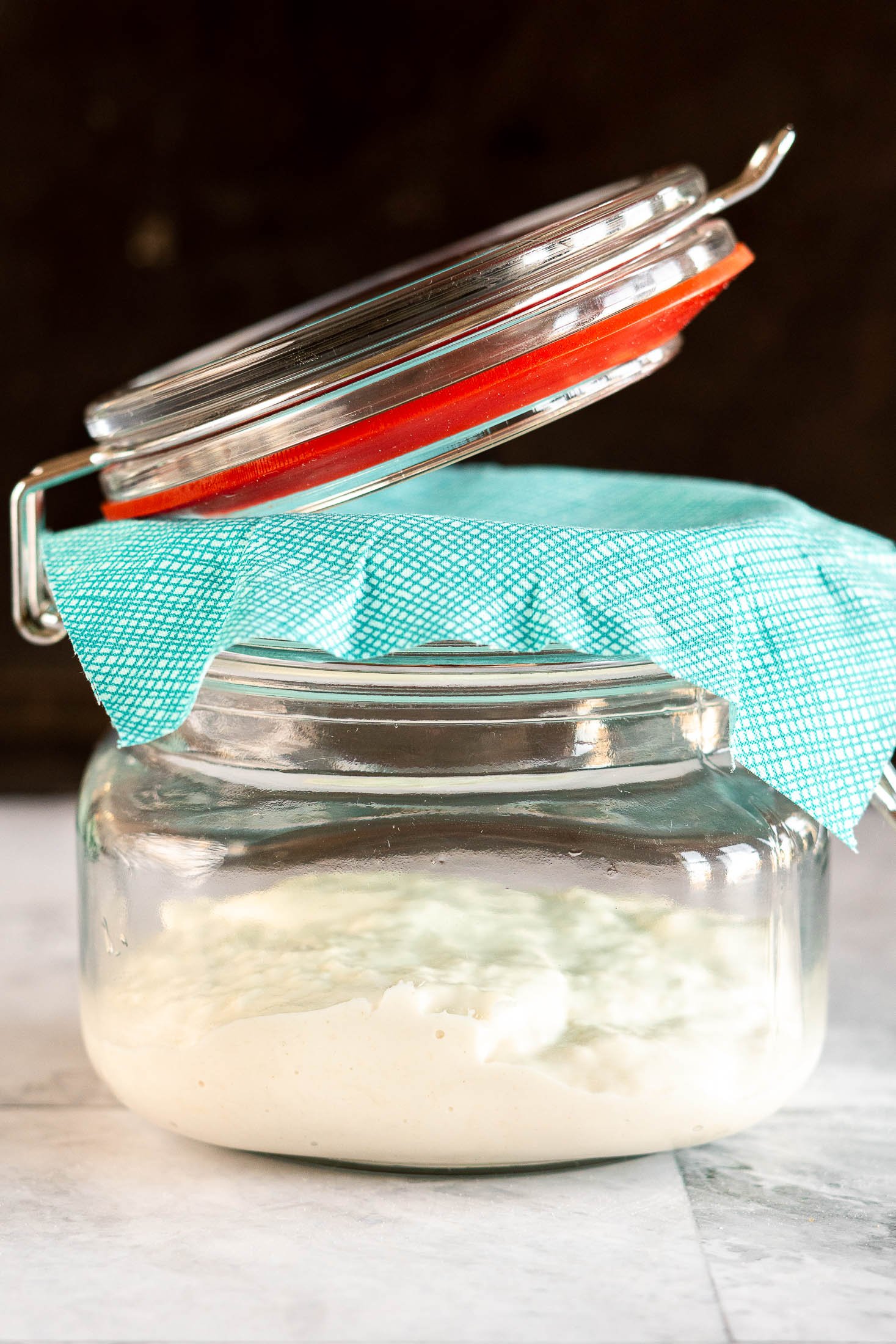
What it is: A quick sourdough starter made with flour, water, and small amount of commercial yeast to jump-start fermentation.
Why you'll love it: It produces an active, bubbly starter in around 24 hours instead of the several days a wild yeast starter needs.
How to make it: Combine water, flour, and active dry yeast and let ferment for 12-18 hours. On Day 2, discard, then feed. Once the starter is bubbly and doubles in volume, usually within 6-12 h, it's ready to use.
This fast sourdough starter method is perfect for both beginners and experienced bakers who want to start baking sourdough ASAP!
By giving your wild yeast a head start with a little bit of commercial yeast in the mix, you get a bubbly, active starter ready to bake with in just one day, not 7 to 10. It’s still real sourdough with all that tangy flavor, just without the patience-testing timeline.
And once your starter is established, the possibilities are endless. Use it fresh for rustic sourdough bread with its tangy crust and open crumb, or toss the discard into your bread machine for an easy sourdough loaf in just a few hours. Feeling adventurous? Try everything bagel sourdough or chocolate sourdough bread for something totally different.
This quick sourdough starter is dedicated to real sourdough – just faster!
November 2021 update – I just revived this sourdough starter that had gone unfed in the fridge for over 4 months!
December 2025 update – That original starter is still going strong!
September 2026 update – Me and my OG starter are still baking great bread!
Jump to:
- Craving The Recipe Details?
- Is A Sourdough Starter Made With Yeast Real Sourdough?
- Key Ingredients
- How To Make A Quick Sourdough Starter With Yeast
- Expert Tips
- Why This Recipe Works
- Quick Sourdough Starter FAQs
- How To Use Sourdough Starter
- Sourdough Starter Feeding And Storage
- Starter Vs. Discard
- Using Sourdough Discard
- What’s Hooch?
- Is My Starter Healthy?
- Easy Sourdough Starter Recipes
- 📖 Printable Recipe

Master Your Sourdough Starter In 5 Days!
From Confused To Confident.
Find success with 5 simple, actionable secrets delivered to you. No more guessing games – just clear, proven steps to a thriving starter.
Is A Sourdough Starter Made With Yeast Real Sourdough?
YES!
Many bakers worry whether a sourdough starter with yeast is ‘authentic.’ Research on sourdough microbiomes shows that sourdough microbiomes naturally shift as they're fed, refreshed, and exposed to local flour and environment. Even when a starter begins with Saccharomyces cerevisiae (commercial baker's yeast), the microbial community gradually transitions toward the yeasts and lactic acid bacteria typically found in mature sourdough cultures.
A 2025 study tracking sourdough microbiomes through daily feedings found that despite early abundance of Kazachstania yeasts, Saccharomyces increased in frequency near the end of their 28 day trial, even in starters where it hadn’t been detected in early on. Leading them to hypothesize that the Saccharomyces could come to dominate starters if the testing continued past 28 days. The same study also found that feeding schedules had no effect on the microbiome’s composition, while type of flour significantly impacted the bacterial community within the starters.
It stands to reason that with regular feedings, environmental exposure, and time, the starter's genetics "refresh”.
In other words: I wholeheartedly believe that my 5 year old quick-started starter has absolutely developed into a full, authentic sourdough starter with its own unique microbiome.
Key Ingredients
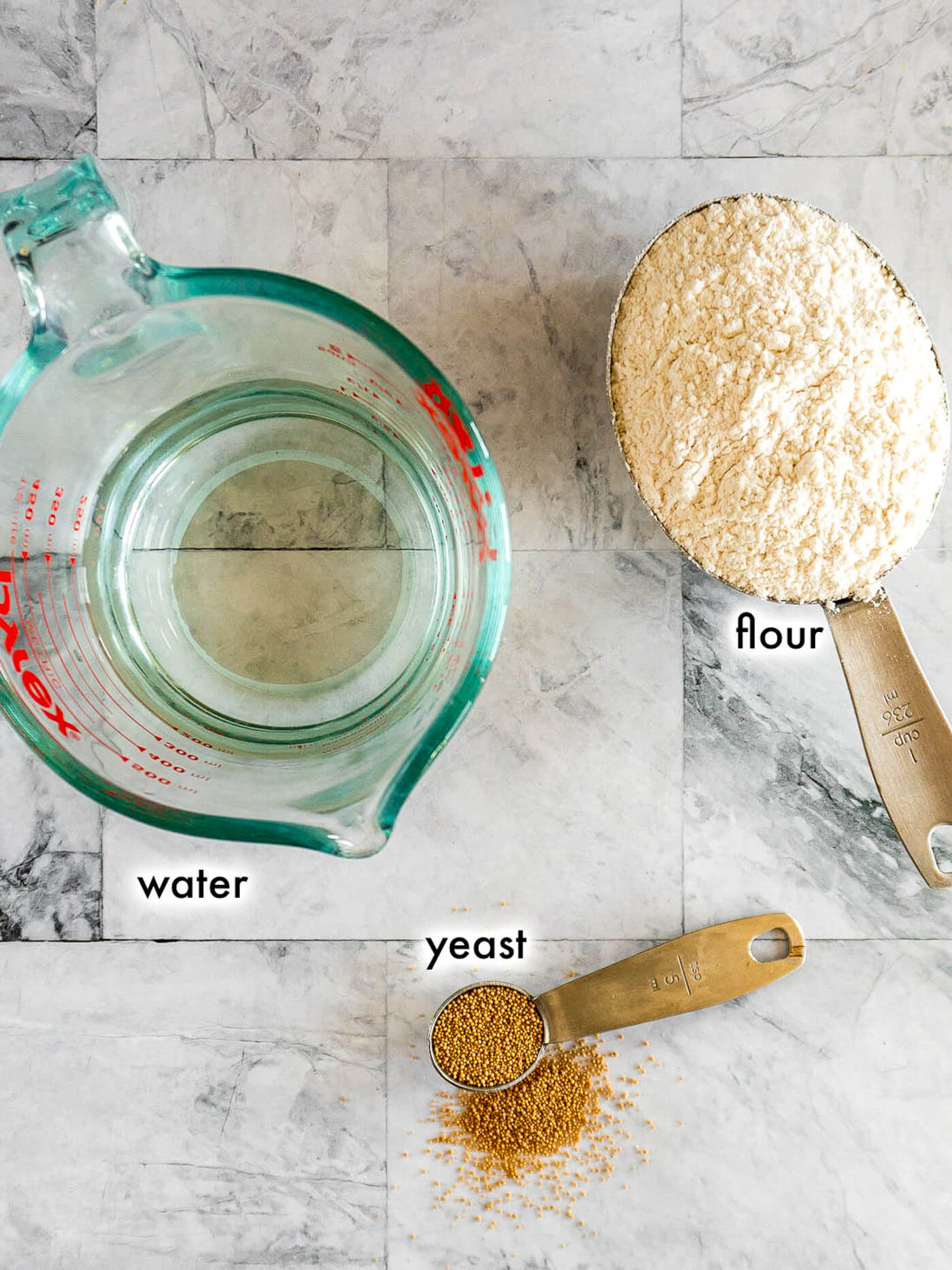
Flour: This recipe calls for unbleached all purpose flour. This can be substituted with organic flour or unbleached bread flour.
Water: Use filtered water at room temperature, treated tap water can kill yeast. Be mindful of the temperature as well, cold water slows fermentation, and hot water kills yeast entirely. I do use my well water for my starter and it’s always fine.
Yeast: Use active dry yeast. The larger granules take longer to re-hydrate and are slower to propagate in the starter.
How To Make A Quick Sourdough Starter With Yeast
Day 1:
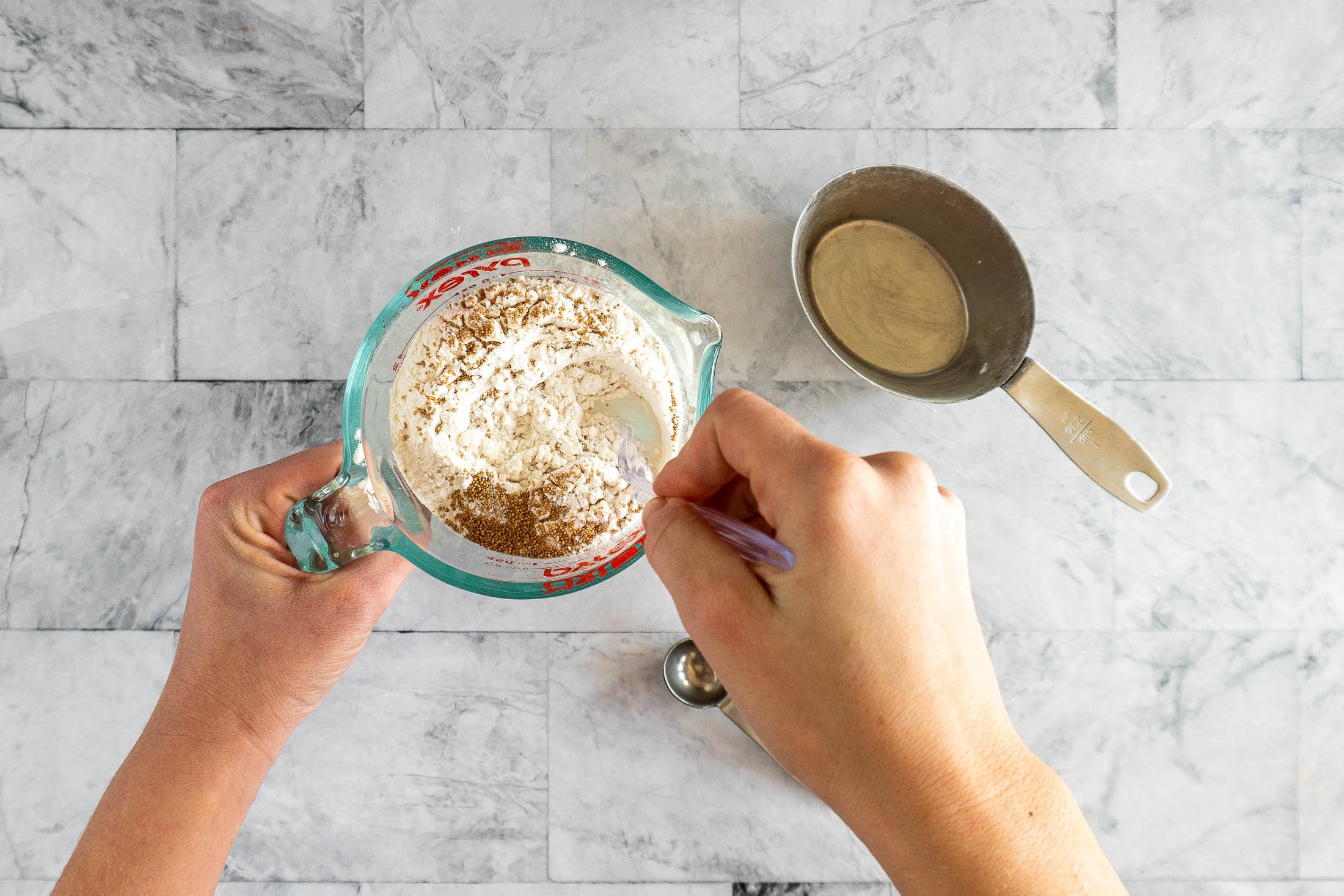
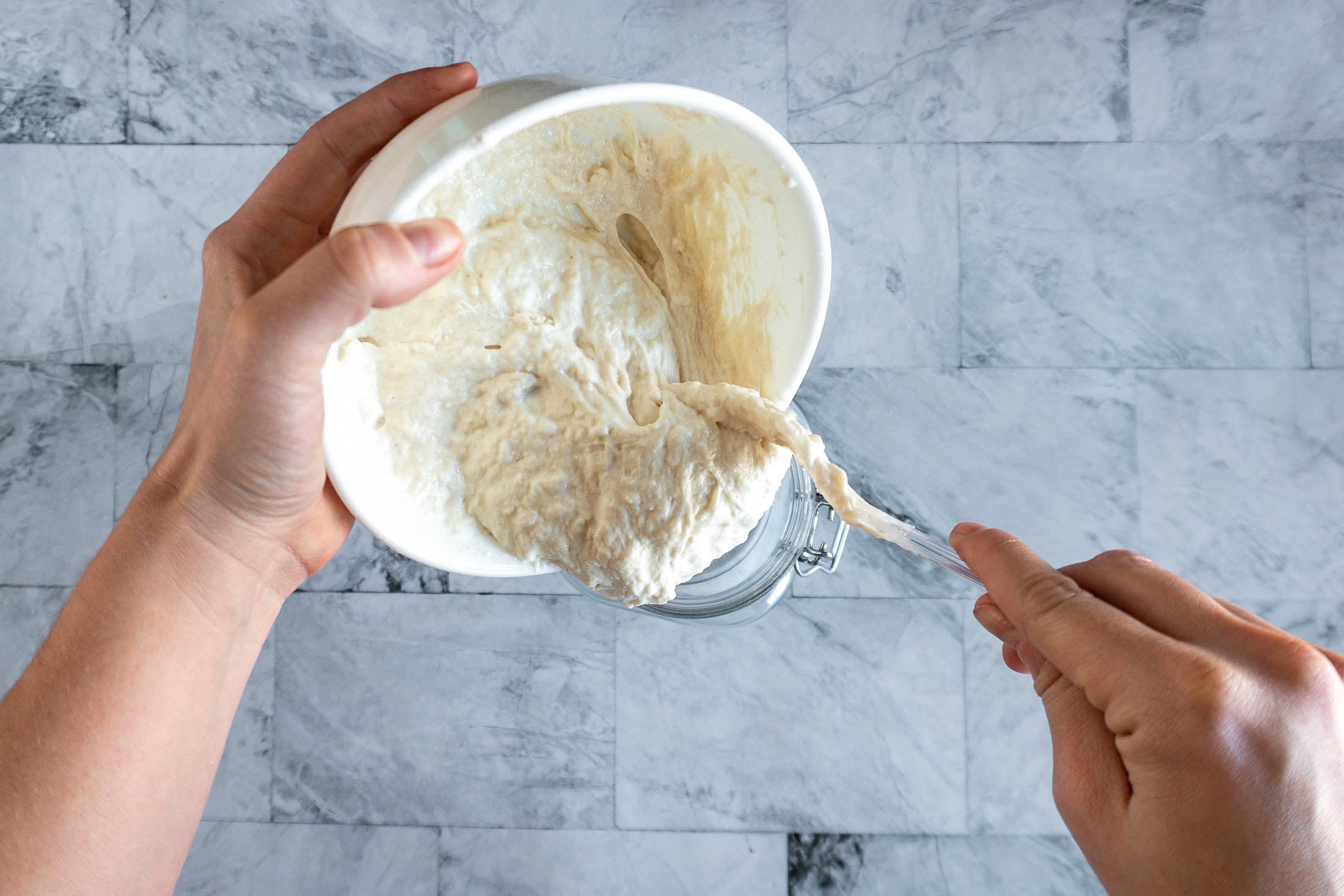
- Step 1: In a large, non-metallic container, mix 100g unbleached all purpose flour, 100g room temperature water, and 1/2 teaspoon of active dry yeast until completely combined. No need to proof the yeast.
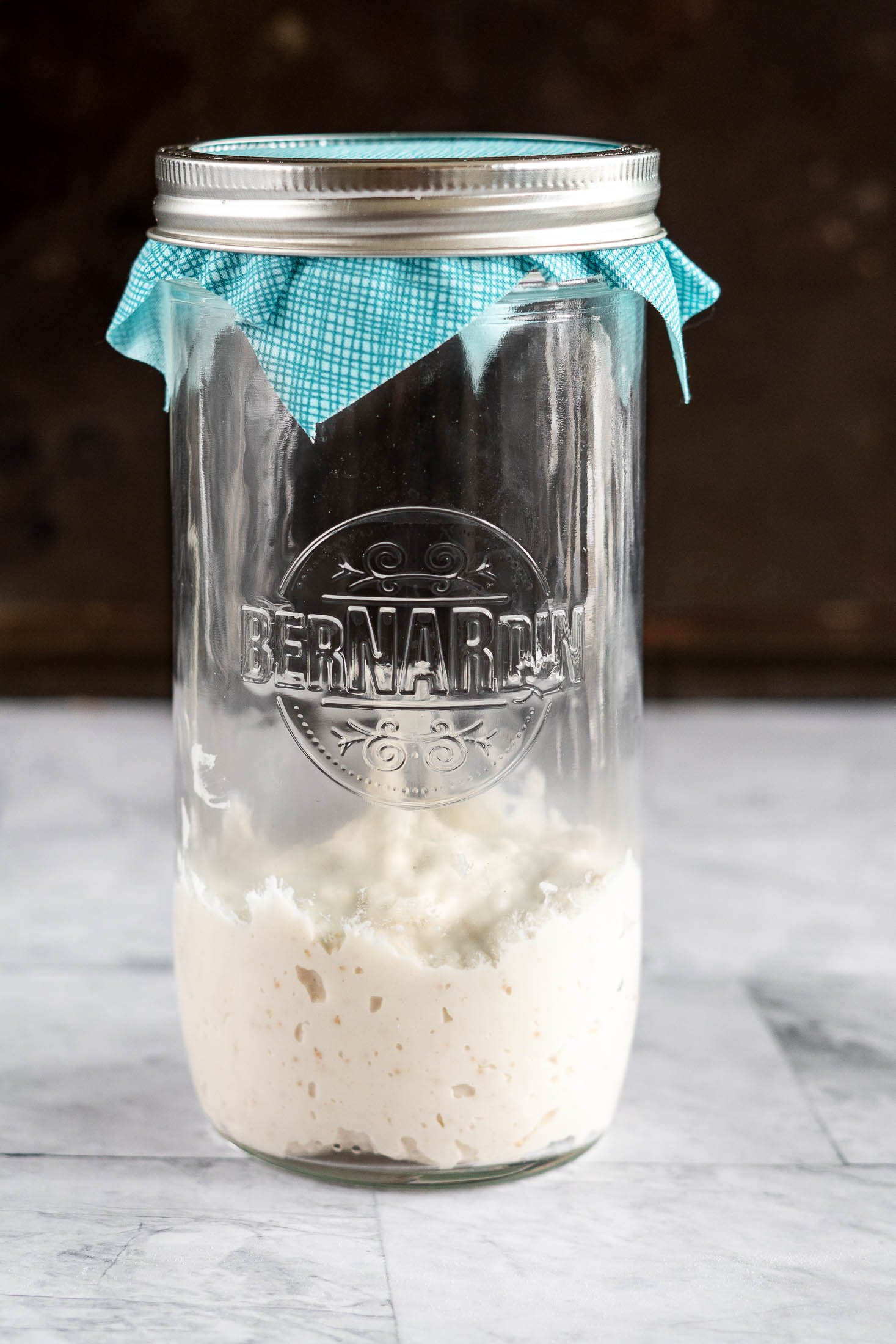
- Step 2: Either cover the container with a clean kitchen towel or transfer it to a glass or plastic container with at least 3 times the volume of the starter – it will grow!
Do not seal airtight – cover loosely, but don’t leave the starter exposed to open air.
Set the starter in a warm spot, free of temperature swings, and drafts to ferment for 12-18 hours.
Day 2:
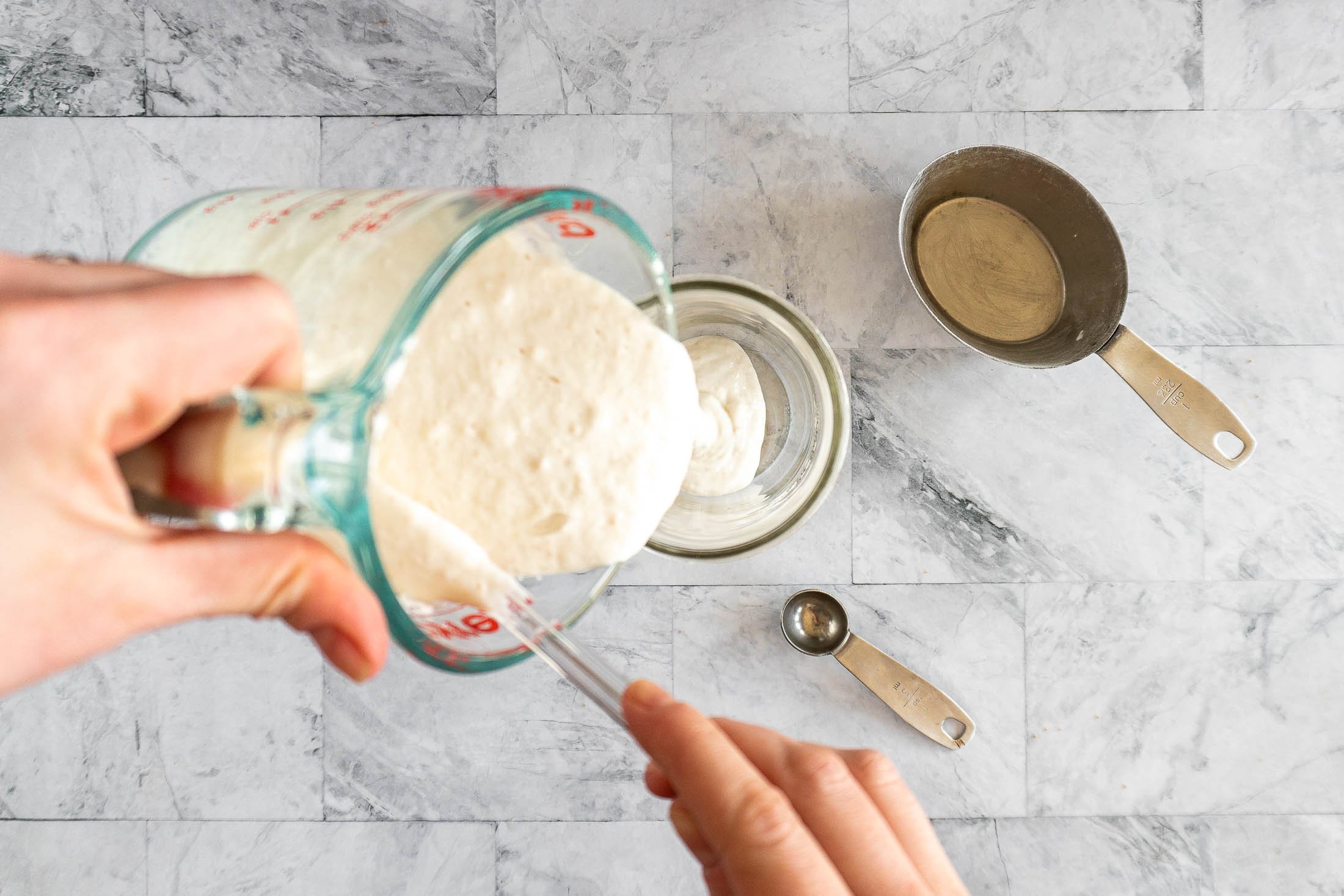
- Step 3: After 12-18 hours, stir down the bubbles and transfer 50 g of starter to a clean starter jar and feed it by mixing in 50 g warm water until mostly combined, then add 50 g unbleached all purpose flour and stir until completely combined.
If you notice a layer of liquid (hooch) on the bottom of the jar, stir this in before discarding.

- Step 4: Once the fed starter is fed, bubbly, and doubled in volume it’s ready to use! This will take between 6 and 12 hours depending on your kitchen (environment) and starter.
NOTE: You can save any amount of starter you’d like, but just remember it must be fed 1:1:1 ratio of starter:water:flour to keep your starter at 100% hydration.
Day 3 + Onward:

- Step 5: Transfer 50 g of starter to a clean starter jar and feed it by mixing in 50 g warm water until mostly combined, then add 50 g unbleached all purpose flour and stir until completely combined.
- Step 6: See the following section for more information on storage!
Expert Tips
- Start Here! If you’re intimidated by a 7 -10 day sourdough starter, this is a great starting point. You’re going to see activity every day and can start baking by the second day, although the flavor, complexity and leavening power will only improve over time.
- Keep It Clean: Each feeding time transfer your starter to a clean jar or container, add the water to the starter and stir until completely combined before adding the flour. This step is helpful in ensuring the starter is completely distributed and in my experience results in a stronger, faster rise.
- Get into a routine: If you’re a counter keeper, try to always feed at the same time daily e.g., if you feed at 8am, feed again at 8am each day. I like to feed my babies while my morning coffee is brewing. If they’re in the fridge, I like to keep them front and center and feed them each Sunday!
- Let it breathe: Keep your starter in a non-airtight, breathable container. If using a mason jar, simply set the flat lid on top of the jar and spin on the ring only enough to keep the flat lid in place.
Why This Recipe Works
Commercial yeast kickstarts fermentation. A small amount of active dry yeast gets the party started, giving you visible bubbling and expansion within hours instead of waiting several days (or more) for a brand new starter to become active.
1:1:1 feeding builds momentum. After the initial 12-18 hour fermentation, you keep 50g starter and feed it equal portions of water and flour, by weight. This is considered a 1:1:1 feeding ratio. This ratio gives the active culture fresh food while maintaining 100% hydration, setting it up for another predictable rise.
You bake by activity, not just the clock. The 24 hour timeline is a target, not a guarantee. Once the starter is bubbly and doubled in volume, it’s ready to use. The exact timing can shift based on your starter and your kitchen environment. This is why we watch for the signs: consistent expansion, bubbles throughout, and a steady rise and fall cycle.
Quick Sourdough Starter FAQs
Yes you can use commercial yeast in a sourdough starter! Adding a small amount of yeast jumpstarts fermentation by introducing a predictable population of yeast right away. This speeds up the early bubbling and rising you normally wait days to see.
However, commercial yeast doesn't replace the wild yeast and bacteria that make sourdough unique. Over time, your local wild microbes will take over as long as you continue feeding the starter regularly.
If your sourdough starter is sluggish, it may need to run through a sourdough starter revival, but if you’re impatient, you can absolutely use yeast. To boost a sluggish starter, simply add a small amount of yeast (a scant ⅛ teaspoon) during your next feed. This bumps up fermentation fast so you can get back to baking!
Adding yeast significantly speeds up the rise, you'll see bubbling and expansion within hours instead of days. This can help your first loaves rise more predictably.
– Faster rise = milder flavor. At first. A yeasted starter hasn't had time to fully develop the tangy notes associated with long-fermented sourdough.
– Over time, the flavor deepens. As you continue feeding the starter, the microbial community continues to develop as the starter is fed and maintained, and the balance of yeasts and bacteria can change over time as your starter matures. Within a short time, it behaves and tastes like a traditional sourdough starter.
If your goal is a fast, dependable starter with true sourdough character, starting your journey with a quick starter is a great option.
Both types work, but I prefer active dry yeast when making sourdough starter. In my testing, active dry yeast performed better as it rehydrates more gradually, giving the starter a gentler, more controlled fermentation.
Absolutely! Once your quick sourdough starter has been fed and doubled or so, you can use it in any sourdough recipe calling for active starter and you can use the discard in any sourdough discard recipe!
It will continue to increase in strength as it ages, like any sourdough starter.
While you can use this quick starter to start a batch of sourdough in about 24 hours and it will absolutely leaven the bread, it lacks some of the character and nuance that a more mature starter brings to sourdough, but your quick starter will absolutely grow into a healthy, mature starter capable of delivering those flavors with proper feeding and maintenance.
Think of this as a shortcut to an active starter, not a shortcut to a mature starter.
How To Use Sourdough Starter
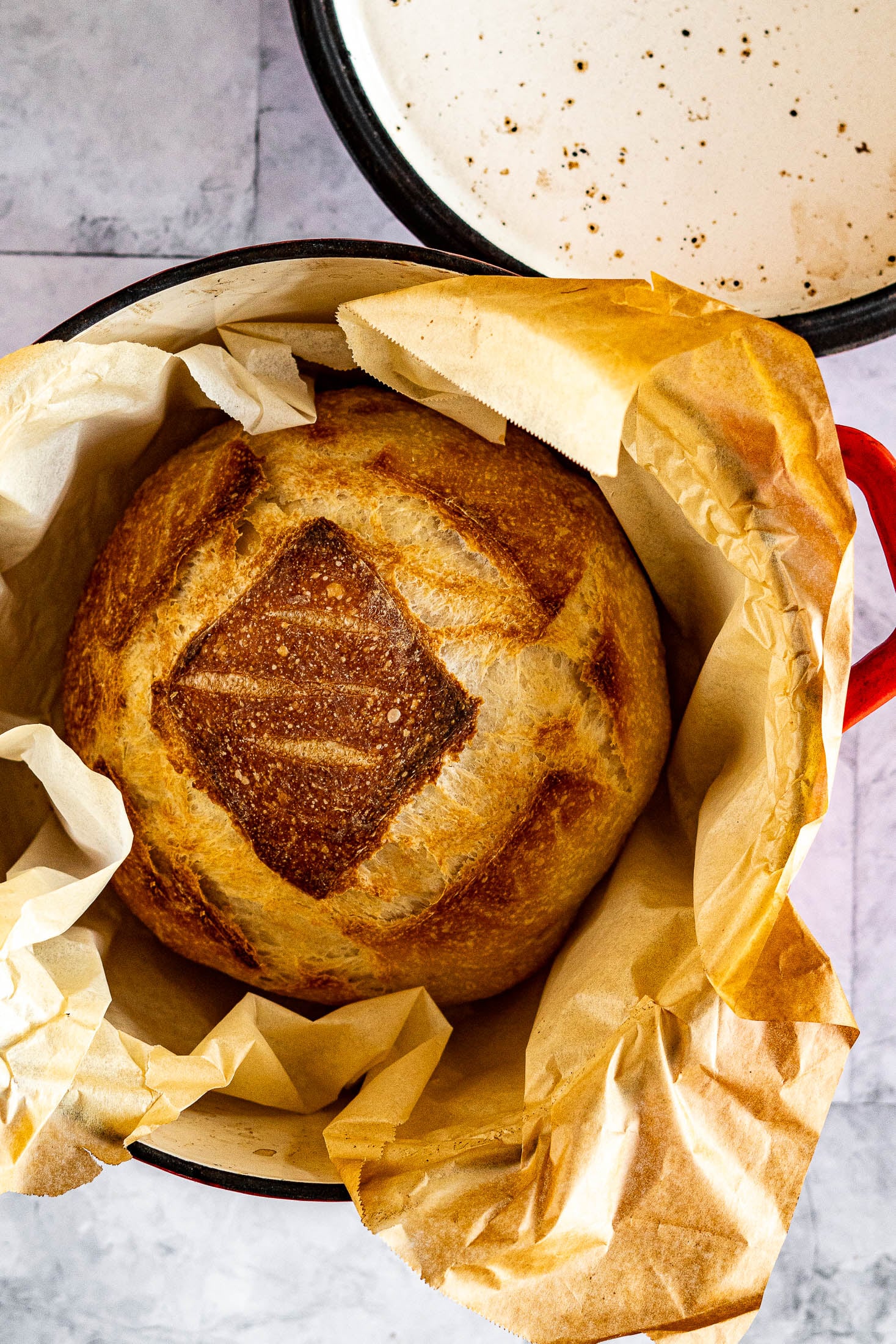
- Before you’re ready to bake, feed your starter according to the recipe with a 1:1:1 (starter:water:flour) ratio and set it in a warm place for it to activate.
- Once your starter has doubled in volume, follow your favorite sourdough recipe.
Float test:
There’s a lot of talk about the float test on the internet. Some swear that it’s a great way to test the viability of your starter for use in bread making, others say it doesn’t matter.
Personally, I think it makes sense that once the yeast has activated and started to create bubbles in the starter, the starter will float due to added buoyancy from the trapped air. To do the float test, simply drop a small amount of sourdough starter in a glass of water, if it floats, it’s all good! If it doesn’t float, might be time to feed your starter!
Why I don’t use the float test:
Instead of using the float tests as a primary readiness check, I look for three things together: consistent expansion after feeding, bubbles throughout the culture, and a predictable rise and fall cycle.
Sourdough Starter Feeding And Storage
This all depends on your baking proclivities!
Daily To Bi-Weekly Baker
If you plan on baking daily or few times a week, you’ll want to keep your starter at room temperature. This will keep it warm and active whenever you’re ready for it!
To keep your starter alive, you’ll need to feed it every 12-24 hours. You can play with the feeding schedule a bit, once you get to know your starter and how hungry it is. The starter should be fed after the culture doubles in size and begins to deflate, but doesn’t completely flatten.
You’ll know your starter has begun to deflate by the slide marks left on your jar.
Weekly Or Less Frequent Baker
Not a huge baker? Don’t have a lot of time to devote to the sourdough? Don’t let this deter you. You can bake beautiful sourdough bread as frequently or infrequently as you like.
If you’re an infrequent baker, store your sourdough starter in the fridge! This slows down the fermentation speed considerably and allows you to feed your sourdough only once a week. Due to the length of time between feeds, the refrigerated starter may have hooch forming on the top, this is totally fine, stir it in and feed as required.
If keeping your starter in the fridge, simply remove it from the fridge, stir and feed, and rest for about 12 hours, or until doubled in volume, before baking.

Starter Vs. Discard
They both contain the same ingredients, and come from the same place, so what’s the difference?
Starter is fed and active sourdough starter, while discard is unfed and inactive sourdough starter. Starter is generally used 6-12 hours after a feeding when it’s bubbly and at its most active. Discard is either harvested when your starter is hungry, before it’s fed again or is separated from the starter during a feed as the “discard” portion, and saved for future recipes.
Starter that has at least doubled in size and is active can leaven bread, while a nearly inactive discard cannot. Discard can, however, be used in recipes that use a secondary leavening agent, like baking soda, baking powder or yeast.
Master Your Sourdough Starter In 5 Days!
From Confused To Confident.
Find success with 5 simple, actionable secrets delivered to you. No more guessing games – just clear, proven steps to a thriving starter.
Using Sourdough Discard
Discard can be used in many recipes, sweet or savoury. The fermented discard will add a layer of flavor and tenderness that a base recipe cannot achieve. Discard can also be used to start ANOTHER sourdough starter – this is great for gifting, starting a second starter with a different flour (and therefore, different flavour), or storing longer term if you’re particularly fond of your starter.
Discard can be used immediately, or kept at room temperature for approximately 24 hours, or stored in the fridge in an airtight container for up to 7 days before use.
How to use sourdough discard in any recipe
Your sourdough discard can also be worked into nearly any recipe. It just requires a bit of math. (I know… SORRY!)
If your recipe uses grams:
- Know your starter’s hydration. This is easy if you’re following my quick sourdough starter recipe, my hydration is 100%.
- Weigh your discard. Let’s use 100g as an example. If your 100g discard is 100% hydration, that means it’s made up of 50g flour and 50g water.
- Adjust your recipe. Subtract 50g from the total flour required and 50g from the total water required, then add the 100g discard!
If Your Recipe Uses Cups:
The math is less accurate but should still work for most recipes. Check out this handy dandy chart over at King Arthur Flour.
Using this chart, we know that 1 cup of all-purpose flour = 120g and 1 cup of water = 227g. So 50g of flour is approximately 1/3 cup, and 50g of water is about 3 1/2 tablespoons. Reduce your recipe by 1/3 cup flour and 3 1/2 tablespoons water.
What’s Hooch?
That layer of liquid on top of your starter is what we call hooch. It is the alcohol released as the yeast ferments and runs out of food. It’s not a problem, it just means your starter is hungry and due for a feed. Some bakers pour off their hooch, others stir it in.
What I do with hooch: When my starter makes hooch, I simply stir it in!
Is My Starter Healthy?
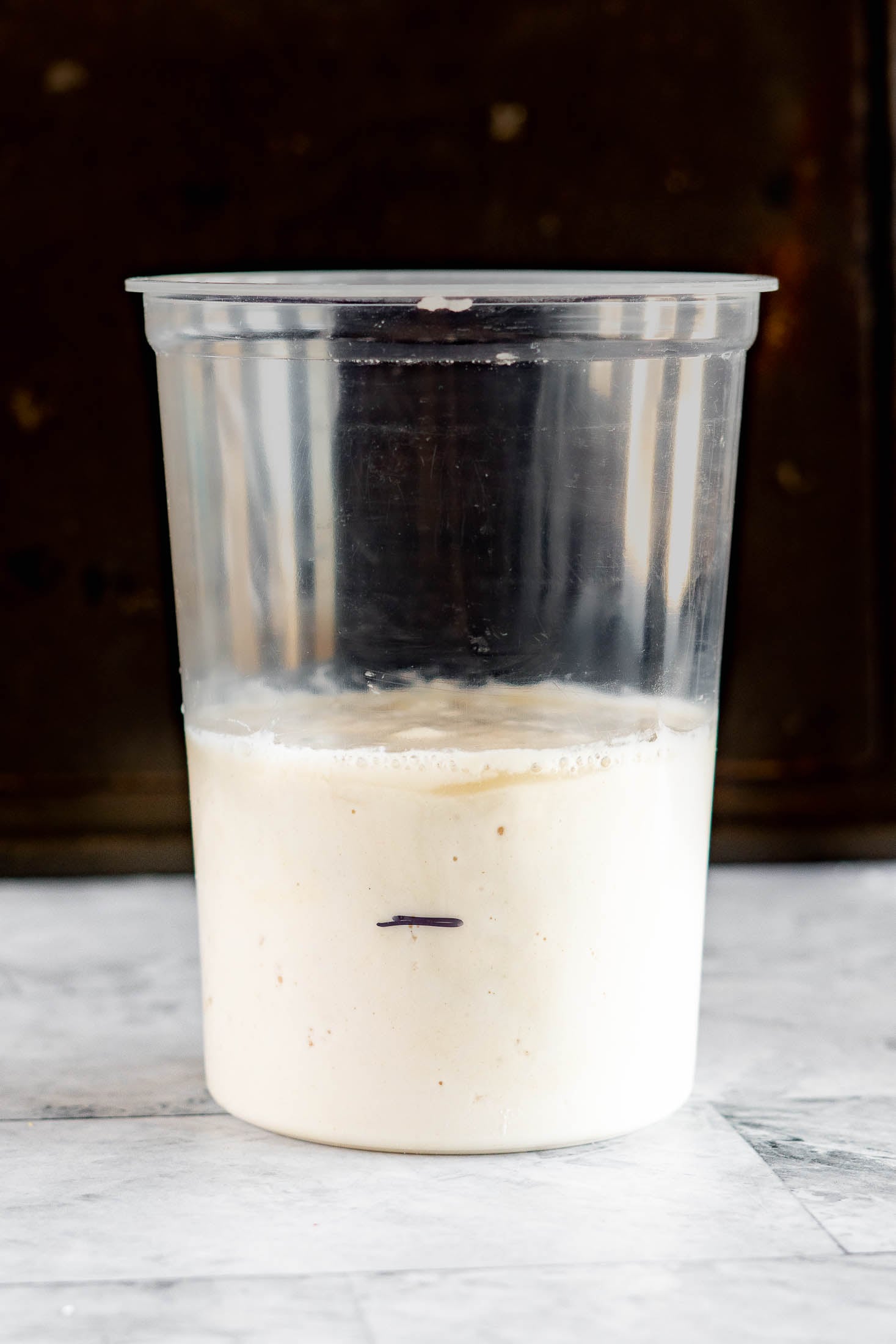
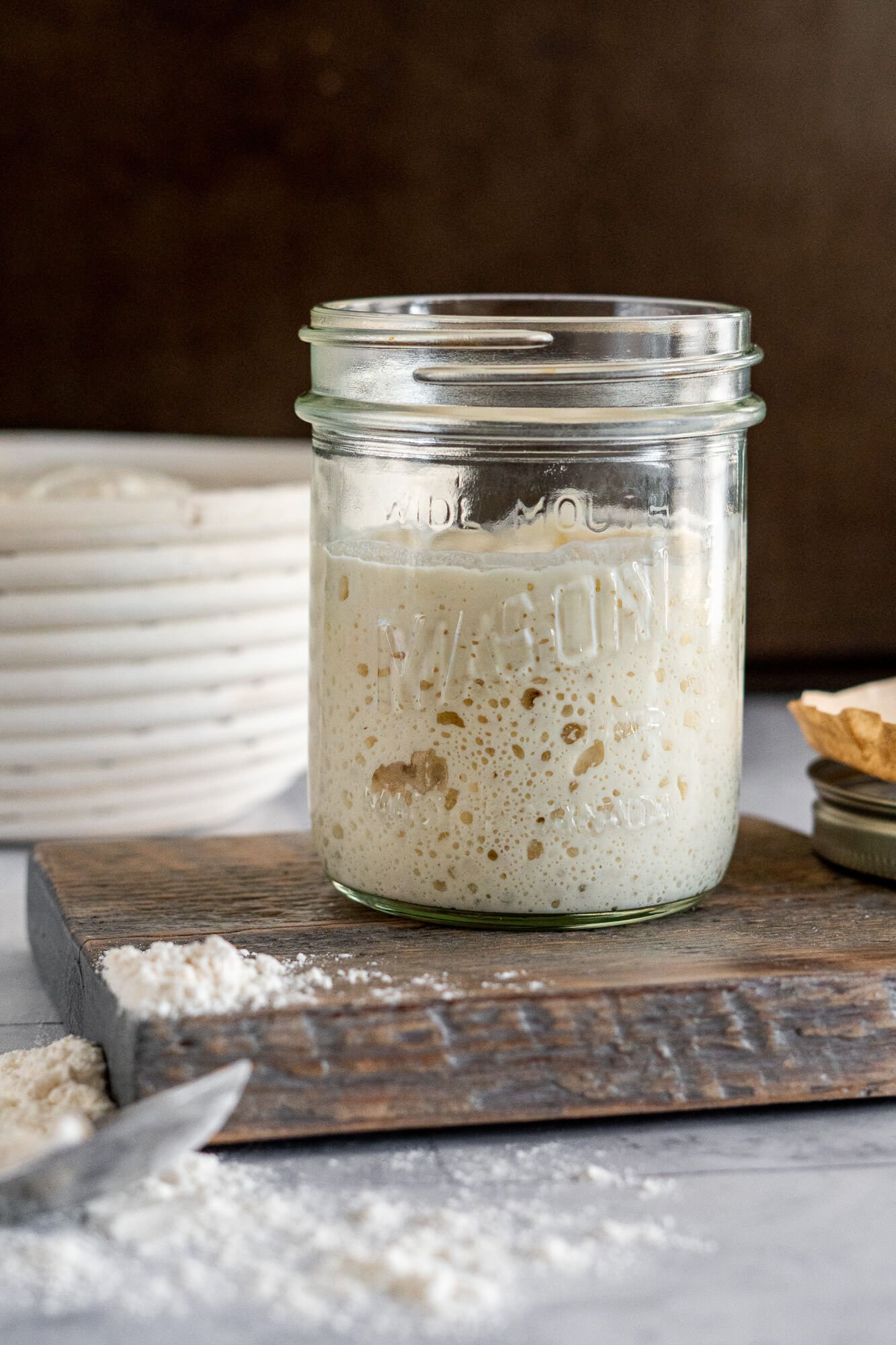
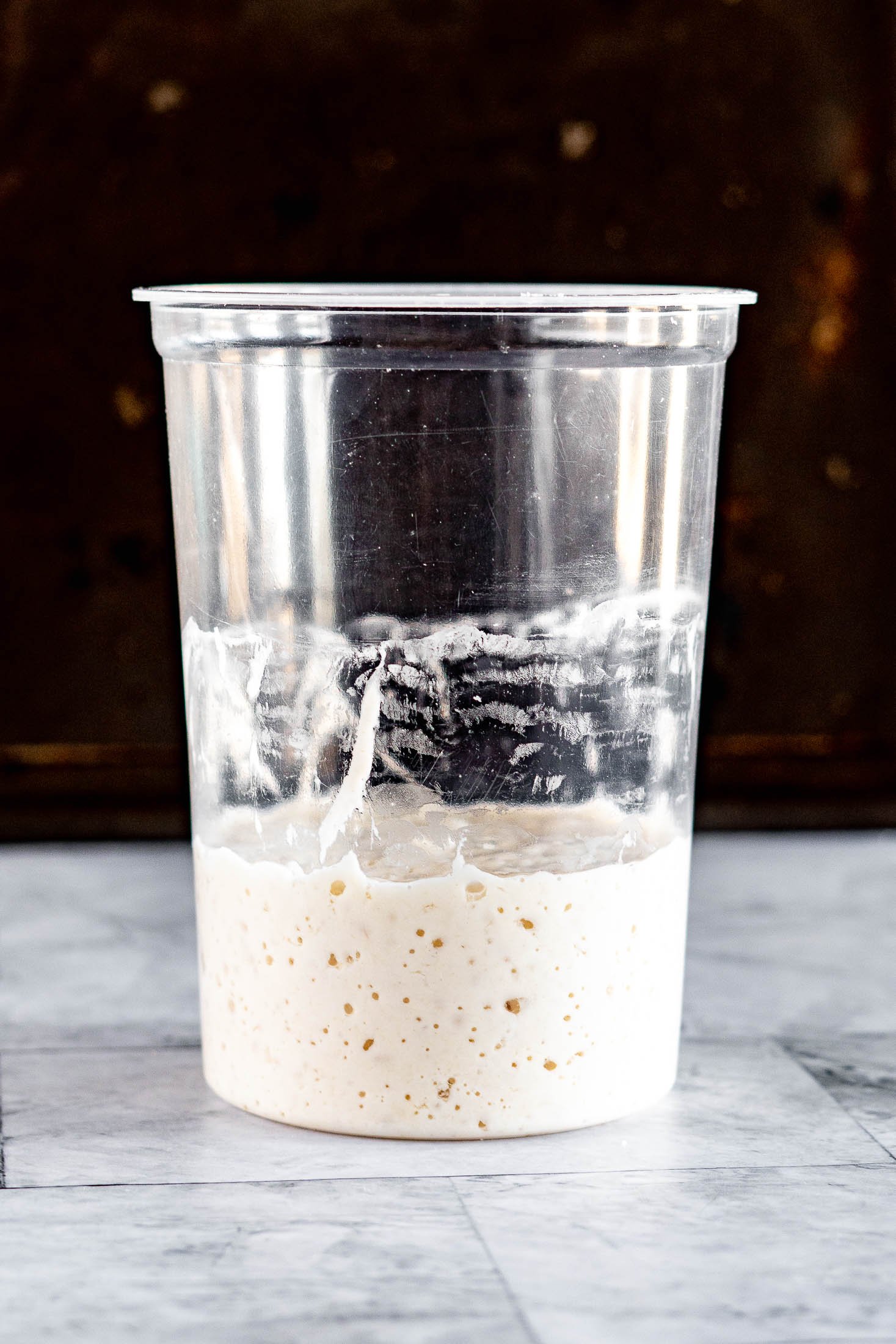
Use your senses. A fed starter smells yeasty or fruit, a hungry one smells sharp like vinegar or gym socks, both are normal. It should look thick like peanut butter right after being fed, then bubbly and domed in the jar as it activates, and a hungry starter will look deflated and leave slide marks on the jar.
Pink or orange streaks, fuzzy mold, or a rotten smell means it’s time to start over.
Learn more: Is my sourdough starter bad?
Master Your Sourdough Starter In 5 Days!
From Confused To Confident.
Find success with 5 simple, actionable secrets delivered to you. No more guessing games – just clear, proven steps to a thriving starter.
Easy Sourdough Starter Recipes



If you tried this Quick Sourdough Starter recipe or any other recipe on my blog, please leave a 🌟 star rating and let me know how it went in the comments below. Thanks for visiting!
📖 Printable Recipe

24 Hour Sourdough Starter (Quick and Easy – Made With Yeast)
Ingredients
Day 1:
- 100 g filtered water
- 100 g unbleached all purpose flour
- 1/2 teaspoon active dry yeast
Day 2:
- 50 g filtered water
- 50 g unbleached all purpose flour
Day 3 Onward:
- 50 g filtered water
- 50 g unbleached all purpose flour
Instructions
Day 1:
- In a large, non-metallic container, mix 100g unbleached all purpose flour, 100g room temperature water, and 1/2 teaspoon of active dry yeast until completely combined. No need to proof the yeast.
- Either cover the container with a clean kitchen towel or transfer it to a glass or plastic container with at least 3 times the volume of the starter - it will grow! Do not seal airtight – cover loosely, but don't leave the starter exposed to open air.Set the starter in a warm spot, free of temperature swings, and drafts to ferment for 12-18 hours.
Day 2:
- After 12-18 hours, stir down the bubbles and transfer 50 g of starter to a clean starter jar and feed it by mixing in 50 g warm water until mostly combined, then add 50 g unbleached all purpose flour and stir until completely combined.If you notice a layer of liquid (hooch) on the bottom of the jar, stir this in before discarding.
- Once the fed starter is fed, bubbly, and doubled in volume it's ready to use! This will take between 6 and 12 hours depending on your kitchen (environment) and starter.
Day 3 Onward:
- Each feed transfer 50 g of starter to a clean starter jar and feed it by mixing in 50 g warm water until mostly combined, then add 50 g unbleached all purpose flour and stir until completely combined. You can save any amount of starter you'd like, but just remember it must be fed 1:1:1 ratio of starter:water:flour to keep your starter at 100% hydration.
- See storage directions below!



what do i do with the discard on day 2?
Most people toss their discard for the first week, but because we inoculated this batch with thriving commercial yeast, you can put it in a container and store it in the fridge while you build up more discard! I have a guide on what to do with sourdough discard, and a guide on storing sourdough discard. Hope that helps!
This cleared up a lot of questions I had. I’ve been reading so many different blogs and watching YouTube videos and was still confused. Thank you so much for just putting it simple straight forward.
That’s great to hear! Good luck on your sourdough journey!
Hey there! I just started this sourdough starter recipe and with in the first couple of hours it has already risen 3x its size and fallen half its size. It also has some clear liquid (hooch I think) at the bottom of the jar. Could I have had it in too warm of a spot? What should I do slow down the rising time?
Thanks!!
Hey Shelby – sorry for the slow reply – we took our kids on a vacation!
I’m sure you’re well past this spot in your starter journey, but to answer your question, yes, if you find your yeast is activating too quickly, you can slow it down in a cooler spot! When I leave my starter at room temp ~70 degrees, I feed it every 24 hours. Hope that helps!
Hello! I’m using this recipe for a school project (Thank you so much for the recipe, I really needed something quick an easy!), but I was wondering if I can use the discard to make an extra starter to give to my teacher?
So happy you found it helpful! Yes, you can certainly use the discard to propagate a new starter! The easiest way would be to feed some of the discard in a separate container and then hand off the other container 🙂
@Ally,
Thank you so much!
Will this work with gluten free 1:1 flour?
Hi Catmk, I have not tried sourdough baking with gluten free flour, and I’m afraid that I would NOT be a good resource! So sorry :<
@Ally, I think I remember King Arthur has a recipe for gluten-free sourdough
Oh that’s a good tip! I think there is a large group on facebook dedicated to gluten free sourdough baking as well!
Great starter recipe! The first day my starter was bubbling. I followed your directions for day two. Today is day three and I didn’t see any growth except hooch! I am weighing the ingredients, what am I doing wrong? Thanks
You’re not doing anything wrong, sometimes starters are finicky at the beginning. If your starter is developing hooch within 24 hours, that means it’s active but going through its food too quickly. You can slow down the activity on your starter by feeding it with cold water or even placing it somewhere cooler. If there is a lot of hooch or a marked lack of rise, you can give it a double feed. Use 50g starter and 100g water with 100g flour, then set it aside for 24 hours. That should really fire it up. I find a double feed can be a good boost to a sluggish starter!
You can’t use commercial yeast and call it sourdough
This starter uses commercial yeast to kickstart the sourdough starter process. Commercial yeast is developed to give consistent results within a consistent time frame – in this process, we are training that same yeast to behave how we want them to.
We can argue semantics, but both store-bought yeast and sourdough starter use yeast to leaven bread. Is it a shortcut? Yes. Does it work? Also yes, I have been rocking the same starter for years now!
Rick is right – this ISNT sourdough. You are simply making a yeast culture. Where is the “sour”?
You need lactobacillus. I would even let the commercial yeast thing slide since you are deliberately trying to fast-track things but the lack of any Lactobacillus means you are NOT making sourdough bread. Try putting a scope of yougurt in, or even just some whey if you want it to be SOURdough
Hey James – while I understand what you’re saying, I think we’re still splitting hairs here.
From the research I’ve done, the commercial yeast will kickstart the process but it eventually dies off, making way for the more hardy wild yeasts to take over.
There is wild yeast in the ingredients fed to my starter and lactic acid bacteria around my environment, it’s not inconceivable that the changes in the starter happen just the same as when a person moves to a new place and feeds their starter different water or flour, or a starter is gifted to another baker and that starter changes its composition based on the wild yeasts in the new owner’s hands, home, and ingredients. Here is an article about the sourdough microbiome and a scientific study that discusses the origin of LAB species in sourdough starters.
This starter behaves exactly like a sourdough starter should and is plenty sour, and I have no doubts that should it be sequenced, it would have all the same major components as other’s more “pure” starters.
Ally, I’m a long time sourdough baker but haven’t in a few years so I read through a number of your articles to refresh my methods. Thanks so much for them as they have been a great read. In reading through the comments, I notice what I remembered from other sources. People often seem to expect instant results, more especially when you introduce the commercial yeast. Perhaps you might give duration ranges and comment on how things always come around with patience. The best line I read written by you was about feeding your starter again if you don’t get the results you expected, that’s always a great suggestion.
Ah I’m so glad to have helped jog your memory. It’s like riding a bike, if your bike had a lot of rules and needs, am I right?! haha! That’s a great idea, I will take some time to add a little note about timeframes and tempering expectations based on time!
Please put in imperial measurements.
Hi Shirley, sourdough should really be made by weights (eg 50g vs volume 2 oz or 1/4 cup). Metric weights seem intimidating but most or all kitchen scales should weigh things in grams for you. The reason for this is that the 1/4 cup of flour you scoop and the 1/4 cup of flour I scoop can be two wildly different weights based on the type of flour, humidity, scooping method etc. So the best bet to achieve consistent results is by weighing all the ingredients. The easiest way is to place your mixing bowl on the scale and use the tare function on your scale to zero out or ignore the weight of the bowl. Then add the starter, again tare to zero out the weight, water, tare, and finally flour.
I hope that’s helpful!
Can you freeze a part of this? I always freeze a part of my friendship starter and I never have a problem with reviving it can I do that with this? Thank you it looks like a blast
Yes!!! I have a great tutorial on how to store sourdough dough starter if you’re interested!!
I’m a little confused. On your easy sourdough starter with yeast ready in 24 hours. Do you include step one in day 2 before using starter or do you just stir and use at spent 3 on day one and add nothing else. Thanks
You will be feeding a portion of your starter, 50g of the total from the first day with 50g of water and 50g of flour. Once that mixture from the feed doubles in volume and becomes airy, you’ll be using the required amount of that for your recipe. If you use my small loaf sourdough recipe, you’ll be using 60g of the fed, doubled starter. There will be starter remaining, which you can allow to deflate and then feed again the next day.
This is THE best description/tutorial on sourdough starter that I have read anywhere! You explain every little nuance and the reason behind why you do everything. The pictures help so much, too. I’m very good at reading and following instructions (I was a career grant writer), but most people’s instructions are vague and incomplete. Yours are brilliant! A million thank yous. I now feel confident about creating my own sourdough starter. 🙂
I am so glad to help you get that confidence! Good luck with your sourdough baking 🙂
Hi,
I am so excited to try this recipe. Is it ok to use whole wheat flour for the starter? I started mine yesterday and it looks a little limp and sad right now. It looks like there is a layer of hooch (I guess) on the bottom. Its time for me to feed again, but Im wondering did the whole wheat flour sabotage my starter???
It shouldn’t have. There is more food in the whole wheat flour than all purpose or bread flour! I’d just stir it all together feed it again to see what happens!
My starter has not resin as high as yours. At our Walmart there is petrified, spring, distilled, and drinking water. I am using spring water hoping that is the closest to filtered water. Is that killing my yeast?
Any of those should work, I use water from my reverse osmosis when I’m starting a new starter, but after that I just use my well water.
Did your starter double in size? It should have, but if not, your yeast might be a bit older. You can always feed it again once it deflates and watch to see what happens!
Hi, I love your recipes and am just trying this one now, I was wondering – I couldn’t tell from the photos, does it matter if the sourdough is in an air tight container or not during the first 3 days? Thanks
That is so great to hear, thank you! Great question, It should not be airtight. When it’s in the mason jar, I place a piece of woven cotton on top to keep things out but allow airflow. The plastic containers are not airtight, either, I will amend the post to add this information!