
Sourdough Cornbread

This sourdough cornbread recipe uses a short pre-ferment to transform simple pantry ingredients into honey sweet cornbread with a crackling cast iron crust. Instead of just adding sourdough discard to get rid of it, this recipe lets the discard work on the cornmeal and flour, developing deeper flavor and tender crumb, all in under 3 hours!

Craving The Recipe Details?
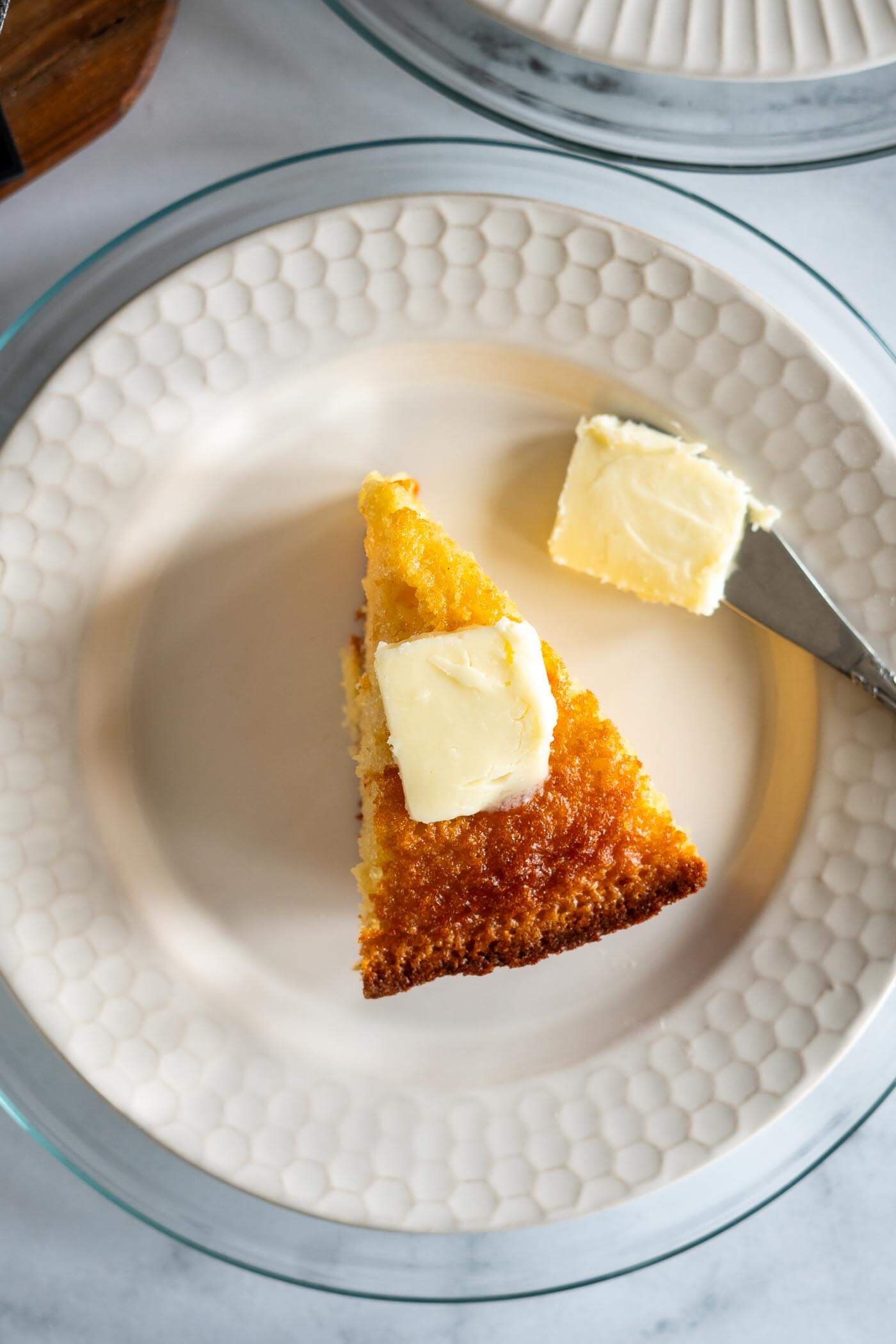
What it is: Honey-sweetened sourdough cornbread with a 2-hour pre-ferment, baked in a preheated cast iron for a crackling crust and a crumb that stays moist for days.
Why you'll love it: The pre-ferment actually transforms the cornmeal; softer, more flavorful, and noticeably different from a quick-mix batch. Hot cast iron does the rest.
How to make it: Combine cornmeal, flour, milk, and discard. Rest 2 hours, then fold in honey, butter, eggs, and leaveners, pour into a screaming-hot greased skillet and bake at 400°F for 25-30 minutes.
Sourdough discard cornbread is just one of those delicious, stick to your ribs recipes. The combination of tangy sourdough starter discard and slightly sweet cornmeal creates a mouthwatering flavor that will leave you craving more.
Most sourdough cornbread recipes just swap discard in for some of the liquid. That’s fine, but it’s not really sourdough cornbread. This recipe builds a corn-and-flour pre-ferment with the discard, then adds the leaveners and eggs after a 2-hour rest. The result is a cornbread with better flavor and a softer crumb you simply can’t get from a quick-mix method.
This sweet sourdough cornbread recipe is dedicated to your ribs!

Master Your Sourdough Starter In 5 Days!
From Confused To Confident.
Find success with 5 simple, actionable secrets delivered to you. No more guessing games – just clear, proven steps to a thriving starter.
Jump to:
- Craving The Recipe Details?
- Sourdough Cornbread Crave Kitchen Style
- Key Ingredients
- Variations + Substitutions
- How To Make Sourdough Cornbread
- Expert Tips
- Sourdough Discard Cornbread FAQs
- Adjusting Fermentation Time
- Make Ahead Cornbread With Sourdough Discard
- What to Serve With Sourdough Cornbread
- 📖 Printable Recipe
Sourdough Cornbread Crave Kitchen Style
I do a few things differently when baking honey cornbread, and I think they’re all equally important for the best result.
- Honey does two things sugar can’t. First, it’s hygroscopic which means it actively attracts and holds moisture, that’s why this cornbread stays moist on day two when a sugar-sweetened version would be drying out. Second, raw honey adds a faint floral complexity that is subtle but noticeable.
- Preferment the cornmeal to develop flavor and structure. Mixing the cornmeal, flour, milk, and discard together and letting them rest for two hours isn’t just about developing sourdough flavor, it changes the cornmeal’s physical structure. The acids in the discard soften the cornmeal particles resulting in crumb that’s cohesive rather than gritty, and moist on day two instead of dry. Skip this step and you’ll still get cornbread… just not this cornbread.
- Let the batter rest while the oven preheats to improve rise. Once you fold in the baking powder, give it time to work before the batter hits heat. That 10-15 minute rest while your cast iron preheats allows the leavener to begin creating the bubble structure that becomes your crumb. Pour immediately and you lose some of that lift before the oven can set it.
- Cook in a preheated and greased cast-iron skillet for crispy edges. A cold pan bakes from the top down. A hot cast iron skillet bakes from every direction simultaneously, bottom, sides, and top, which is why you get that crackling crust on the underside and edges that you simply cannot replicate in a glass dish or a cold metal pan. Lard is my preference for greasing; it has a higher smoke point than butter and creates a crispier contact crust.
Now, go forth and make perfect sourdough discard cornbread!
Key Ingredients
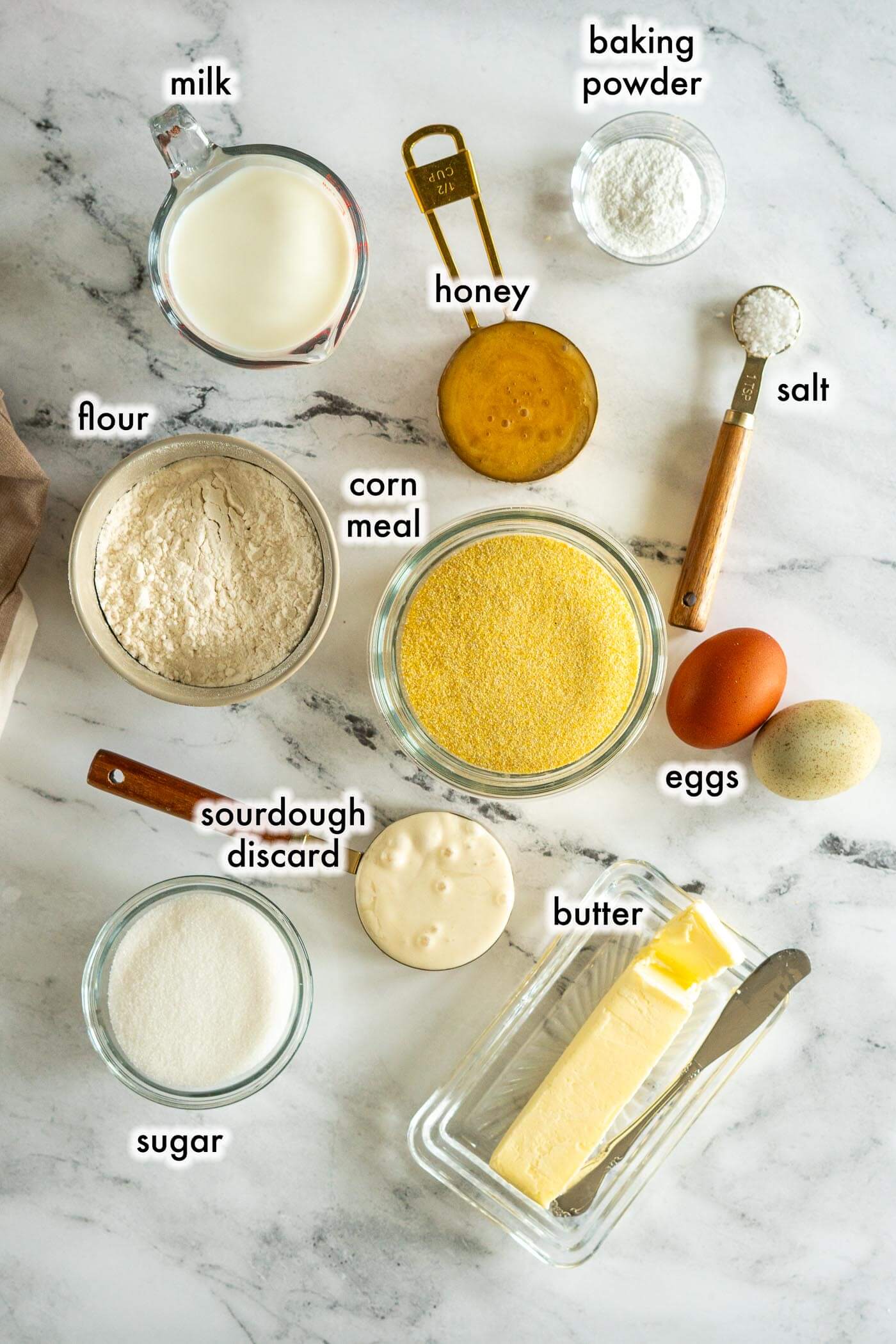
Sourdough discard: This recipe owes its delicious tang to the discard used in the recipe. You can use active starter, but it isn’t necessary because the baking powder is responsible for the rise in this recipe. Fresher discard will produce milder flavors while aged discard has a higher acidity and will bring more sour flavors.
Cornmeal: When you’re shopping, look for medium-grain cornmeal as it offers the best texture and flavor. Coarse-grain can lead to a too crumbly crumb. If you can only find fine-grain, that will work but will result in a finer, smoother crumb. I use degermed cornmeal, which means the germ and bran have been removed leaving a lighter textured cornmeal.
Honey: I love a sweet cornbread, almost cakey, moist and delicious, and one way that I’ve found to get the right balance of sweetness and tender crumb is to use raw honey – and I give myself bonus points for using honey from the hives right in my backyard!
Variations + Substitutions
As written, this easy sourdough discard cornbread recipe is really a blank slate! Get creative with it – you’ll be happy you did.
- Sub out the honey for maple syrup (this version is my kids’ favorite)
- Add sliced picked jalapenos and smoked cheddar cheese
- Add 1 cup of corn kernels, 1/4 cup cooked bacon, and 1/2 cup shredded Monterey Jack cheese
How To Make Sourdough Cornbread
The process for making fermented cornbread is a little different than if you were to make it the traditional way, so take a moment to read through the steps prior to starting because it will certainly feel unfamiliar!
Build The Pre-Ferment:
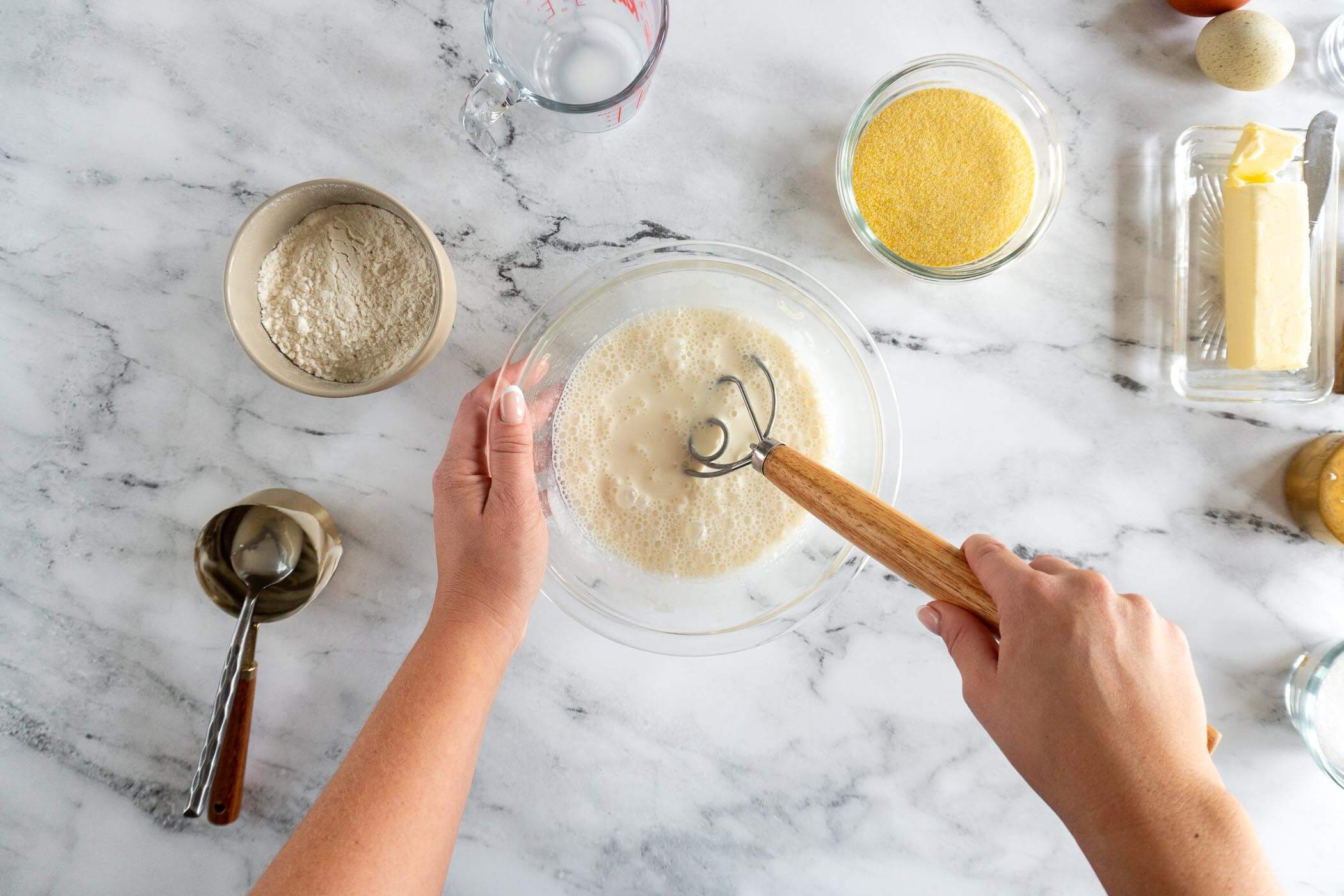
- Step 1: In a large mixing bowl, combine 3/4 cup room temperature whole milk with 1/2 cup sourdough discard.
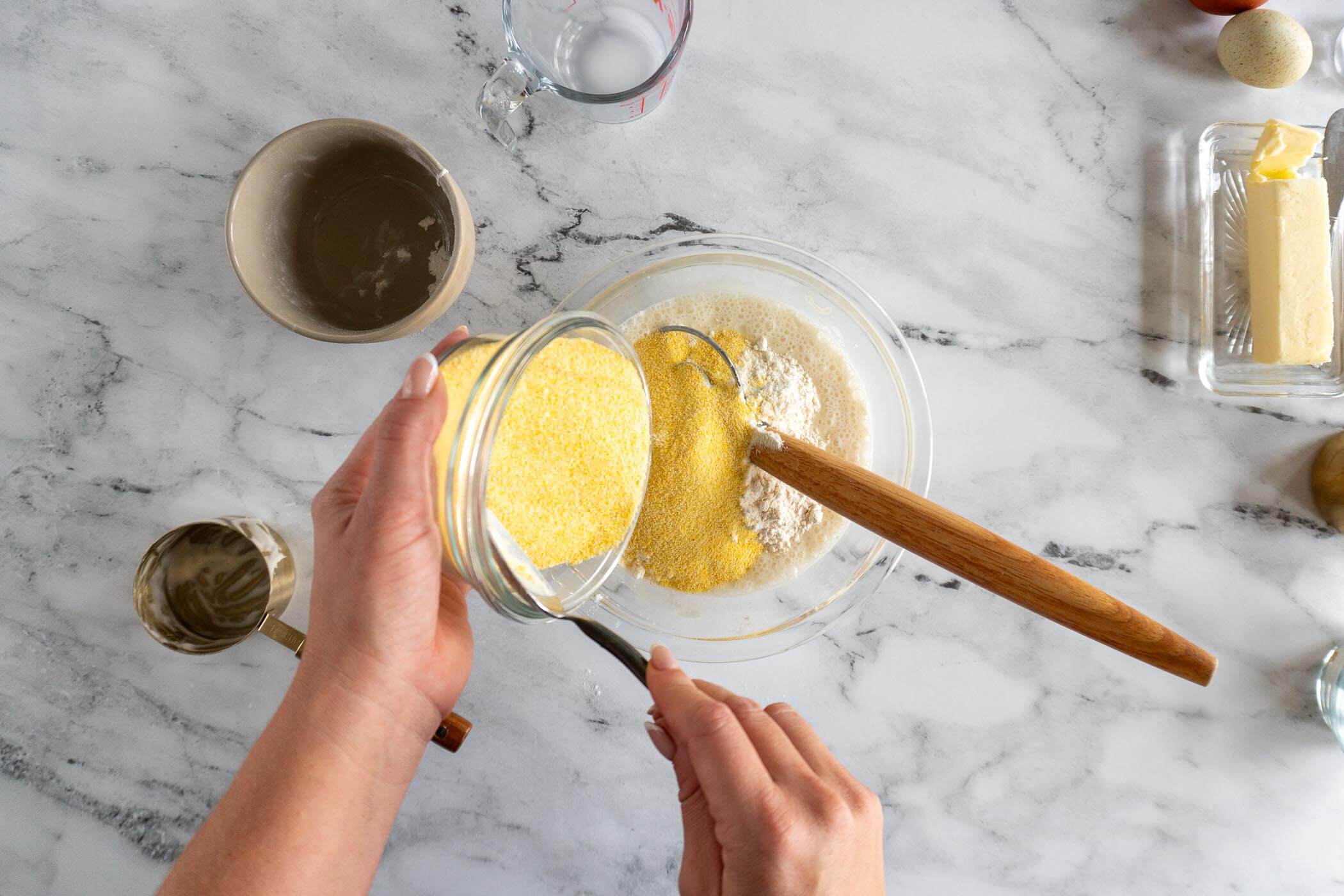
- Step 2: Mix in 1 cup all purpose flour and 1 cup cornmeal until completely combined.
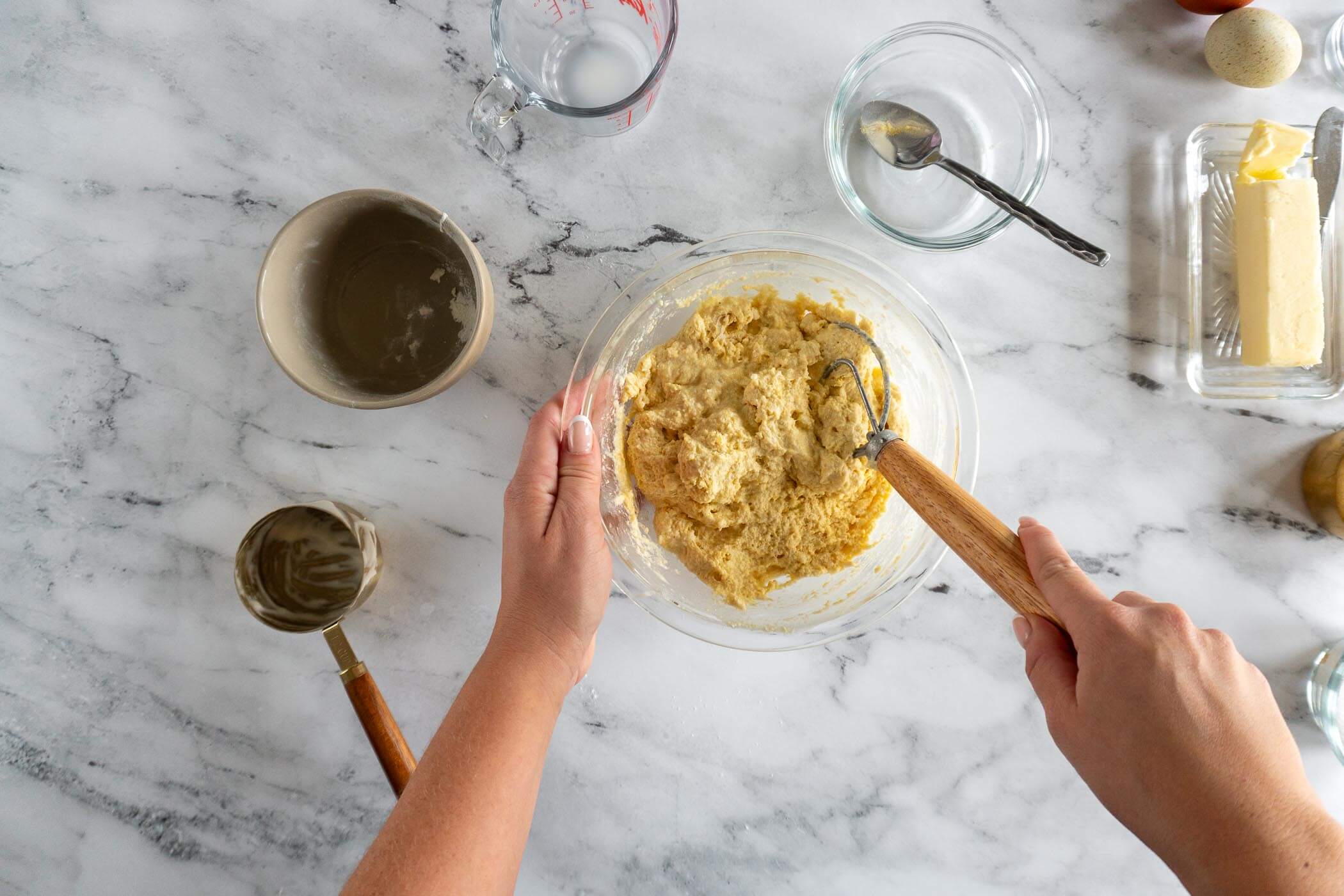
- Step 3: Cover the bowl and set aside to ferment for 2 hours.
Finish The Batter:
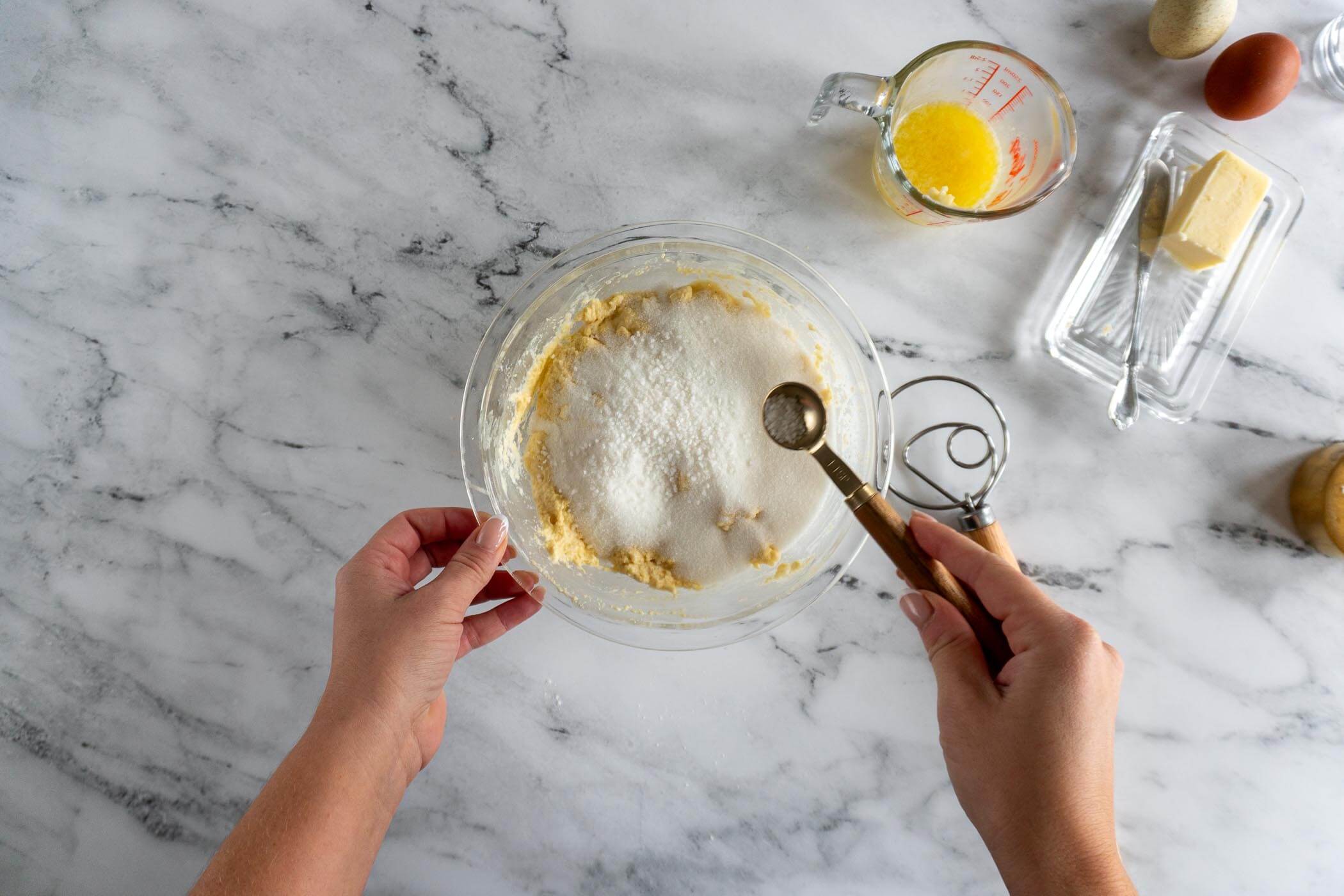
- Step 4: To the top of the preferment, sprinkle 1/2 cup granulated sugar, 1 tablespoon baking powder, and 1 teaspoon coarse salt.
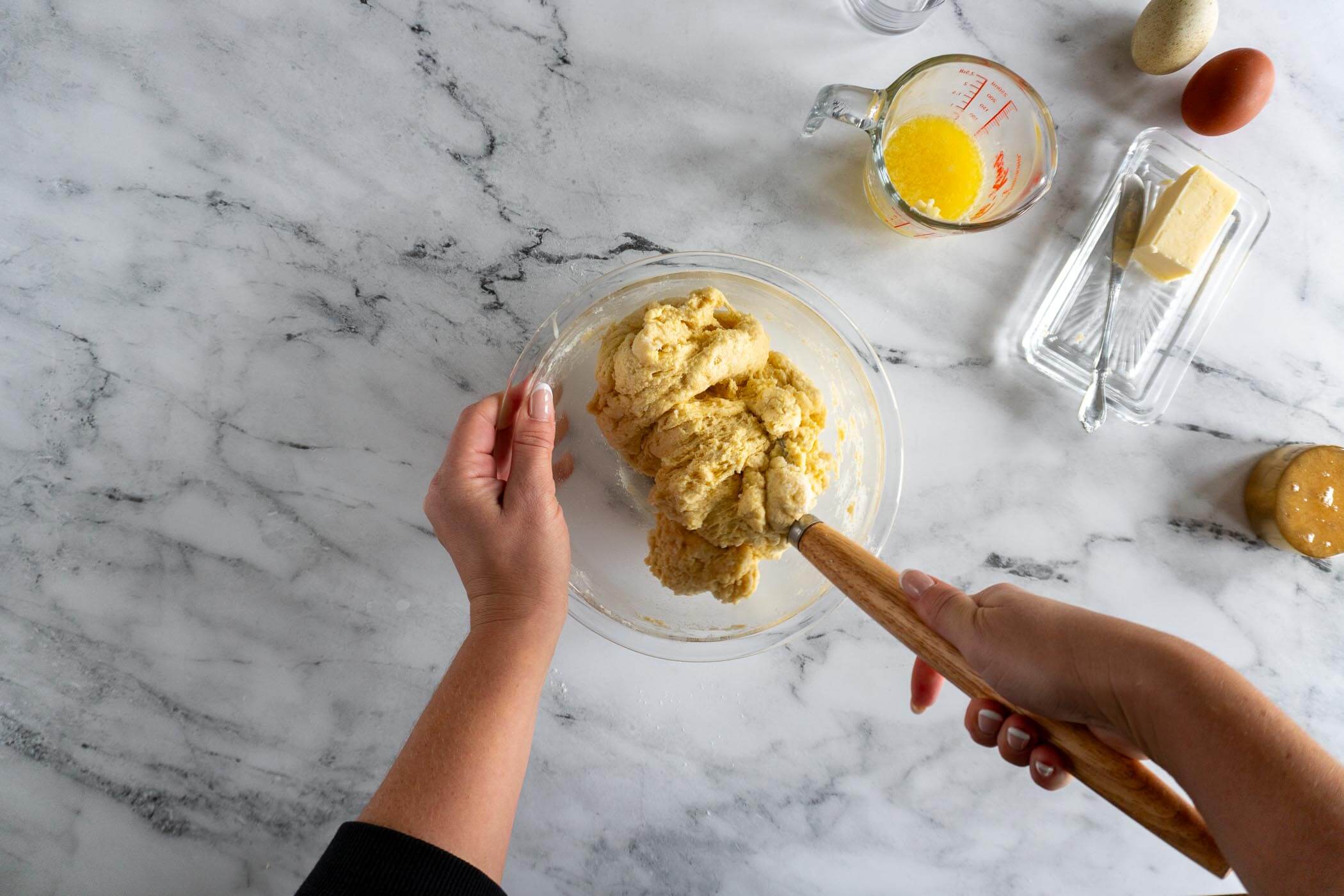
- Step 5: Stir until completely combined – the dough will be very thick and dense at this point.
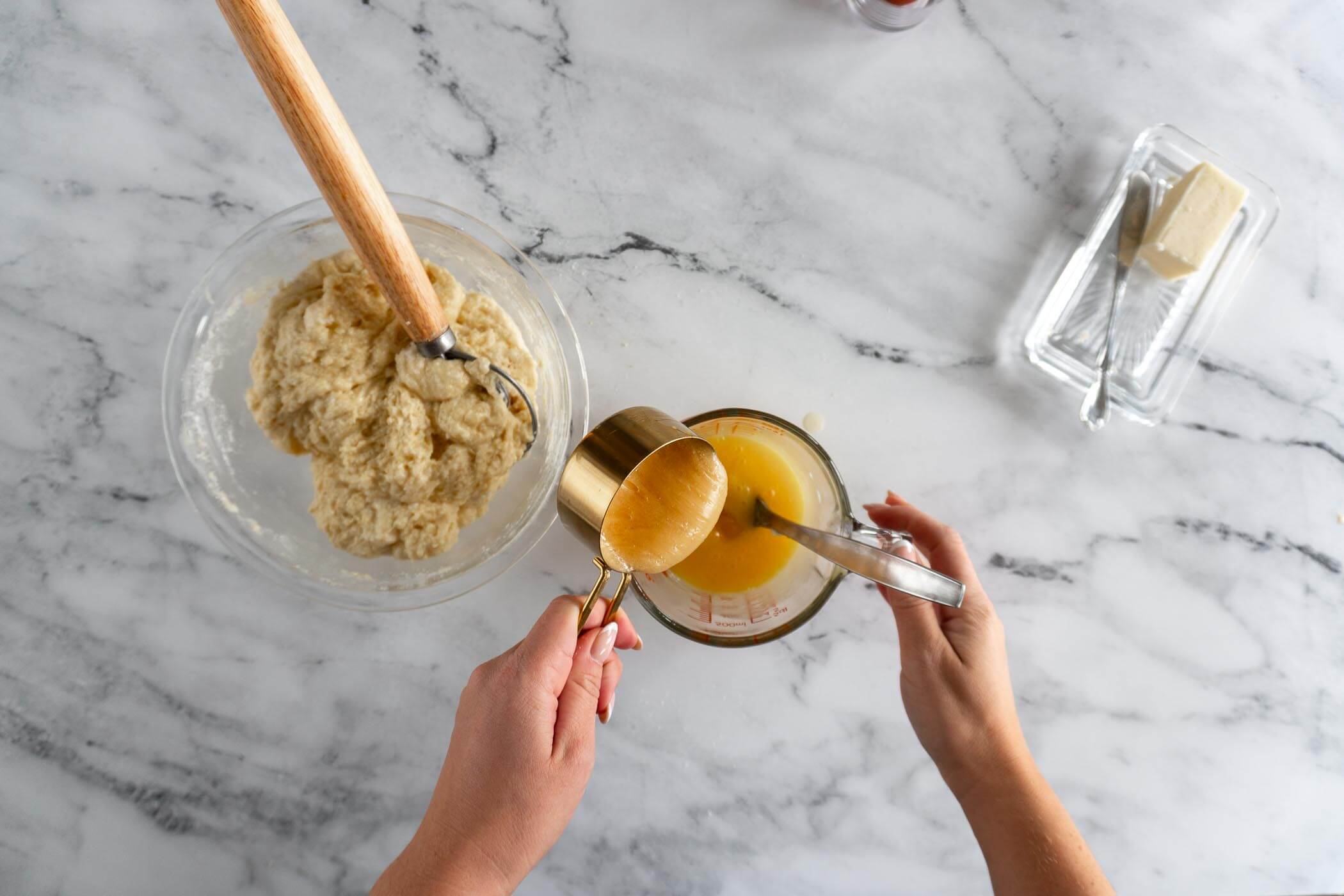
- Step 6: Melt 1/4 cup of unsalted butter in a medium bowl, then add to 1/2 cup honey, 2 large eggs, and whisk well to combine.
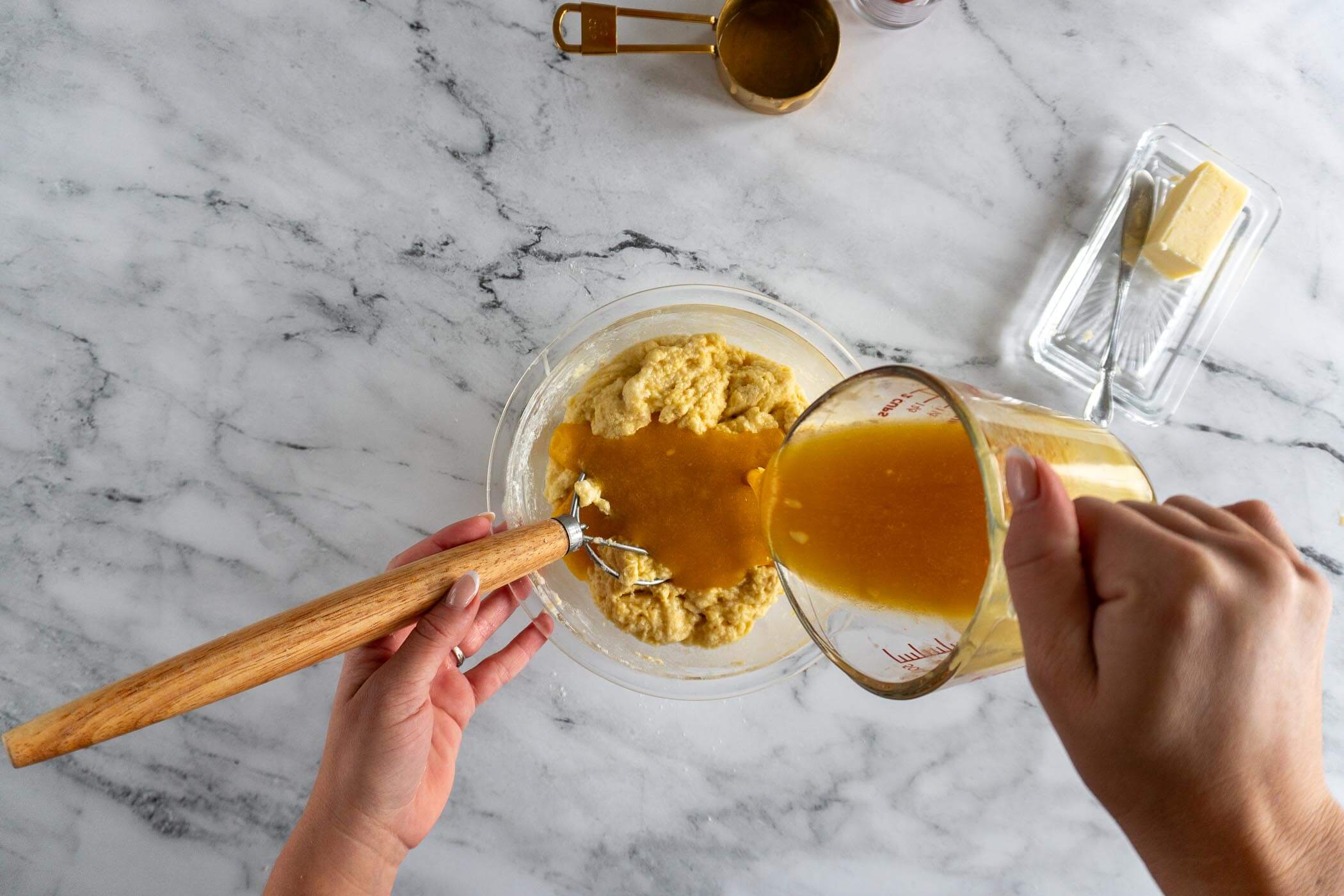
- Step 7: Add butter mixture to the preferment, and fold in with a whisk or slotted spoon until just incorporated but avoid over-mixing. Cover bowl and set aside.
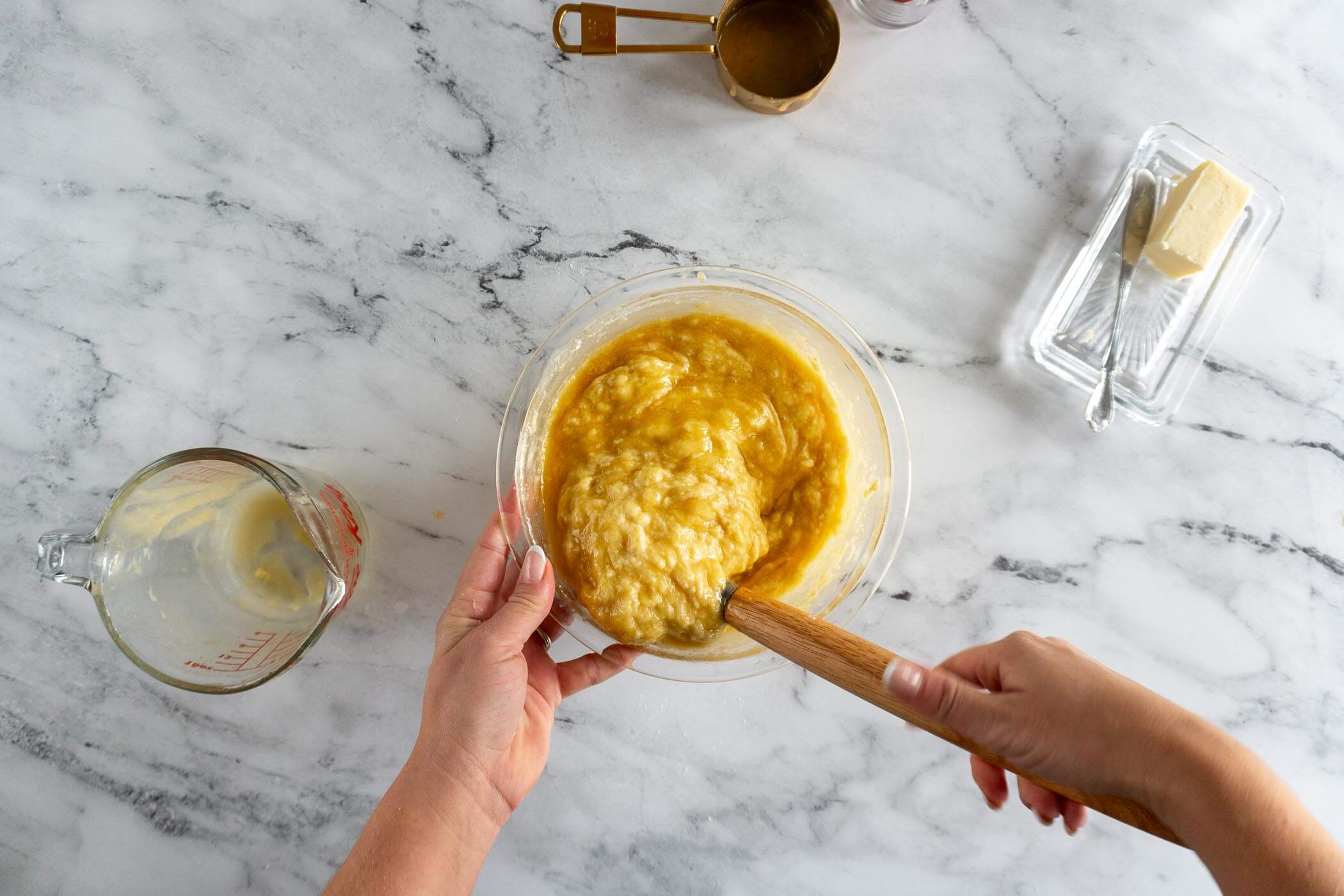
- Step 8: Meanwhile, place a 10 inch cast iron skillet into the oven and preheat to 400F.
Bake The Cornbread:
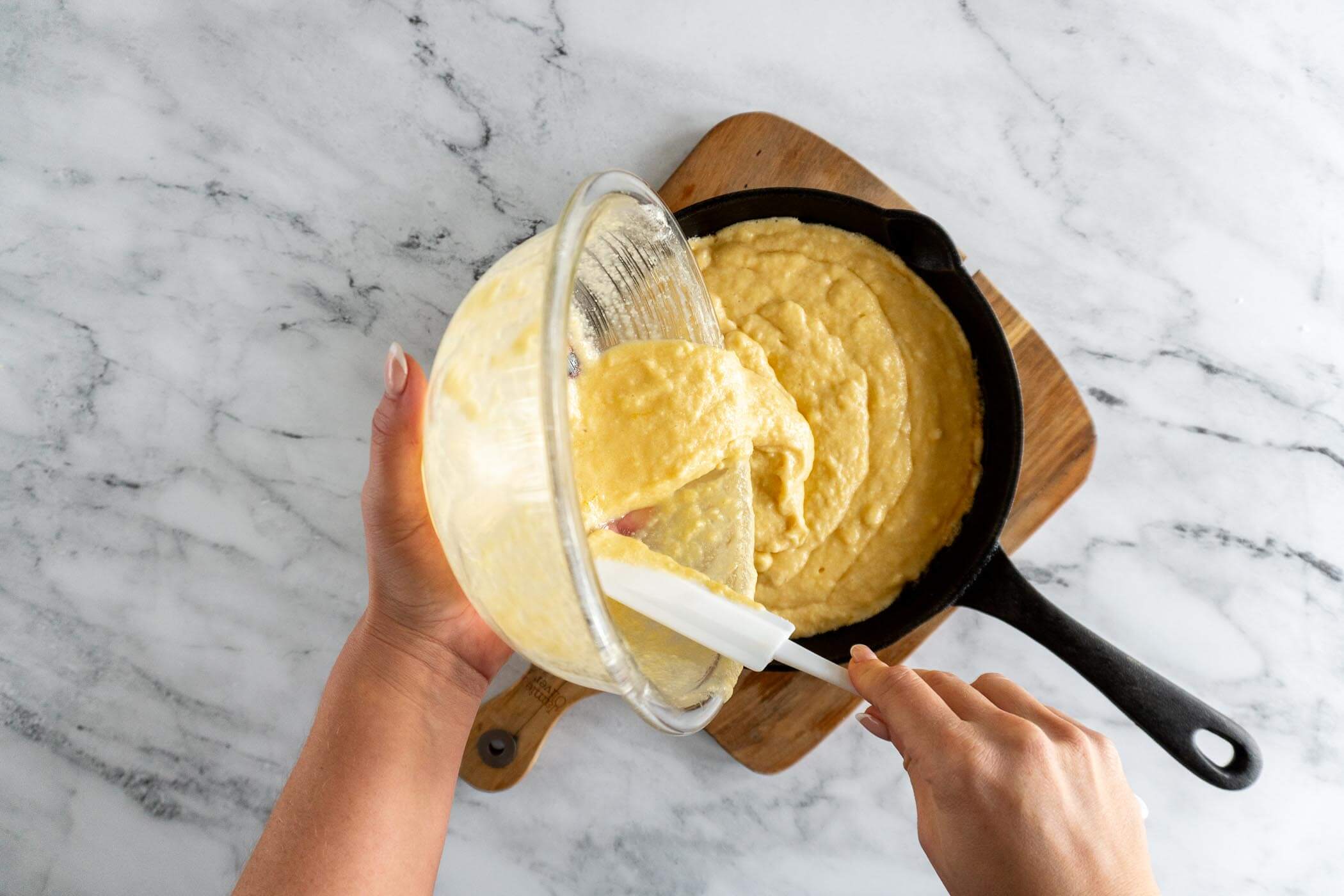
- Step 9: Carefully remove heated skillet from oven and place on a heat proof surface. Add a dollop of butter or lard to the skillet (I prefer lard) and swish to grease the pan.
Taking care to not deflate the patter, pour it into the skillet.
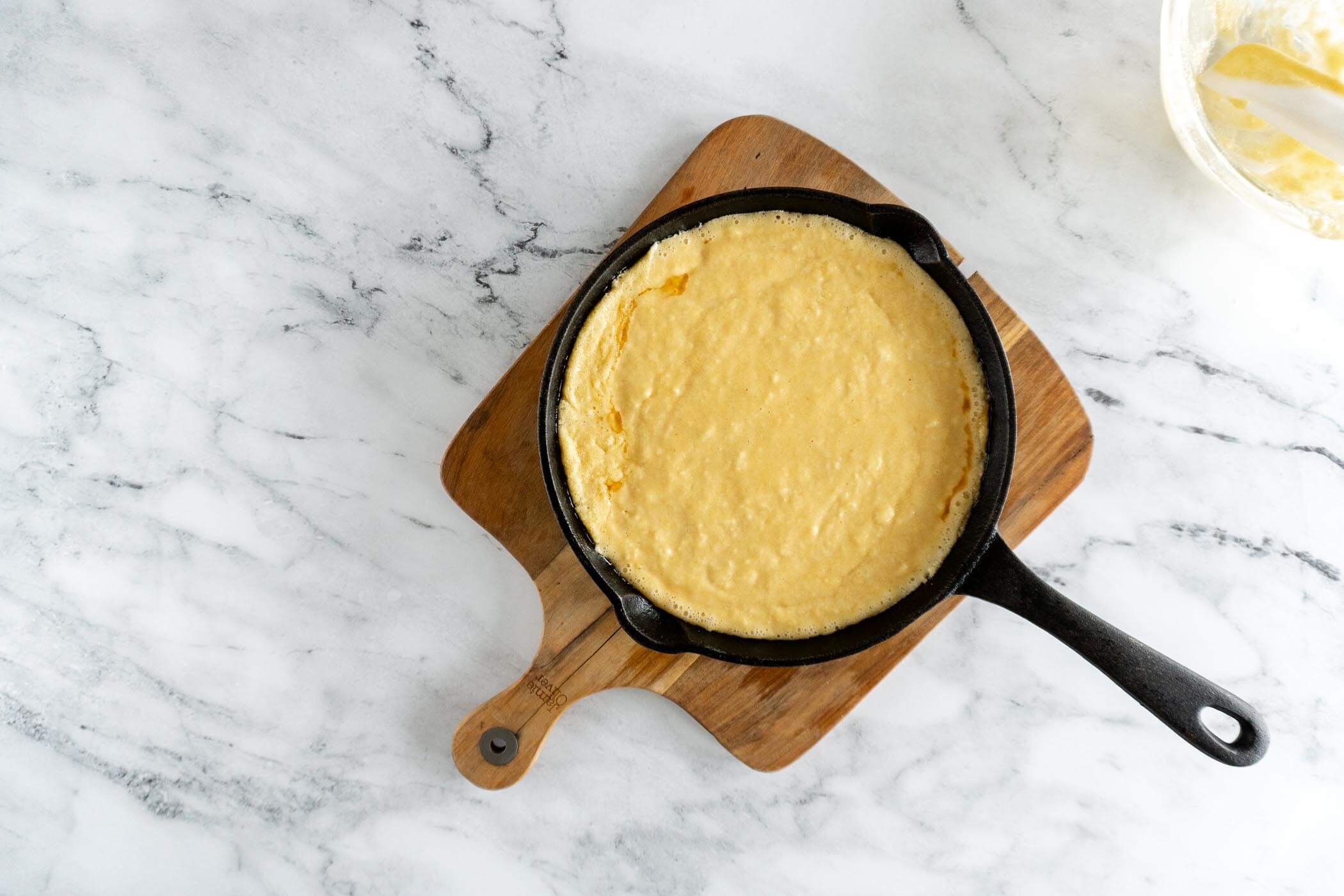
- Step 10: Smooth the top, if desired.
Bake at 400 for 25-30 minutes or until a tester stick comes out of the middle clean.
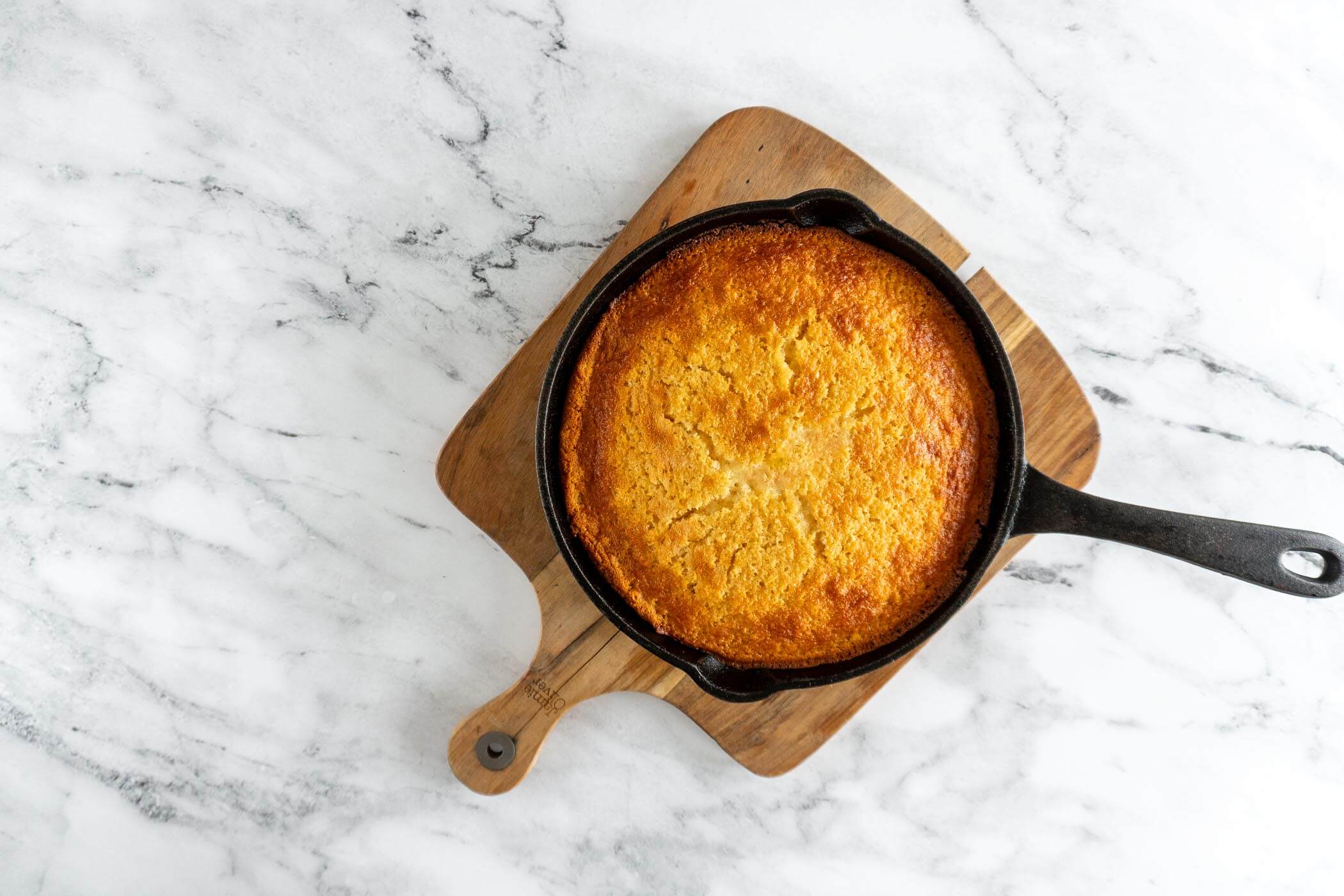
- Step 11: Allow to cool (at least slightly) before slicing and serving.
Expert Tips
- Baking dish: I always bake my cornbread in my 10 inch cast iron skillet, but a 9×9 baking pan has roughly the same volume, so if you prefer squares, feel free to use a 9×9, no need to preheat the pan, just grease it well before transferring the batter and keep an eye on the baking time. If you don’t have cast iron, any oven-safe skillet cornbread pan works, but expect less crust.
- Keep it fluffy: The freshness of your baking powder really matters in this recipe because it is the leavening agent! If you’ve been rocking the same baking powder for the last few years, it might be worth testing by adding a 1/2 teaspoon of baking powder into 1/4 cup of boiling water. You want to see vigorous bubbling, if there is very little activity, you’ll need new baking powder.
Sourdough Discard Cornbread FAQs
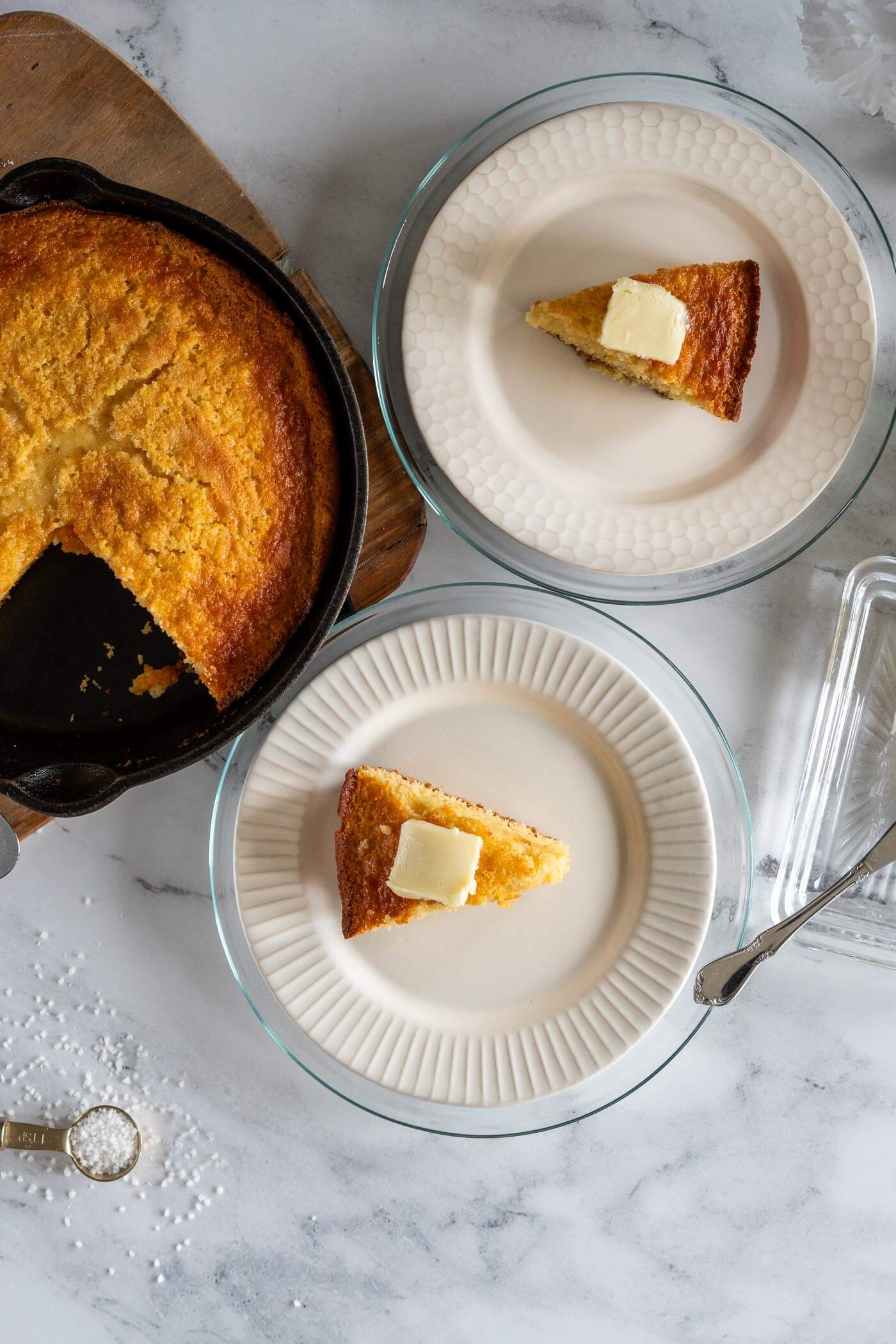
While your cornbread definitely tastes best fresh, it can be stored by placing in an airtight container at room temperature for up to 3 days. I like to warm up my leftover cornbread in the microwave for a few seconds and smear with whipped honey butter or peach jam.
It also freezes well, wrap individual slices and freeze for up to 3 months. You can thaw uncovered at room temperature for 15-30 minutes, or warm gently in the microwave if you just can’t wait!
Sourdough discard cornbread is a wonderful way to use the discard’s natural acidity to counteract the sweetness, add moisture, and (in this recipe) softens the cornmeal during the pre-ferment for a more cohesive, tender crumb.
Two things cause cornbread to be dense; weak baking powder and over mixing. Old or expired baking powder can struggle to leaven your cornbread because it is the only leavening agent in the recipe. Over mixing or rough pouring can actually deflate the bubbles developed in the dough causing it to fall flat.
Crumbly cornbread is almost always caused by too much cornmeal relative to flour, or not enough fat. This recipe uses a 1:1 cornmeal-to-flour ratio specifically to avoid this. If yours is still crumbling, check that your butter was fully melted and your eggs were at room temperature before folding them in.
Yes, active starter works fine here. Because leavening comes entirely from baking powder (not the starter), the difference is flavor, not rise. Active starter will give a slightly milder flavor and may offer a bit more rise. Discard that’s been sitting for several days will be more acidic and give a more pronounced sour note. Both work. Most people make this recipe specifically to use up discard, which is the practical intent anyway.
Yes. First, the sourdough discard adds lactic and acetic acids that counteract sweetness and create a more balanced, complex flavor you can’t get from a plain batter. Second, and this is what most recipes miss, those same acids soften the cornmeal’s physical structure during the pre-ferment, resulting in a softer, more tender crumb.
Adjusting Fermentation Time
One of the things that makes sourdough discard cornbread different from a standard recipe is that the discard is doing real work, not just standing in for liquid. The 2-hour bench rest is the minimum to get meaningful softening of the cornmeal. Here’s how the timing affects the result:
- Skip the rest entirely: If you’re short on time, you can skip the pre-ferment and mix everything at once, but know that you’re making a different recipe. The texture will be slightly more gritty and the flavor less developed. It’ll still be good cornbread; just not the version this recipe is optimized for. If you want to make ahead without the wait, the overnight fridge method (described below) does the work while you sleep.
- 2 hours: The sweet spot for same-day baking. Enough time for the acids to soften the cornmeal without over-developing tang. In testing this became my favorite version, relatively quick, full of flavor, and great texture.
- Overnight (8-12 hours, refrigerated): Cover tightly and refrigerate after your’ve built the preferment. Pull it out 45-60 minutes before continuing with the recipe and adding the remaining ingredients. The flavor will be more complex and slightly more sour, a great option if you want a more savory cornbread.
Do not ferment longer than 12-14 hours at room temperature; the texture may become gummy.
Make Ahead Cornbread With Sourdough Discard
This recipe is literal make-ahead magic. It freezes and thaws incredibly well.
I've found if you turn the cornbread out of the skillet after it’s cooled enough to move onto a wire mesh rack and then allow to cool to room temp, you can either wrap it in single-serve wedges OR, wrap the entire cornbread in plastic wrap, slide it into a freezer bag, then pop in the freezer for later!
When ready to use, simply pull the bread out of the freezer, unwrap, and place on a cooling rack 1-2 hours to thaw before you want to serve.
What to Serve With Sourdough Cornbread
Cornbread is one of those sides that can go in almost any direction, but the flavor in this particular recipe gives you more flexibility than you might expect. Here’s how I actually use it:
With smoked or braised meats. A thick wedge alongside smoked brisket or pulled pork acts almost like a palate cleanser between bites, it’s rich, but it resets you.
Floating in a bowl of chili. Not on the side… in the bowl. Drop a wedge directly into a deep bowl of smoked brisket chili and let the bottom soak through while the top stays crispy from the cast iron crust. The honey sweetness against a spicy chili is just one of those irresistible combinations.
As a breakfast bread. This cornbread is sweet enough that it needs no introduction in the morning. Split a cold wedge, toast it, and serve with whipped honey butter or a spoonful of peach jam.
On its own, warm from the skillet. Honestly, this is how most of it gets eaten in my house. The first slice comes out before it’s fully cooled, eaten standing at the counter with nothing but a swipe of softened butter. That crisp crust and soft crumb, still warm from the iron… it doesn’t need anything else.
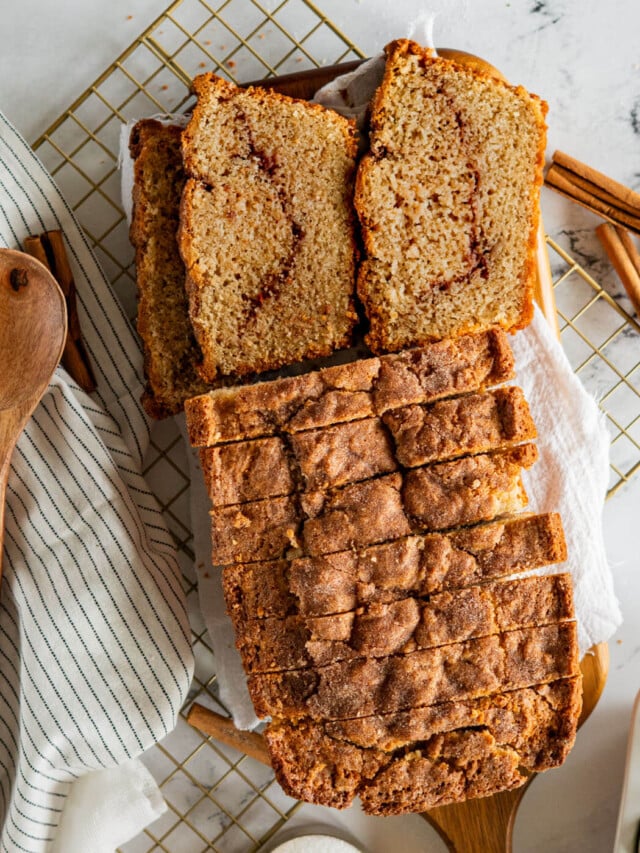
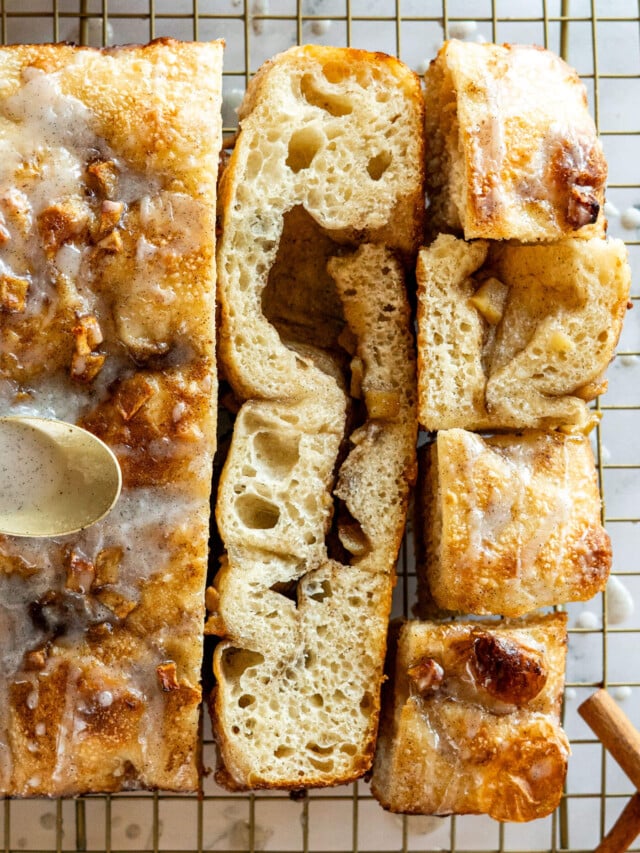
See More Sourdough Discard Recipes


If you tried this Sourdough Cornbread recipe or any other recipe on my blog, please leave a 🌟 star rating and let me know how it went in the comments below. Thanks for visiting!
📖 Printable Recipe
Sourdough Cornbread Recipe
Ingredients
- 1 cup all purpose flour
- 1 cup cornmeal, medium-ground
- ¾ cup whole milk, room temperature
- ½ cup sourdough discard, room temperature
- ½ cup granulated sugar
- 1 tablespoon baking powder
- 1 teaspoon coarse kosher salt
- ¼ cup butter, unsalted
- 2 large eggs, room temperature
- ½ cup honey
Instructions
Build The Pre-ferment
- In a large mixing bowl, combine ¾ cup whole milk, and ½ cup sourdough discard. Then add 1 cup all purpose flour, 1 cup cornmeal and stir until completely combined.
- Cover the bowl and set aside to ferment for 2 hours.
Finish The Batter
- Melt ¼ cup of unsalted butter in a medium bowl, then add to ½ cup honey, 2 large eggs, and whisk well to combine.
- To the top of the preferment, sprinkle ½ cup granulated sugar, 1 tablespoon baking powder, and 1 teaspoon coarse salt. Stir until completely combined.
- Add butter mixture to the preferment, and stir until just incorporated but avoid over-mixing. Cover bowl and set aside.
- Meanwhile, place a 10 inch cast iron skillet into the oven and preheat to 400F.
Bake The Cornbread
- Carefully remove heated skillet from oven and place on a heat proof surface. Add a dollop of butter or lard to the skillet (I prefer lard) and swish to grease the pan.
- Taking care to not deflate the patter, pour it into the skillet. Smooth the top, if desired.
- Bake at 400 for 25-30 minutes or until a tester stick comes out of the middle clean.
- Allow to cool (at least slightly) before slicing and serving.
Notes
Variations + Substitutions
- Sub out the honey for maple syrup (this version is my kids' favorite)
- Add sliced picked jalapenos and smoked cheddar cheese
- Add 1 cup of corn kernels, 1/4 cup cooked bacon, and 1/2 cup shredded Monterey Jack cheese


We love this cornbread recipe! I made a batch for a dinner party last week and served it with smoked brisket and it got rave reviews from our guests!